Why Choose 0 Nicotine Disposable Vapes for Global Buyers?

For global buyers, product choice increasingly depends on transparency, consistency, and responsible sourcing. A 0 Nicotine Disposable Vape may appeal to adults who want vaping without nicotine exposure. It can also support sampling, retail testing, or nicotine-free product portfolios. However, “nicotine-free” should never be accepted without evidence. Reliable suppliers provide laboratory reports, ingredient lists, batch information, and clear manufacturing details.

Quality differences become visible in practical moments. A device should have secure packaging, readable labels, stable airflow, and a battery that performs consistently. Buyers should examine leakage rates, flavor accuracy, shelf life, and transport protection. These details matter when products travel across borders, through changing temperatures, and into different distribution systems. Independent testing can help confirm nicotine levels and screen for restricted substances. Supplier audits and traceable documentation add further confidence.

Still, this option is not risk-free. It is not suitable for minors, non-users, or people sensitive to aerosol ingredients. Regulations differ widely, and some markets restrict disposable devices, flavored products, or specific components. Importers must verify local requirements before ordering. Claims should remain modest, especially when evidence is limited. A product can look polished and still lack dependable controls. That is an uncomfortable point, but it deserves attention. For responsible global purchasing, the strongest choice combines verified specifications, honest communication, compliant packaging, and after-sales support. A 0 Nicotine Disposable Vape should be evaluated as a regulated consumer product, not treated as a harmless lifestyle accessory.
Why Choose 0 Nicotine Disposable Vapes for Global Buyers?

Definition and Core Features of 0 Nicotine Disposable Vapes

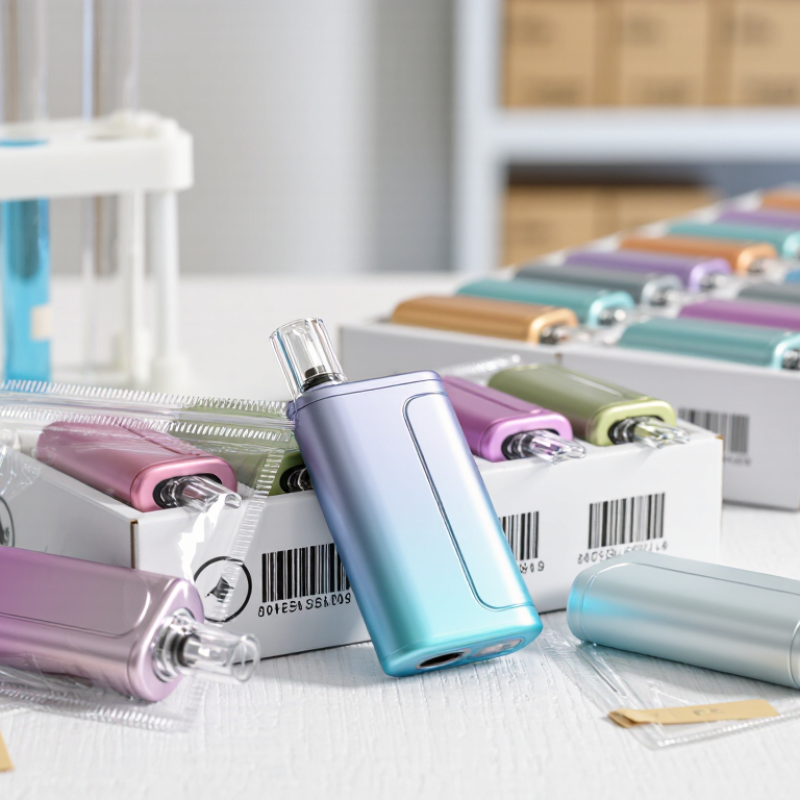
A 0 nicotine disposable vape is a prefilled, compact vapor device containing no nicotine. It usually combines a sealed e-liquid reservoir, heating coil, battery, and mouthpiece. Most models activate when the user inhales. No buttons are needed. The device is designed for limited use, although battery capacity and liquid volume vary between products.

Its core feature is the absence of nicotine, not the absence of all ingredients. The aerosol may contain flavoring compounds, vegetable glycerin, and propylene glycol. These materials can affect taste, throat feel, and cloud density. A clear label should identify ingredients, liquid volume, batch information, and responsible disposal guidance. Good manufacturing records matter more than attractive packaging.

From a buyer’s perspective, airflow, leak resistance, battery stability, and consistent heating deserve close attention. A device that feels smooth on the first draw may perform poorly later. That happens. Checking independent test information can reduce uncertainty, but no test replaces careful product evaluation. Nicotine-free also does not mean risk-free, and users should avoid assuming otherwise. Rules for sale, import, labeling, and disposal differ across markets, so global buyers need current local guidance. Adult use only, where permitted.

How 0 Nicotine Disposable Vapes Work

How 0 Nicotine Disposable Vapes Work

A 0 nicotine disposable vape uses a small battery, heating coil, and e-liquid chamber. The battery powers the coil when the user inhales. The coil warms a liquid mixture, usually propylene glycol, vegetable glycerin, and approved flavorings. It creates an aerosol, not harmless water vapor. No combustion occurs. No nicotine is intentionally added.

The National Academies of Sciences, Engineering, and Medicine reported in 2018 that vape aerosol can contain ultrafine particles, metals, and other potentially harmful substances. Therefore, nicotine-free does not mean risk-free. The CDC’s 2023 National Youth Tobacco Survey recorded e-cigarette use among 7.7% of U.S. middle and high school students. That figure covers all e-cigarettes, not only nicotine-free products. Still, it shows why responsible product communication matters.

For global buyers, formulation control is essential. Reliable suppliers should provide batch records, ingredient specifications, and independent laboratory testing. Tests should verify nicotine absence, heavy metals, carbonyl compounds, and microbial contamination. Labels should match the tested liquid. That sounds obvious.

In practice, trace contamination or inaccurate labeling can occur. Buyers should also check local rules before importing or selling these products. Regulations differ widely. I would not treat a “0 nicotine” claim as proof of complete safety. It is only a formulation statement, and evidence around long-term inhalation remains incomplete.

Why Choose 0 Nicotine Disposable Vapes for Global Buyers? - How 0 Nicotine Disposable Vapes Work

Data Dimension Verified Information Why It Matters to Global Buyers Recommended Verification
Declared nicotine level A 0 nicotine product is marketed as containing 0 mg/mL of nicotine in its e-liquid. This declaration should not be treated as proof of zero nicotine without laboratory testing. Nicotine limits, labeling rules, and product definitions differ between countries and regions. Request a recent independent certificate of analysis using a validated nicotine-testing method.
How the device works An airflow sensor or button activates a battery-powered heating element. The element heats the e-liquid and produces an aerosol for inhalation; it does not burn tobacco. The operating principle affects safety documentation, technical specifications, and transport classification. Check the technical sheet for the activation method, heating element, battery protection, and operating instructions.
Main e-liquid components Typical formulations may contain propylene glycol, vegetable glycerin, and flavoring ingredients. A 0 nicotine claim does not mean the aerosol contains only water. Ingredient restrictions and disclosure requirements vary across destination markets. Obtain a complete ingredient list, allergen information where applicable, and relevant safety data sheets.
Aerosol composition The aerosol can contain fine and ultrafine particles, flavoring chemicals, and trace substances released from the liquid or device components. It is not equivalent to harmless water vapor. Health, consumer-safety, and advertising claims must be reviewed carefully before international distribution. Use product-safety testing and avoid claims that the product is risk-free or completely harmless.
Nicotine-contamination control Cross-contamination or inaccurate labeling can cause products sold as nicotine-free to contain detectable nicotine. Accurate labeling is important for customs clearance, consumer trust, age-policy compliance, and product liability. Review batch records, cleaning procedures, raw-material controls, and third-party test results.
Puff-count claims Puff counts are estimates rather than universal performance standards. Actual results vary with puff duration, airflow, temperature, and user behavior. Comparable testing is needed when evaluating suppliers or comparing products across markets. Ask for the test protocol, puff duration, airflow setting, e-liquid volume, and end-of-life criteria.
Power source Disposable devices generally use a built-in rechargeable or non-rechargeable lithium-ion battery, depending on the design. Battery type influences transport documentation, packaging requirements, and end-of-life handling. Confirm battery chemistry, nominal capacity, protection features, UN 38.3 documentation where applicable, and shipping requirements.
Product consistency Output can change as the battery discharges or the e-liquid supply decreases. Flavor and aerosol volume may therefore vary during use. Consistent performance supports fewer complaints and more reliable quality control. Use batch sampling to test nicotine level, e-liquid fill volume, leakage, activation, and aerosol output.
Regulatory status A 0 nicotine claim does not automatically exempt a disposable vape from tobacco, consumer-product, chemical, waste, packaging, or advertising regulations. Import legality and market access must be assessed separately for every destination. Check destination-country rules for product registration, labeling language, age restrictions, health warnings, taxes, and advertising.
Environmental considerations Disposable vapes combine electronic components, a battery, and residual e-liquid, creating a waste stream that requires appropriate collection and recycling practices. Extended-producer-responsibility and electronic-waste obligations may apply in the destination market. Review take-back, battery-recycling, packaging, and disposal requirements before placing products on the market.

Important: 0 nicotine products are not risk-free, and nicotine-free labeling should be confirmed through appropriate laboratory testing and destination-market compliance checks.

Key Reasons Global Buyers Consider Nicotine-Free Options

Why Choose 0 Nicotine Disposable Vapes for Global Buyers?

Global buyers increasingly examine nicotine-free options for practical and compliance-related reasons. Some adult consumers want the vaping experience without intentionally consuming nicotine, an addictive substance. Others prefer products with simpler ingredient declarations for travel, retail, or workplace policies. However, “0 nicotine” does not mean risk-free. The World Health Organization states that electronic nicotine and non-nicotine delivery systems can expose users to potentially harmful substances.

Quality verification matters. A 2024 UK Office for Health Improvement and Disparities evidence review found that vaping emissions generally contain fewer toxicants than cigarette smoke, but they are not harmless. Buyers should request batch-specific laboratory reports, ingredient lists, and age-verification procedures. Packaging should clearly state the nicotine level and manufacturing date. Small details matter.

Mislabeling remains a concern. WHO reports that some products marketed as nicotine-free have contained nicotine. That finding should make importers cautious, not alarmed, but more analytical. The 2024 National Youth Tobacco Survey recorded about 1.63 million U.S. students using e-cigarettes, reinforcing the need for strict age controls. Adult-only distribution is essential. Rules also differ across countries, and some jurisdictions restrict or prohibit disposable products. Buyers should confirm local requirements before purchasing. A nicotine-free option may suit certain adults, but independent testing and responsible sourcing remain more important than attractive claims.

Regulations, Product Standards, and Import Requirements

Why Choose 0 Nicotine Disposable Vapes for Global Buyers?

Regulatory treatment varies sharply by destination. The WHO’s 2023 technical report recorded 34 countries banning ENDS sales, while 74 had no specific policy. However, “0 nicotine” does not mean “unregulated.” Importers should confirm product definitions, age restrictions, advertising rules, waste obligations, and customs classification before shipment. A nicotine-free claim also needs laboratory support. One incorrect batch can create costly border delays.

Product standards require more than a clean label. Buyers should request independent test reports for nicotine content, heavy metals, carbonyl compounds, microbial safety, battery performance, and leakage resistance. ISO 20768:2018 provides a recognized method for generating and testing vaping aerosols. In the European market, chemical obligations may involve REACH and CLP, while electrical products can require battery and waste compliance. Requirements differ between countries. This is where many purchasing plans become too optimistic.

Import files should normally include a commercial invoice, packing list, certificate of origin, accurate HS classification, safety data where applicable, and batch-level certificates of analysis. Packaging should show ingredients, manufacturer details, warnings, and disposal information in the required local language. The European Commission’s Safety Gate reports continue to show thousands of product alerts annually across consumer goods, proving that paperwork alone cannot replace testing. I would also verify random samples after production. Supplier documents can be incomplete, outdated, or simply wrong.

How to Evaluate Quality, Safety, and Supplier Reliability

For global buyers, a “0 nicotine” label should begin a quality investigation, not end it. The National Academies’ 2018 evidence review found that e-cigarette aerosols can contain harmful chemicals, even when nicotine exposure is excluded. Ask suppliers for batch-specific laboratory reports covering nicotine, solvents, heavy metals, carbonyl compounds, and microbial contamination. Prefer independent laboratories using recognized methods, with sample numbers and test dates clearly shown. A polished certificate is not enough.

Supplier reliability also requires practical checks. Request ISO 9001 certification, production photos, traceable batch codes, and written records for battery, liquid, and device testing. Confirm that packaging matches the laboratory sample. Test several units from different cartons, not only one selected piece. Small details matter: loose mouthpieces, leaking seals, burnt odors, or inconsistent vapor indicate weak process control. The 2024 WHO global tobacco report highlights continuing regulatory scrutiny across markets, so buyers must verify destination-country rules before ordering. Requirements may differ sharply.

I would still keep some doubt. Even a compliant report can miss a contaminated batch or a changed formulation. Independent pre-shipment testing is safer than relying on supplier promises. Keep retained samples for later comparison. This costs more, but disputes cost more. Avoid suppliers who refuse factory audits, cannot explain test methods, or offer unusually low prices without evidence. Experienced procurement teams document every claim, because “nicotine-free” describes one ingredient, not the entire product risk.

Find Mitten in Michigan

Request Mitten Near You

Have a favorite dispensary that doesn't carry Mitten Extracts yet? Let us know, and we'll work to make sure our premium products are available where you shop.