Why Choose 99% Pure Sodium Ascorbyl Phosphate Powder?

Why Choose 99% Pure Sodium Ascorbyl Phosphate Powder?

The global beauty market is growing, and ingredient scrutiny is growing with it. McKinsey & Company’s 2023 beauty-market analysis projected the sector could reach approximately $580 billion by 2027. That figure describes the market, not the proven performance of any single ingredient. Still, it helps explain why formulators seek stable, well-documented options for skincare products.

Sodium ascorbyl phosphate is a water-soluble vitamin C derivative used in cosmetic formulations. Compared with pure ascorbic acid, it can offer formulators different handling and stability considerations. Those qualities may matter when weighing storage, processing, and the feel of a finished serum or cream. But stability is not magic. Formula pH, packaging, processing, and other ingredients can all affect the final product.

The “99% pure” specification can be a useful starting point when assessing 99% Pure Sodium Ascorbyl Phosphate Powder. It should be supported by a current certificate of analysis, clear test methods, and batch-specific quality records. Purity alone does not prove a finished formula’s effectiveness, safety, or shelf life. That distinction is easy to overlook.

This guide examines the reasons formulators may choose this powder, the evidence worth checking, and the practical questions to ask suppliers. It also considers its limitations. A careful choice begins with documentation, not a headline number.
Why Choose 99% Pure Sodium Ascorbyl Phosphate Powder?

What Is 99% Pure Sodium Ascorbyl Phosphate Powder?

Sodium ascorbyl phosphate, or SAP, is a water-soluble sodium salt derived from vitamin C. Its phosphate group makes it a chemically modified form, not pure ascorbic acid. Cosmetic formulators use it in water-based products such as serums and creams. The Cosmetic Ingredient Review’s safety assessment includes sodium ascorbyl phosphate among cosmetic vitamin C ingredients. In a 2005 Journal of Cosmetic Dermatology study, researchers evaluated a 5% SAP preparation for acne-prone skin. That is a formulation level, not a universal recommendation. Results depend on the finished product and how it is used.

“99% pure” describes the powder’s stated assay, not the amount that reaches skin or the result a user will see.
Check the supplier’s certificate of analysis for the test method, moisture, and impurity limits. A fine, pale powder can look convincing. Appearance alone proves little. SAP is valued for formulation stability, but light, heat, pH, and storage can still affect a finished formula. A 99% assay does not replace stability testing. It also does not establish safety or efficacy for every concentration. That distinction matters.

How Is Its Purity and Composition Defined?

Why Choose 99% Pure Sodium Ascorbyl Phosphate Powder?

How Is Its Purity and Composition Defined?

A 99% purity claim describes the measured proportion of sodium ascorbyl phosphate in a powder sample. It does not mean a finished skincare product contains 99% of the ingredient. Check whether the assay is reported “as is” or on a dry basis, since moisture can affect the figure. Numbers need context. A reliable specification should name the test method and provide batch-specific results, not just a general product sheet.

Composition matters too. The remaining fraction may include water, residual processing materials, or inorganic salts, depending on the material and testing method. A certificate of analysis can help clarify what was measured and whether the batch meets its stated limits. Methods such as chromatography may be used, but the method should suit the ingredient and be clearly identified. That matters. Even a precise-looking percentage cannot, by itself, confirm stability or performance in a finished formula.

Tips: Compare the specification with the batch certificate. Look for assay basis, test method, moisture limits, and storage guidance. If any detail is missing, ask for clarification before evaluating the powder. A tidy label is helpful, but it is not the whole story.

What Properties Distinguish This Vitamin C Derivative?

Sodium ascorbyl phosphate is a water-soluble vitamin C derivative, not simply ascorbic acid in another package. PubChem lists its molecular mass as 322.05 g/mol. Its phosphate group helps make the ingredient more stable in water-based formulations than ascorbic acid, though heat, light, pH, and the full formula still matter. A clear serum on a shelf is not proof of potency. Formulation details count.

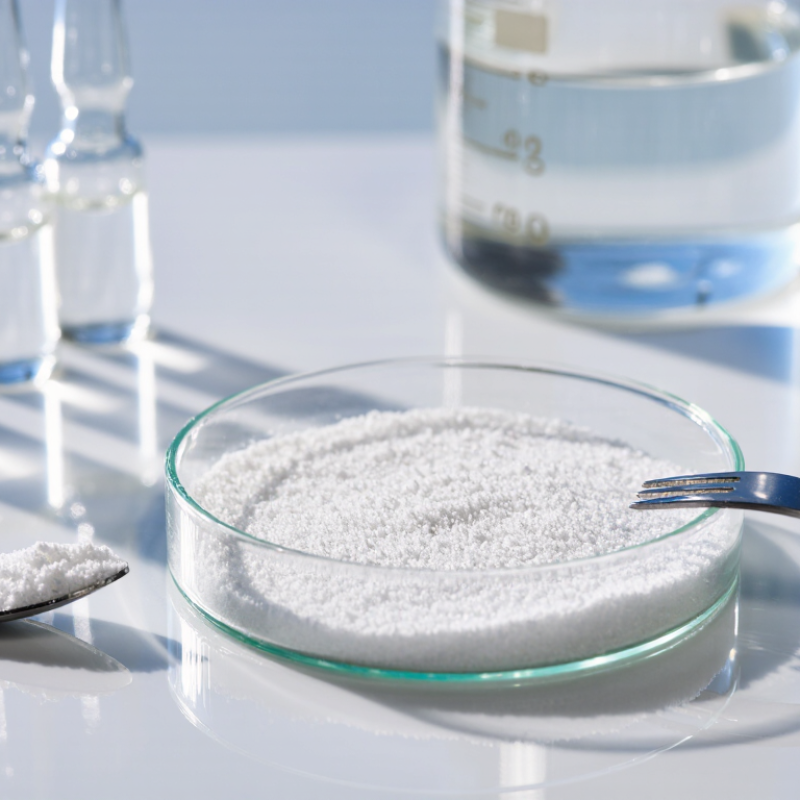
The skin must convert this derivative into active ascorbic acid, so results can depend on skin enzymes and product design. Telang’s 2013 review in the Indian Dermatology Online Journal describes vitamin C derivatives as more stable, while noting that clinical evidence varies by form. That distinction matters. A “99% pure” assay describes raw-material purity; it does not establish how much reaches skin or what a finished product can do. A small amount of powder on a weighing dish may look pristine, but moisture control and accurate handling remain important. I would not treat purity alone as a performance guarantee. That part is easy to overlook.

How Is It Used in Skincare Formulations?

Sodium ascorbyl phosphate is a water-soluble vitamin C derivative, so formulators commonly add it to the water phase of a serum, gel, or lotion. Measure the powder carefully, then mix until the liquid looks clear and uniform. Grit at the bottom means it may not be fully dissolved. Small details matter. Follow the ingredient supplier’s guidance for use level, temperature, and pH; a familiar recipe is not a substitute for checking the powder’s specifications. This ingredient does not necessarily need the very low pH used in some pure ascorbic acid formulas.

During development, check how the formula behaves after mixing and over time. Record pH, look for crystals or color changes, and assess texture after the product rests. Even a tidy formula can surprise you. Heat, other ingredients, and packaging may affect stability, so test the complete product rather than the isolated powder. Use a suitable preservative system in water-based products, and verify its performance through appropriate testing. A small trial batch is useful, though it cannot predict every storage condition. Keep notes on each adjustment; they make an imperfect first attempt easier to improve.

What Factors Matter When Selecting and Storing It?

When selecting 99% pure sodium ascorbyl phosphate powder, treat the assay as one data point, not a complete quality check. Request a batch-specific certificate of analysis and confirm identity, assay method, moisture level, and relevant impurity limits. Check that the material meets the specifications for your intended cosmetic formulation. Looks can mislead. A bright, uniform powder cannot prove its purity. Ask about particle size and packaging, too, since both can affect handling and weighing. A small trial batch may reveal mixing issues before you commit to a larger quantity.

Storage matters. Keep the powder in a tightly sealed, moisture-resistant container, away from heat and direct sunlight. Keep it dry. Use a clean, dry spatula, and close the container promptly after each use. Record the lot number and opening date so you can trace changes over time. Avoid repeated temperature shifts, which can introduce condensation. Clumping or a noticeable color change deserves attention, but appearance alone cannot confirm whether the powder has degraded. Check the supplier’s storage instructions and documentation, and don’t rely on guesswork when a batch seems different.

Why Choose 99% Pure Sodium Ascorbyl Phosphate Powder? — Factors to Consider When Selecting and Storing It
Factor What to Check Practical Guidance
Assay and purity Confirm that the certificate of analysis (COA) reports an assay close to the stated 99% specification and identifies the test method and batch. A 99% assay describes the ingredient powder, not the concentration in a finished product. Review the COA for each lot and account for the assay when weighing a formula.
Identity and documentation Check the ingredient name, chemical identity, lot number, manufacturing date, and applicable specification documents. Request a current COA and safety data sheet. Ensure the documents match the supplied batch and the intended cosmetic or research use.
Impurities and quality controls Review available limits or test results for residual solvents, elemental impurities, and other relevant contaminants. Choose specifications appropriate to the intended application and local requirements. A high assay alone does not describe every aspect of product quality.
Physical condition Inspect the powder for unexpected discoloration, foreign matter, or signs of moisture exposure; compare with the supplier’s specification. Sodium ascorbyl phosphate is generally supplied as a white to off-white powder. Appearance is a screening check, not a substitute for analytical testing.
Water solubility Confirm that the grade is suitable for the formulation’s water phase and review its solubility information. It is a water-soluble vitamin C derivative. Add and mix according to the formulation process, avoiding undissolved material and checking the finished product for uniformity.
Formula pH Check the supplier’s recommended pH range and assess compatibility with the other ingredients in the formula. Sodium ascorbyl phosphate is commonly used in formulations that are not strongly acidic. Measure the final product’s pH and follow grade-specific technical guidance rather than assuming one range suits every formula.
Use level and processing Use the supplier’s recommended concentration and processing instructions for the intended product type. There is no single use level suitable for every product. Validate dispersion, stability, pH, and finished-product safety in the complete formulation; avoid unnecessary prolonged heating.
Packaging Look for a tightly closed, moisture-resistant container that protects the powder from contamination and excessive light. Keep the original packaging where practical. Use clean, dry utensils and reseal promptly after each opening to limit moisture uptake and contamination.
Storage conditions Follow the storage conditions on the product label and COA; keep the powder away from moisture, direct sunlight, and excessive heat. A cool, dry storage area in a well-sealed container is generally appropriate. Do not refrigerate unless the supplier recommends it, since temperature changes can cause condensation.
Shelf life and traceability Check the stated retest or expiry date, batch number, and storage history. Use the supplier’s shelf-life guidance and maintain batch records. Do not rely on appearance alone to establish that material remains within specification.
Finished-product stability Assess the complete formulation under appropriate storage and packaging conditions. The ingredient’s powder stability does not guarantee the stability of a finished product. Conduct formulation-specific stability and compatibility testing before setting a product shelf life.

Find Mitten in Michigan

Request Mitten Near You

Have a favorite dispensary that doesn't carry Mitten Extracts yet? Let us know, and we'll work to make sure our premium products are available where you shop.