What Are the Top Types of Fish Specimens?
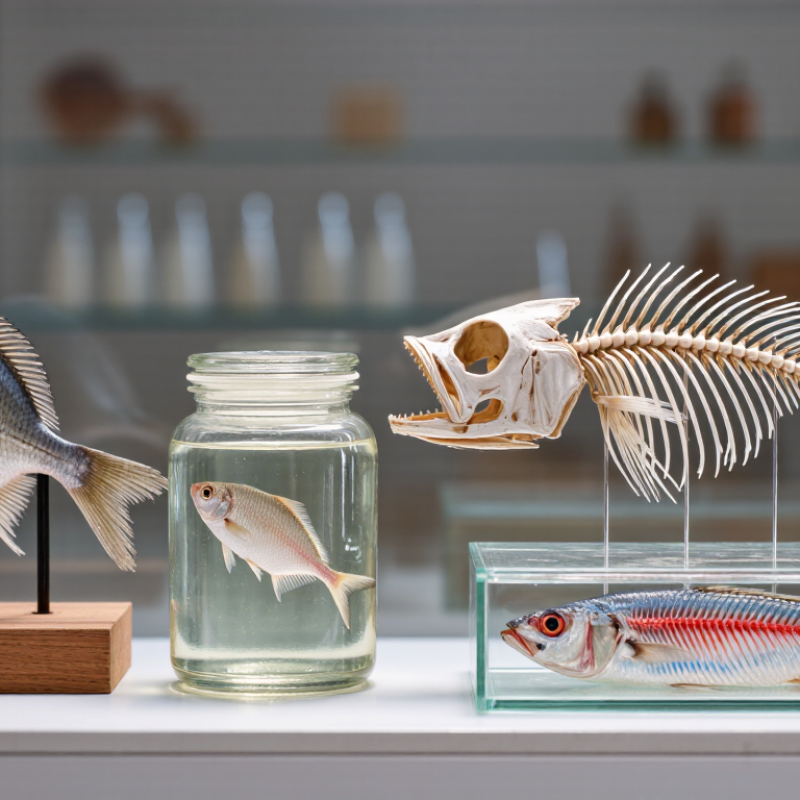
Understanding the top types of fish specimens begins with their purpose, not their appearance. A museum mount may display external form, while a wet specimen preserves delicate tissues in a clear, labeled jar. Skeletal preparations reveal vertebrae, jaws, and fin supports. Cleared-and-stained specimens can show cartilage and bone beneath the skin.
Each Fish Specimen requires different preparation, storage, and documentation. Taxidermists often focus on accurate body shape, scale placement, and natural coloration. Laboratory staff may prioritize tissue preservation, fluid stability, and protection from light. Teaching collections need specimens that remain useful after repeated handling. Research collections demand precise labels, collection dates, locations, and verified species names.
Details matter.
A poorly recorded specimen can lose much of its scientific value. Even experienced professionals may disagree about the best preservation method for unusual species. That uncertainty deserves careful review rather than confident guessing. Ethical sourcing also matters. Reputable collections use legally obtained material, follow animal welfare standards, and maintain transparent records.
This guide will compare common specimen types by appearance, educational value, durability, and practical care. It will also consider their limitations. A polished mount may look impressive but hide internal anatomy. A wet specimen may preserve structure better but require controlled temperature and fluid checks. Seeing these differences helps collectors, educators, and researchers choose responsibly. It also encourages a more honest view of specimen work: preservation is skilled, useful, and sometimes imperfect.
Whole-Fish Vouchers: 10% Formalin Fixation and 70% Ethanol Storage
What Are the Top Types of Fish Specimens?
Whole-fish vouchers are among the most valuable specimens in ichthyology. They preserve body shape, fin placement, scale patterns, and stomach contents. These details support species identification and future taxonomic review.
The FAO reported 185 million tonnes of global aquatic animal production in 2022. Such production increases the need for reliable biodiversity records, especially when field identification is uncertain.
A practical voucher begins with clear photographs and collection data. Record location, date, habitat, collector, and field number before preservation. Small tissue samples should be removed before fixation when genetic testing is planned.
Place the fish in about ten times its volume of buffered 10% formalin. Make sure the solution reaches the body cavity and muscle. Large fish may need a small abdominal incision. Labels must remain readable and chemically stable.
After adequate fixation, rinse the specimen carefully. Transfer it to 70% ethanol for long-term storage. Ethanol reduces continued formalin exposure, but it can still evaporate. Check fluid levels during collection audits.
I have seen labels fade, lids loosen, and specimens lose diagnostic color. These failures are preventable, yet they still occur.
The IUCN Red List has assessed more than 44,000 species as threatened, making accurate vouchers increasingly important. A voucher is not merely a preserved fish. It is a verifiable data point for conservation, fisheries research, and later scientific correction.
Cleared-and-Stained Specimens: Alizarin Red for Bone and Alcian Blue for Cartilage
What Are the Top Types of Fish Specimens?
Cleared-and-stained fish specimens reveal structures hidden by skin and muscle. This method is especially useful for studying developing skeletons. In a teaching laboratory, I find small fish easier to examine than large specimens. Their delicate bones become visible under gentle illumination. The final preparation can look almost transparent, with red bones and blue cartilage suspended inside the body.
Alizarin Red stains mineralized bone by binding to calcium deposits. Its color may range from pale pink to deep red. Alcian Blue targets acidic compounds in cartilage, producing blue or blue-green areas. Together, these stains help distinguish hardening bone from flexible cartilage. Proper fixation matters. Incomplete fixation can cause tissue damage or uneven staining. Clearing must also be controlled, because excessive treatment may weaken fragile fins and joints.
Details can vary with species, age, diet, and developmental stage. Young fish often show broad cartilage regions before bone formation becomes obvious. Older specimens may display stronger red staining and less visible cartilage. I once expected every specimen to produce sharp color boundaries, but biological tissues are rarely so cooperative. Some samples remain cloudy. Others stain unevenly. Careful labeling, consistent timing, and magnified observation make the interpretation more reliable. Photographs should include specimen size and preparation conditions. A bright image alone cannot prove that a structure is bone or cartilage.
Cleared-and-stained fish specimens commonly use Alizarin Red S to highlight mineralized bone and Alcian Blue to highlight cartilage. The chart uses a binary scale: 1 indicates the tissue is a primary target of the stain, while 0 indicates it is not a primary target.
Dry Skeletal Mounts: Osteological References for Morphometrics and Identification
Dry skeletal mounts are among the most useful fish specimens for osteological research. They expose vertebrae, fin supports, jaws, and the delicate architecture around the skull. A well-prepared mount can support meristic counts and repeatable measurements for decades. Curators should record collection location, date, sex, standard length, and preparation method. Small labels matter. Without them, anatomy loses context.
The Food and Agriculture Organization’s State of World Fisheries and Aquaculture 2024 reported 185 million tonnes of aquatic animals produced in 2022. That scale increases the need for reliable identification references across fisheries science, museum work, and biodiversity surveys. Dry mounts help researchers compare body proportions without soft-tissue distortion. They also reveal traits that photographs often hide, including tooth placement and vertebral curvature. The 2024 Living Planet Report found an 85% average decline in monitored freshwater vertebrate populations since 1970. This finding concerns monitored populations, not every fish species. Still, it strengthens the case for careful reference collections.
Preparation requires patience. Degreasing, controlled drying, and stable support prevent warping. Fragile rays may break during handling. That is a practical limitation. I have seen measurements become inconsistent when mounts lack a fixed orientation. Digital calipers, calibrated scales, and repeat photographs improve repeatability. Yet no mount is perfect. Researchers should compare skeletal evidence with genetic, ecological, and field observations before making firm identification claims.
Taxidermy and Freeze-Dried Fish: Display Specimens Compared with Scientific Vouchers
What Are the Top Types of Fish Specimens?
Fish specimens usually serve two different purposes: public display or scientific reference. Taxidermy creates a lifelike presentation with shaped fins, painted details, and carefully positioned eyes. It works well in homes, museums, and educational exhibits. The result can show a fish’s posture and surface patterns clearly. However, the finished mount may contain artificial forms or reconstructed features. It is attractive, but not always a precise record of the original animal.
Freeze-dried fish offer another display option. The process removes moisture while preserving much of the body’s natural shape. Scales, fins, and unusual anatomy may remain visible. These specimens feel more authentic than heavily reconstructed mounts, yet they can become brittle. Strong light, humidity, and careless handling may cause fading or cracking. Scientific vouchers follow a different standard. Researchers preserve them with collection data, locality, date, measurements, and identification records. They may look less appealing, but they support repeatable study and future verification. Some specimens lose color or shape. That limitation deserves honest attention.
Tips: Choose taxidermy for visual storytelling and freeze-dried specimens for natural form. Use scientific vouchers when identification and research value matter most. Keep display specimens away from sunlight and changing humidity. Record the species name, collection details, and preservation method. A beautiful specimen can still leave important questions unanswered.
What Are the Top Types of Fish Specimens? - Taxidermy and Freeze-Dried Fish: Display Specimens Compared with Scientific Vouchers
A practical comparison of display-oriented fish preparations and scientifically documented voucher specimens
| Specimen Type | Primary Purpose | Typical Preparation | Appearance and Display Value | Main Strengths | Scientific Voucher Suitability |
|---|---|---|---|---|---|
| Traditional Fish Taxidermy Mount | Public display, education, interiors, and angling records | The skin is removed, cleaned, treated with preservatives, positioned over a shaped form, dried, painted, and finished with artificial or preserved details. | Highly realistic external form and coloration when expertly prepared; suitable for wall, habitat, or full-body presentation. | Strong visual impact; communicates body shape, scale pattern, fins, and overall appearance without a liquid container. | Usually poor as a primary scientific voucher because processing can remove internal anatomy and alter or contaminate tissue. It may still document external morphology if accompanied by complete collection data. |
| Freeze-Dried Fish | Three-dimensional display, teaching collections, and natural-history exhibits | The specimen is frozen and dried under reduced pressure so ice changes directly from solid to vapor. It is then protected from moisture, light, pests, and physical damage. | Retains a three-dimensional silhouette and can show fins, mouth position, and body proportions; colors may fade without controlled display conditions. | Lightweight, odor-free when properly processed, and convenient for dry display; no permanent liquid container is required. | Limited for most modern research because drying changes tissues and prevents routine examination of fresh internal structures. It can serve as a reference specimen when properly documented. |
| Wet-Preserved Fish | Research collections, comparative anatomy, and long-term biological documentation | Fresh tissue is commonly fixed in formalin and transferred to approximately 70–80% ethanol for long-term storage. The specimen is kept in a sealed, labeled container. | Shows the whole body and some anatomical features, although colors often fade and the specimen may become less lifelike over time. | Preserves internal and external structures better than most dry display preparations; suitable for measurements, dissection, and future study. | Excellent. A properly labeled and cataloged wet specimen is one of the standard forms of a scientific voucher. |
| Skeletal Fish Specimen | Osteology, functional anatomy, taxonomy, and classroom instruction | Soft tissues are removed through maceration or dermestid processing, followed by cleaning, drying, and careful arrangement of the bones. | Provides a clear view of the skull, vertebral column, ribs, and fin-supporting elements; it has a specialized rather than lifelike appearance. | Reveals diagnostic skeletal characters that are hidden in intact specimens; useful for comparative anatomy and identification. | Very good when the skeleton retains key elements and is linked to a cataloged specimen and complete locality data. It does not replace a tissue-preserving voucher for every study. |
| Cleared-and-Stained Fish | Developmental biology, anatomy, and research on bones and cartilage | Enzymatic or chemical treatment makes soft tissues transparent, while stains selectively highlight cartilage and mineralized bone. The specimen is stored in a suitable preserving medium. | Creates a transparent anatomical preparation with colored skeletal structures; generally intended for close examination rather than decorative display. | Shows the relative position of cartilage, bones, and internal structures in a three-dimensional arrangement. | Useful as a specialized research voucher when preparation methods, specimen identity, and collection information are recorded. Chemical treatment limits some later analyses. |
| Dried Whole Fish or Study Skin | Historical collections, morphology references, and compact educational displays | The specimen is air-dried or prepared as a skin, often with supporting material removed or reduced. It is protected from humidity, insects, and excessive handling. | Compact and easy to store, but the body can shrink, flatten, or lose natural coloration and three-dimensional form. | Requires little storage space and can preserve useful external characters for comparison when carefully prepared. | Variable. It can function as a voucher for external morphology if its collection history is secure, but it is less informative than a well-preserved wet specimen for many studies. |
| Tissue or Genetic Voucher | DNA analysis, population studies, genomics, and molecular identification | A small tissue sample is preserved rapidly, commonly in high-concentration ethanol or by freezing, and linked to a separately preserved whole specimen. | Not normally a display specimen; the value lies in the preserved biological material and its connection to a documented individual. | Supports molecular research and can provide genetic evidence that complements morphological examination. | Excellent when paired with a physical voucher. A tissue sample alone is not always sufficient for confirming identity, morphology, or collection context. |
Key distinction: Display specimens prioritize visual appearance and presentation, while scientific vouchers prioritize traceability, preservation of diagnostic characters, and complete collection records such as species identification, locality, date, collector, and catalog number.
Tissue and DNA Vouchers: 95–100% Ethanol Samples Linked to Whole Fish Collections
Tissue and DNA vouchers are among the most valuable fish specimen types in modern collections. A small fin clip, muscle piece, or liver sample can preserve genetic evidence for decades. Researchers usually place these tissues in 95–100% ethanol, then link them to a complete voucher fish. The physical specimen supports identification. The tissue supports future DNA testing.
That connection must be precise. Each sample needs a unique catalog number, collection location, date, collector, and preservation method. A waterproof label inside the vial is useful. So is a second label outside. Ethanol can evaporate, especially from loose caps, reducing preservation quality. I have seen excellent samples weakened by poor sealing. That detail deserves more attention.
The Global Biodiversity Information Facility’s 2024 reporting described more than three billion biodiversity occurrence records worldwide. Yet many records lack genetic material or dependable specimen links. The gap matters as fish populations face increasing pressure. The Food and Agriculture Organization’s State of World Fisheries and Aquaculture 2024 reported 185 million tonnes of aquatic animal production in 2022. Monitoring that scale requires verifiable reference material.
A whole fish collection with linked ethanol tissues creates stronger evidence than either sample alone. Morphology can reveal traits that DNA misses. DNA can clarify species boundaries that photographs cannot. Still, ethanol is not magic. Concentration, temperature, tissue size, and handling time all influence DNA quality. Small mistakes remain possible. Better documentation often matters as much as better equipment.