Top 10 Packaging Companies in China for Global Buyers

Choosing a China Packaging Company is not just a matter of comparing prices. Global buyers need packaging that protects products through production, storage, and long-distance shipping. A carton may look sturdy on a sample table, yet soften after hours in a humid warehouse. Small details matter: board grade, sealing consistency, print accuracy, and how quickly a supplier flags a production issue.

Packaging educator Walter Soroka’s work offers a useful principle, paraphrased here: packaging should protect the product and serve the distribution process. That sounds simple. It isn’t. Buyers also need to assess a supplier’s experience with their packaging format, quality-control routines, communication, customization options, and ability to provide clear documentation. Ask for specifications and production samples, not just polished catalog photos. A factory visit or video walkthrough can reveal practical details, such as how materials are stored and how finished cartons are checked.

This Top 10 guide is designed to help global buyers compare Chinese suppliers against those real-world needs. It considers product range, manufacturing capability, export support, and the clarity of each company’s information. The right partner depends on the product, order volume, and target market; one supplier will not suit every brief. Rankings also have limits. Company capabilities can change, and a strong website does not prove consistent performance. Treat this list as a starting point, then verify claims directly and request a quote against your actual specifications. That extra check may feel slow. It can prevent a costly mismatch.
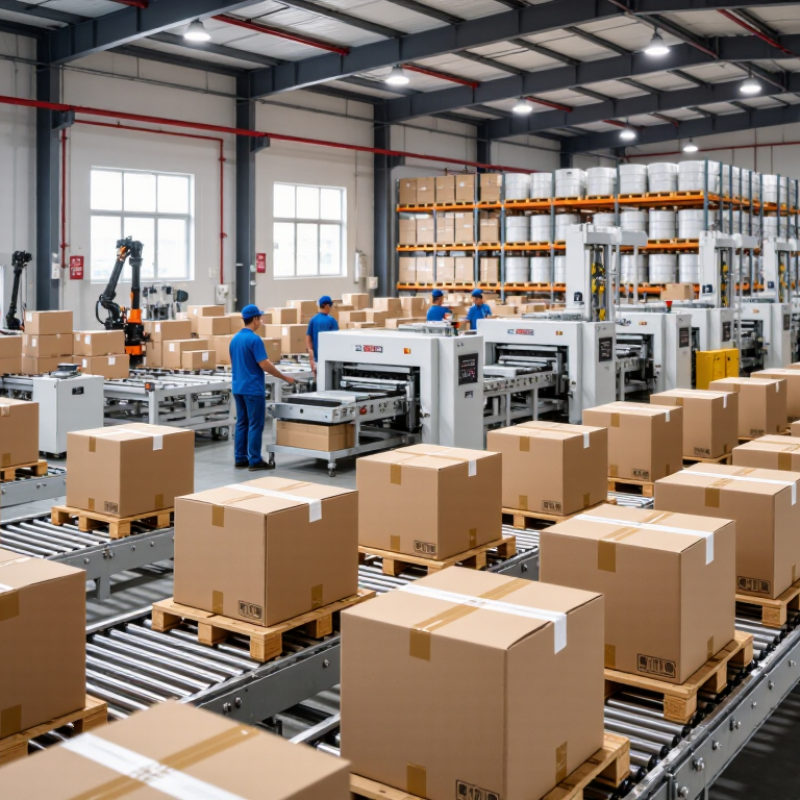
Top 10 Packaging Companies in China for Global Buyers

China’s Packaging Industry and Its Role in Global Trade

China’s packaging industry supports global trade by turning product requirements into export-ready cartons, films, molded pulp, and protective inserts. Dense manufacturing networks can coordinate printing, converting, and assembly near major logistics hubs. That proximity may reduce handoffs, though it does not guarantee faster delivery. Schedules still depend on material availability, tooling, inspection, and port congestion.

For overseas buyers, packaging is part of product protection, not just presentation. A corrugated box must withstand stacking in a container; a moisture-sensitive label may need testing after a humid transit simulation. Buyers should define dimensions, compression needs, barrier performance, print tolerances, and destination handling before approving a sample. Small details matter. A few millimeters can affect pallet stability or freight use. Check specifications through real packing trials, not only a polished sample.

China’s scale offers choices across cost, materials, and production volume, but supplier capabilities vary. Request documented quality checks, material declarations, and repeatability data, then compare samples under the same conditions. Environmental claims need careful review: recyclable in one market may not be recyclable in another. This is easy to overlook. Packaging decisions work best when procurement, logistics, and compliance teams review them together. Even then, forecasts can be wrong, and a trial shipment may reveal issues that a spreadsheet missed.

Criteria for Selecting the Top 10 Packaging Companies

For global buyers, a useful shortlist starts with evidence, not factory photos. The China Packaging Federation reported roughly RMB 1.15 trillion in operating revenue among above-designated-size packaging firms in 2023. That scale suggests broad manufacturing capacity, but it does not guarantee consistent delivery. Compare each supplier’s production lines, minimum order quantities, lead times, and backup capacity. Ask to inspect recent quality records and samples from actual production runs. Look closely at print alignment, seal strength, and dimensional tolerances. Small defects matter.

Quality and export readiness deserve measurable checks. Request material specifications, batch traceability, test results, and clear procedures for handling defects. Confirm that samples match the proposed production materials. OECD’s Global Plastics Outlook identifies packaging as the source of about 40% of global plastic waste in 2019, making material use a practical selection criterion. Compare verified recycled content, package weight, and recyclability claims rather than relying on broad sustainability language. A spreadsheet cannot reveal everything. Communication matters, too: test response speed and how clearly a supplier explains production risks. No scoring system is perfect; buyers should record uncertainties, not hide them.

Profiles of 10 Leading Packaging Companies in China

China’s packaging sector includes specialists in paper, plastics, metal, glass, and protective materials. These ten anonymized profiles highlight capabilities global buyers can compare; company names are omitted. A paper-packaging producer may offer folding cartons, corrugated boxes, and printed sleeves. Another focuses on flexible pouches, where barrier layers and seal strength affect product protection. A third makes rigid plastic containers in varied shapes and sizes.

A metal-packaging supplier may serve food and household goods with cans, lids, or tins. A glass specialist offers bottles and jars, with weight and breakage risks worth checking. One molded-pulp producer turns recycled fibers into inserts for fragile items. Another makes protective foam and cushioning, tailoring fit to a product’s dimensions. Details matter. A label converter handles adhesive stocks, finishes, and variable print runs. A paper-bag maker may support retail formats, though handle strength needs practical testing.

The tenth profile is a contract packaging provider, combining materials, printing, and packing services. These descriptions are starting points, not verified rankings. Buyers should request current certifications, material specifications, samples, and production timelines. Samples can disappoint. Confirm quality controls with recent records, and test packaging under realistic shipping conditions. A supplier’s stated capacity may not match a buyer’s peak-season needs. Compare total landed cost, communication, and change-management processes, not just the quoted unit price.

Top 10 Packaging Companies in China for Global Buyers

China’s Express Parcel Volume, 2019–2023

Express parcel volume is a useful indicator of demand for shipping packaging, though it is not a direct measure of packaging production or company sales.

Source: State Post Bureau of China; annual express delivery volume, rounded to one decimal place.

Products, Materials, and Manufacturing Capabilities

For global buyers comparing China’s packaging manufacturers, product range matters less than proven process control. Common offerings include corrugated shipping cartons, folding cartons, flexible pouches, molded-pulp inserts, and protective foam. Materials vary by use: kraft paper for strength, coated board for print quality, and multilayer films for moisture barriers.

Smithers estimated the global packaging market at about US$1.05 trillion in 2023, with growth projected through 2028. That scale creates choice, but it does not guarantee consistent quality.

Ask suppliers for material specifications, production tolerances, and test records. Request a production sample, not just a polished mock-up. Check print registration, seal strength, carton compression, and whether recycled content affects performance.

The OECD reported that packaging represented 40% of global plastic waste in 2019, making material efficiency and recyclability practical sourcing questions. Still, a recyclable design can be difficult to process where collection systems are limited. That detail is easy to miss.

Factory audits can reveal whether a supplier runs in-house printing, lamination, die-cutting, and quality checks, or relies on subcontractors. Capacity figures also need context: peak output may not reflect routine lead times or defect rates. A little skepticism helps.

Key Considerations for Global Buyers Evaluating Suppliers

When evaluating packaging suppliers in China, test whether they can repeat the same result across production runs. Send a clear specification covering material, dimensions, tolerances, print colors, and intended use. Ask how each detail is checked on the production line. A sample may look excellent, yet a larger batch can vary. Small details matter. Inspect folds, seals, edges, and color consistency under ordinary lighting.

Request quality records and confirm that any certifications apply to the actual product and facility. Ask for inspection stages, defect handling, and documented corrective actions. Ask for evidence. Compare samples against written specifications, not memory or a polished presentation. If testing is important, agree on the method and acceptance criteria before production begins. This takes time, and it can feel excessive; skipping it may cost more later.

Check lead times against production capacity, seasonal demand, and shipping plans. Ask what happens if materials arrive late or a specification changes. Compare quotes line by line, including tooling, packing, and delivery terms, rather than choosing the lowest figure. Communication is another practical test: send a technical question and see whether the reply is specific. Even a careful review has blind spots, so keep decisions and approvals in writing.

Top 10 Packaging Companies in China for Global Buyers - Key Considerations for Global Buyers Evaluating Suppliers

Supplier-evaluation checklist. The rows below cover ten due-diligence areas; they are not a verified company ranking or supplier-specific claims. Confirm requirements against the product, destination market, and current regulations.

No. Evaluation area What to evaluate Evidence or applicable benchmark Buyer verification
1 Product and process fit Whether the supplier makes the required format and material, such as folding cartons, corrugated cases, flexible packaging, labels, or rigid containers. Written product specifications, material structure, drawings, and samples approved for the intended use. Match samples and documented specifications to the actual product, filling line, and packing conditions.
2 Quality management Documented controls for incoming materials, production, inspection, nonconformities, and corrective actions. A valid ISO 9001 certificate may support a quality-management review; certification alone does not guarantee product quality. Check certificate scope, issuing certification body, validity, and audit records; request recent inspection and corrective-action examples.
3 Food-contact compliance Suitability of the specific packaging material, inks, coatings, and intended conditions of use when packaging food or beverages. For applicable EU uses, review Regulation (EC) No 1935/2004 and GMP Regulation (EC) No 2023/2006; for applicable US uses, review relevant FDA food-contact requirements, including applicable provisions of 21 CFR. Request declarations and test reports for the exact material and use conditions; confirm requirements with the importer or regulatory adviser.
4 Packaging-specific certification Whether the supplier’s site and processes meet any sector-specific audit or certification requirements set by the buyer or end market. BRCGS Packaging Materials is one recognized packaging-materials standard; applicability depends on the buyer’s supply-chain requirements. Verify the certificate, site address, scope, audit status, and current recognition directly with the issuing organization or certification body.
5 Specifications and testing Control of agreed dimensions, material properties, print quality, sealing performance, and other product-specific acceptance criteria. A signed specification and approved sample define the agreed requirements; test methods should be stated where relevant. Agree tolerances, sampling, inspection frequency, test methods, defect classification, and acceptance or rejection procedures before ordering.
6 Traceability and change control Ability to identify production lots and manage changes to materials, production sites, tooling, or approved specifications. Lot records, material records, retention samples where applicable, and a documented customer-notification process. Ask the supplier to demonstrate a mock lot-trace exercise and define which changes require prior written approval.
7 Sustainability claims Substantiation of claims about recycled content, recyclability, or responsibly sourced fibre, with attention to local collection and recycling systems. For certified forest-based sourcing claims, check the relevant FSC Chain of Custody certificate and product claim where applicable. Request claim-specific documentation and confirm that the certificate covers the relevant site, product, and transaction.
8 Capacity and lead time Available production capacity, tooling needs, order-size constraints, seasonal availability, and the time required for sampling and production. A production plan should distinguish sampling, material procurement, manufacturing, inspection, and dispatch milestones. Validate stated capacity against the proposed order schedule and agree how delays, shortages, and expedited orders will be handled.
9 Export documentation and logistics Readiness to provide accurate shipping documents and coordinate packaging, loading, and delivery responsibilities. Incoterms® 2020 rules allocate specified delivery obligations, costs, and risks between seller and buyer; they do not replace the sales contract. Name the agreed Incoterms rule and place precisely in the contract; separately confirm required customs and product documents.
10 Transport protection and total cost Protection against moisture, crushing, abrasion, and handling damage, plus a cost comparison that includes tooling, freight, duties, and inspection. ISPM 15 applies to regulated wood packaging material used in international trade; it does not apply to every packaging material or shipment component. Confirm packaging and load plans, test requirements, and any destination-country rules; compare landed cost using the same specification and delivery basis.

Find Mitten in Michigan

Request Mitten Near You

Have a favorite dispensary that doesn't carry Mitten Extracts yet? Let us know, and we'll work to make sure our premium products are available where you shop.