Top 10 Types of Organic Socks for Global Buyers
Global buyers are paying closer attention to what touches the skin. Organic Socks now sit within a wider movement toward traceable, lower-impact textiles. Textile Exchange reported that certified organic cotton production reached approximately 342,265 metric tonnes in 2021, while representing only a small share of global cotton output. The figure shows both progress and a limitation. Supply remains narrower than demand.
“Organic cotton is more than a fiber; it is a system,” says La Rhea Pepper, co-founder of Textile Exchange. Her observation matters for sock sourcing. A genuinely responsible pair involves more than organic yarn. Buyers should examine farm certification, spinning records, dyeing processes, elastic content, packaging, and factory conditions. GOTS and OCS certifications can support verification, but they do not mean exactly the same thing. Certification scope must be checked.
Details reveal quality.
This guide explores ten Organic Socks types for international purchasing teams, including organic cotton crew socks, bamboo-blend styles, athletic socks, baby socks, and recycled-fiber constructions. Each category has different expectations for softness, moisture management, durability, and price. A 2023 Textile Exchange materials report also emphasized the importance of preferred fibers, traceability, and credible claims across textile supply chains. However, reports do not solve every sourcing problem. Some data are incomplete, and “eco-friendly” labels can still confuse buyers.
That is why practical inspection matters. Feel the cuff recovery. Check toe-seam finishing. Request current certificates and transaction records. Compare shrinkage after washing. Organic Socks can be a strong procurement choice, but only when environmental claims match the physical product and documented supply chain.
Organic Socks: Definition, Standards, and Key Natural Materials
Top 10 Types of Organic Socks for Global Buyers
Organic socks use fibers grown under recognized organic farming systems. They are not automatically fully organic products. A sock may contain organic cotton, synthetic elastane, dyes, and elastic cuffs. The fiber percentage matters.
The Textile Exchange Organic Cotton Market Report records organic cotton at about 1.4% of global cotton production in 2021/22. This small share makes certification and traceability especially important.
The Global Organic Textile Standard (GOTS) generally requires at least 70% certified organic fibers for “made with organic” claims.
Its “organic” grade usually requires 95% or more.
GOTS also evaluates processing, wastewater, chemical use, and social criteria. The Organic Content Standard mainly verifies organic material and supply-chain custody. It does not cover every processing impact.
Organic cotton remains the most practical choice for soft, breathable socks. Organic hemp adds strength and moisture management. Organic linen can feel cool, but it may need blending for comfort.
Bamboo-derived viscose is plant-based, yet it is not automatically organic. Buyers should request valid scope certificates and transaction records. OEKO-TEX testing can support chemical safety, but it does not prove organic farming.
Check the toe seam, cuff recovery, and shrinkage after washing. These details affect real performance. Certification logos alone are insufficient. Supplier documents can still contain gaps. That deserves honest review.
The 10 Main Types of Organic Socks for Different Uses
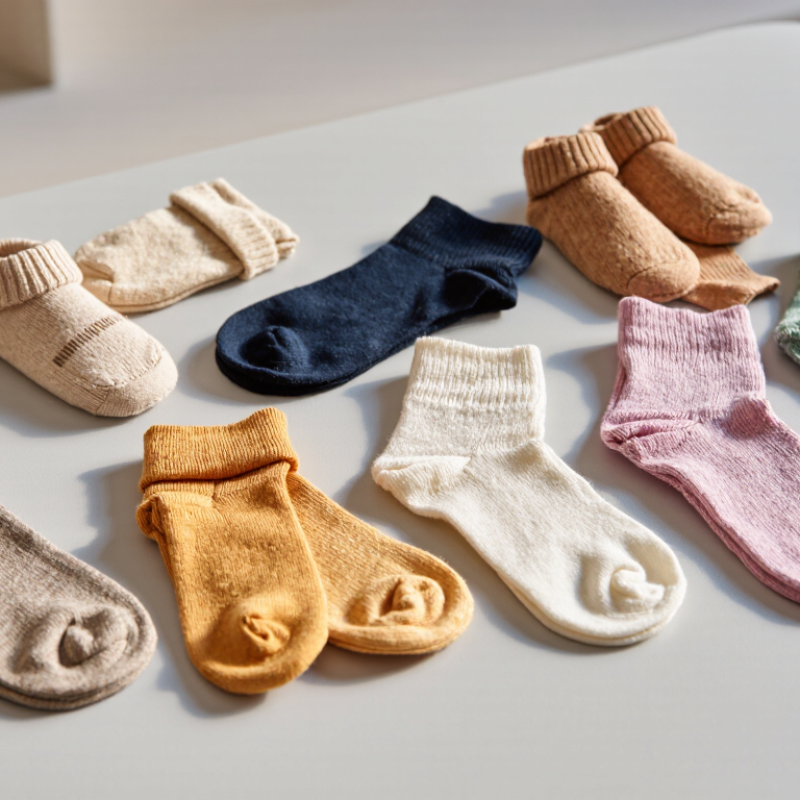
Organic socks serve different feet, climates, and buying requirements. Material origin matters, but fit and construction matter just as much. In my sourcing experience, the ten practical types are everyday crew, ankle, no-show, knee-high, hiking, running, work, thermal, baby, and dress socks.
Everyday crew socks suit commuting and casual wear. Ankle socks feel lighter with trainers and cropped trousers. No-show socks stay hidden, although poor silicone grips may slip. Knee-high socks provide extra coverage under boots or uniforms. Hiking socks need reinforced heels, cushioned soles, and moisture control. Organic wool can add warmth, but some users may find it itchy.
Running socks should manage sweat and reduce friction around the toes. Work socks need durable knitting for repeated washing and long shifts. Thermal socks use thicker organic wool or cotton blends for cold conditions. Baby and children’s socks should have soft seams, gentle cuffs, and secure sizing. Dress socks require a finer texture and a smoother appearance.
Small details matter.
For global buyers, check fiber certificates, dye safety records, shrinkage results, and colorfastness reports. Organic content alone does not prove comfort or durability. A sock may claim sustainability yet wear thin after several washes. I have seen this gap during product sampling. It deserves honest review. Buyers should also compare size charts, climate needs, packaging limits, and care instructions before approving bulk orders.
How Organic Sock Fibers Affect Comfort, Durability, and Performance
For global buyers, organic sock fibers shape comfort, durability, and daily performance. Organic cotton feels soft against the skin and absorbs sweat well. However, it can stay damp during long walks. Textile Exchange’s 2024 Materials Market Report reports that cotton represented about 20% of global fiber production in 2023, while polyester exceeded half. This comparison explains why cotton socks often feel more breathable, but dry more slowly.
Organic wool offers natural warmth, odor resistance, and better moisture regulation. Fine wool can remain comfortable inside hiking shoes, although some users still notice light irritation. The International Wool Textile Organisation reports that wool represents less than 1.5% of global fiber supply. Organic hemp adds strength and airflow, but its texture may feel rough without careful blending. Organic linen is cool and quick-drying, yet it creases and may wear faster around the heel.
Fiber blends change the result. Organic cotton with a small amount of recycled or conventional stretch fiber can improve fit and recovery. Buyers should check the percentage, yarn structure, and reinforcement zones, not only the word organic. The Global Organic Textile Standard requires at least 70% certified organic fibers for products labeled “made with organic” fibers. That distinction matters. Certification is useful, but it does not guarantee perfect durability. I have found that dense knitting often outlasts softer, looser socks, even when both use certified fibers. Performance depends on construction, washing, and the wearer’s routine.
Top 10 Types of Organic Socks for Global Buyers - How Organic Sock Fibers Affect Comfort, Durability, and Performance
| No. | Organic Fiber Type | Typical Comfort Profile | Moisture and Temperature Performance | Relative Durability | Best Product Applications | Common Construction Considerations | Organic Verification Notes |
|---|---|---|---|---|---|---|---|
| 1 | Organic Cotton | Soft, familiar hand feel with low natural elasticity. Comfortable for everyday wear and sensitive skin. | Absorbs moisture well but dries more slowly than wool or synthetic fibers. Comfortable in mild to warm conditions. | Medium | Daily socks, casual socks, dress socks, baby socks, and lightweight summer styles. | Often combined with elastane and a stronger reinforcement yarn at the heel and toe to improve fit and wear life. | Organic cultivation should be supported by recognized textile or agricultural certification. “Cotton” alone does not indicate organic origin. |
| 2 | Organic Merino Wool | Fine, soft wool with low itch potential compared with many coarser wool types. Naturally comfortable across changing temperatures. | Absorbs and releases moisture vapor while helping regulate temperature. Maintains warmth when damp and resists odor better than many cellulosic fibers. | Medium to High | Hiking socks, outdoor socks, travel socks, winter socks, and performance lifestyle products. | Fiber fineness, knitting density, and nylon or other reinforcement strongly influence abrasion resistance and pilling. | Organic wool claims should identify the relevant farm, animal-welfare, and processing certification where applicable. |
| 3 | Organic Alpaca | Lightweight, warm, and smooth with a soft feel. Usually less elastic than merino wool and may require blend support. | Provides good insulation and moderate moisture management. Well suited to cool and dry climates. | Medium | Premium winter socks, thermal socks, lounge socks, and cold-weather accessories. | Blending with wool, polyamide, or elastane can improve stretch recovery, shape retention, and resistance to heel and toe abrasion. | Organic certification availability can vary by region and supply chain. Buyers should verify the actual fiber source and chain of custody. |
| 4 | Organic Hemp | Cool, dry, and slightly textured hand feel that becomes softer with use and washing. Less naturally elastic than wool. | Good moisture absorption and breathability. Performs well in warm conditions but can feel less insulating in cold weather. | High | Casual socks, work socks, summer socks, and products designed for a durable natural-fiber story. | Usually blended with organic cotton or elastane to improve softness, stretch, and knitting performance. | Organic status should cover the cultivated hemp and, where claimed, the complete textile processing pathway. |
| 5 | Organic Linen or Flax | Crisp, lightweight, and breathable. It offers a natural texture rather than a plush or highly elastic feel. | Excellent moisture absorption and heat release, making it suitable for warm climates. It dries more slowly than many technical fibers. | High | Summer socks, breathable dress socks, resort wear, and lightweight lifestyle collections. | Blending with cotton, wool, or elastane can reduce stiffness and improve comfort, recovery, and dimensional stability. | “Organic linen” should be supported by documentation for the flax cultivation and the relevant processing stages. |
| 6 | Organic Bamboo-Derived Cellulosic Fiber | Usually smooth and soft, with a fluid drape and low friction against the skin. | Generally breathable and moisture-absorbent. Performance depends heavily on the manufacturing process and the final blend. | Medium | Everyday socks, lightweight comfort socks, and products emphasizing a smooth hand feel. | Most bamboo socks use regenerated cellulose rather than raw bamboo fiber. Elastane and reinforcement yarns help improve fit and durability. | Bamboo cultivation and the conversion process are separate issues. Buyers should verify both the fiber claim and the applicable environmental certification. |
| 7 | Organic Wool | Warm, resilient, and naturally springy. Comfort varies significantly with fiber fineness and yarn construction. | Good insulation, moisture buffering, and odor resistance. Suitable for cool and variable weather. | Medium to High | Thermal socks, work socks, outdoor socks, winter uniforms, and hiking products. | Coarser fibers may feel itchy. Reinforced heel and toe zones and controlled washing help reduce felting and premature wear. | Organic wool claims should be supported by verifiable certification for livestock management and processing where required. |
| 8 | Organic Silk | Very smooth, lightweight, and naturally comfortable against the skin. Offers limited bulk and a premium hand feel. | Breathable and capable of absorbing some moisture, but it provides less insulation and cushioning than wool. | Low to Medium | Luxury dress socks, liner socks, travel socks, and lightweight layering products. | Best used in blends or low-abrasion applications because repeated rubbing and harsh washing can shorten service life. | Organic silk is a specialized claim. Verify the source, processing method, animal-welfare requirements, and certification scope. |
| 9 | Organic Cashmere | Exceptionally soft, lightweight, and warm with a luxurious hand feel. | Provides strong warmth-to-weight performance and moderate moisture buffering, but it is not intended for high-abrasion use. | Low to Medium | Premium winter socks, luxury gift collections, and low-impact indoor or lifestyle wear. | Often blended with wool or polyamide to improve durability, shape retention, and resistance to pilling. | Organic certification may be less standardized across supply chains. Buyers should request traceability and independent documentation. |
| 10 | Organic Jute | Firm, natural, and textured rather than soft. It is generally unsuitable as the main skin-contact fiber for premium comfort socks. | Breathable and absorbent, but it offers limited elasticity and a comparatively rough hand feel. | High | Specialty casual socks, rustic textile concepts, and blended products where texture and natural-fiber content are priorities. | Usually requires substantial blending with softer fibers and elastane to improve wearability, stretch, and fit. | Organic jute availability and certification vary by origin. Documentation should cover cultivation and processing claims. |
Buyer note: Fiber performance is influenced by fineness, yarn twist, blend ratio, knitting structure, sock thickness, elastane content, washing conditions, and heel-and-toe reinforcement. The term “organic” should be verified through the relevant certification and supply-chain documentation rather than inferred from the fiber name alone.
Choosing Organic Socks by Market, Climate, Size, and Buyer Needs
Organic socks should be selected by market, climate, size, and use—not by fiber labels alone. Textile Exchange’s 2024 Materials Market Report estimates that organic cotton represents about 1.4% of global cotton production. Supply is still limited. Buyers should therefore verify fiber content, certification scope, and factory traceability before making sustainability claims. A certified organic cotton crew sock suits warm, dry markets, while a thinner organic cotton blend can improve comfort in humid cities. For colder regions, organic wool socks provide better insulation and moisture management. Climate changes everything.
Size needs equal attention. Research from the International Journal of Fashion Design, Technology and Education reports significant variation in clothing sizes across populations, so one global sock chart is unreliable. Measure foot length, calf width, and expected shrinkage. Reinforced toes and heels matter for workers, travelers, and children. Retail buyers may prefer broad size ranges, while uniform programs often need consistent grading and repeat availability. Fit still fails.
For sensitive-skin markets, buyers should examine dyes, finishing agents, elastic composition, and wash instructions. The Global Organic Textile Standard requires certified products to meet defined environmental and social criteria throughout processing. However, certification does not guarantee perfect comfort or durability. In practical testing, I would compare washed samples, seam pressure, drying time, and color retention. My own caution is simple: a “natural” sock can still feel hot, stretch poorly, or wear quickly. Market feedback should revise the specification, not merely confirm it.
Global Purchasing Factors: Certifications, Suppliers, Pricing, and Compliance
Top 10 Types of Organic Socks for Global Buyers
Organic socks can serve different markets: crew, ankle, no-show, athletic, dress, thermal, baby, liner, work, and lounge styles. The fiber claim needs careful verification. Textile Exchange’s 2023 Organic Cotton Market Report recorded 342,265 metric tonnes of organic cotton fiber production, only about 1.4% of global cotton output. Supply is meaningful, but not unlimited.
For purchasing, request a valid scope certificate and transaction certificate for every organic cotton order. GOTS generally requires at least 70% certified organic fibers for “made with organic” claims and 95% for “organic” labeling. OCS certification can verify organic fiber content, but it does not cover the full processing system. Check dye safety, wastewater controls, worker audits, and traceability to the spinning mill. A certificate is not proof of every marketing statement.
Pricing should separate yarn, knitting, dyeing, finishing, testing, packaging, freight, and minimum order quantities. Recycled elastane, reinforced heels, and low-volume colors can change costs quickly. Ask suppliers to quote the same specification under identical Incoterms. For Europe, screen materials against REACH requirements; for the United States, review fiber labels and applicable consumer-product safety rules. Laboratory reports should identify the tested style and production batch. A recurring sourcing mistake is accepting a factory audit as product compliance. They are different documents, and confusing them can delay customs clearance.
Top 10 Types of Organic Socks for Global Buyers
Indicative FOB price benchmarks by sock type, with key purchasing factors including certification, supplier capability, pricing, and compliance.
For GOTS products, at least 70% certified organic fibers are required for “made with organic” labeling, while the “organic” label generally requires at least 95% certified organic fibers.
Verify factory audits, knitting capacity, dye-house controls, traceability, sample approval procedures, and minimum order quantities before contracting.
The benchmarks are indicative FOB ranges expressed as estimated midpoint prices in USD per dozen. Final prices vary with yarn count, construction, packaging, order volume, and destination.
Buyers should confirm fiber-content labeling, restricted-substance requirements, product safety rules, packaging regulations, and import documentation for the destination market.
Indicative global sourcing benchmarks for planning purposes; no company or brand data is represented.