China Top 10 Battery Powered Tools Manufacturers
China’s battery-powered tool industry is shaped by expanding battery supply chains, demanding jobsite conditions, and fast product cycles. The International Energy Agency’s Global EV Outlook 2024 reports that battery demand for energy applications rose about 40% in 2023. That figure reflects electric vehicles and energy storage, not power tools alone. Still, it signals the scale of investment behind cells, materials, and manufacturing.
This guide to China’s top 10 Battery Powered tools manufacturers looks beyond catalog claims. It considers product range, battery-platform compatibility, manufacturing capability, quality systems, export experience, and after-sales support. For buyers, practical details matter: how a drill handles under load, whether a charger fits the local workflow, and how easily replacement packs can be sourced. Small differences show up quickly on a busy workbench.
The list is intended as a starting point, not a universal verdict. Company rankings can shift with product category, sales channel, and evidence available to verify claims. A large factory does not automatically mean consistent performance. Nor does a polished specification sheet. Some comparisons remain imperfect, especially when manufacturers disclose different levels of test data. Readers should confirm current certifications, warranty terms, and model availability directly with each supplier before making a purchasing decision. The right choice depends on the work, not just the name.
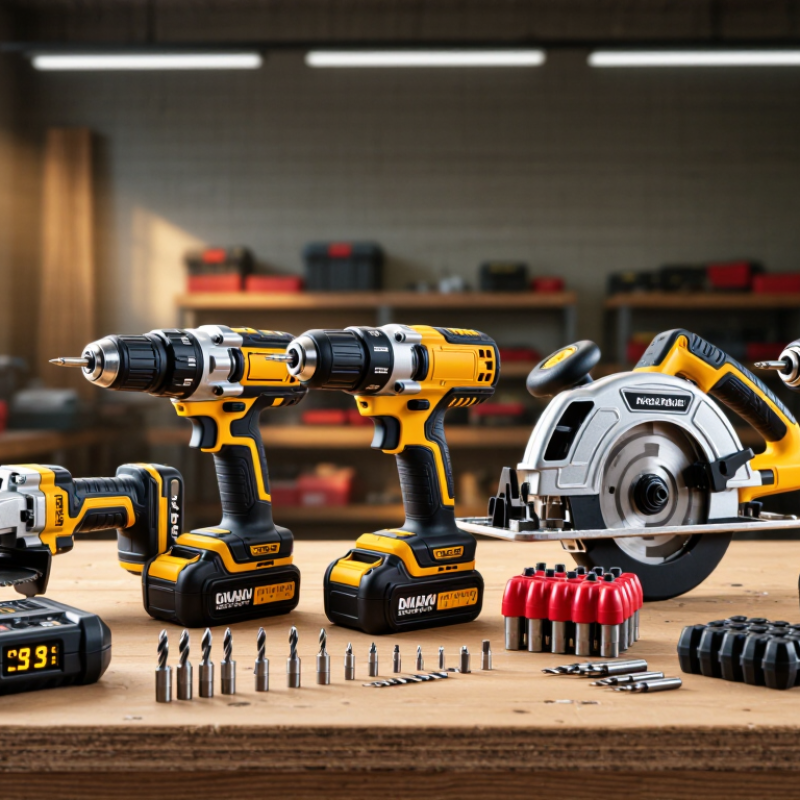
China’s Battery-Powered Tool Manufacturing Industry
China’s battery-powered tool manufacturing industry has grown around dense supply networks, skilled production teams, and fast product development. Factories often coordinate motor design, battery-pack assembly, housing moulding, and final testing within a compact supplier ecosystem. This proximity can shorten development cycles, but it also makes component consistency especially important.
A cordless drill may look simple from the outside. Inside, performance depends on motor efficiency, cell quality, electronic protection, heat control, and a well-fitted gearbox. Manufacturers can test tools under load, monitor temperature, and inspect battery connections. Buyers should compare runtime, charging time, torque consistency, warranty terms, and spare-part access—not just the voltage on a label. Small details matter.
The industry serves domestic users and export markets, so production lines must adapt to different working conditions and product specifications. Automation supports repeatable assembly, while human inspection can catch scratches, loose fasteners, and unusual vibration. Progress is real, but quality may vary between models and suppliers. That deserves attention. A polished catalogue cannot replace sample testing, clear technical documents, and direct questions about quality control. Better sourcing starts with evidence, not assumptions.
Criteria for Identifying Leading Chinese Manufacturers
A credible assessment of Chinese battery-powered tool manufacturers should begin with factory capability, not catalog size. Ask how battery packs, motors, and control boards are tested, and request recent test records. Useful details include load duration, temperature rise, drop resistance, and performance after repeated charging cycles. Numbers matter.
Product quality also depends on how well the tool and battery work together. Check whether the manufacturer tests compatibility across its stated voltage range and documents safeguards against overheating, overcurrent, and deep discharge. Review samples under realistic conditions: drill into hardwood, drive fasteners repeatedly, and note vibration, chuck movement, and battery temperature. One polished sample proves little.
Look for traceable quality procedures, clear component specifications, and consistent results across production batches. Independent audit documents and verifiable customer references can add confidence, though neither replaces hands-on testing. Ask about spare parts, warranty handling, and response times for technical questions. That takes time. A supplier may score highly on price and still fall short on service or repeatability; even a careful checklist cannot reveal every production issue. Test more than one unit before making a sourcing decision.
Profiles of Ten Battery-Powered Tool Manufacturers
China’s ten battery-powered tool manufacturer profiles are best compared by capability, not catalog size. These profiles describe distinct production strengths rather than a verified ranking. One maker specializes in compact drills for cabinetry and repair work. Another builds impact drivers for repetitive fastening. A third focuses on saws, with attention to blade alignment and grip comfort. A fourth produces grinders suited to controlled finishing. A fifth emphasizes garden tools with replaceable batteries. A sixth serves assembly lines with consistent torque settings. A seventh develops lightweight tools for overhead tasks. An eighth offers broad accessory compatibility. A ninth concentrates on battery pack testing and thermal management. A tenth balances custom production with export support.
Fit matters most. A polished brochure cannot confirm durability, service response, or parts availability. Ask for test records, warranty terms, and sample units. Check whether stated runtime reflects real workloads; speed and material can change results. Small differences matter. A supplier may excel at one tool family yet struggle with another, so avoid assuming every product meets the same standard.
Tips: Compare noise, vibration, charging time, and tool weight using the same task. Request clear information on battery life and replacement parts. Test before scaling. A sample trial may reveal details that a specification sheet misses.
Key Products, Technologies, and Manufacturing Capabilities
China’s battery-powered tool manufacturers compete through cell integration, motor design, and production consistency—not battery capacity alone. Grand View Research valued the global power tools market at US$36.8 billion in 2023 and forecast 4.3% annual growth through 2030 (Power Tools Market Size, Share & Trends Analysis Report, 2024). That demand favors compact platforms sharing batteries across drills, impact drivers, saws, and garden equipment. Small details matter. A balanced tool feels stable overhead, while its battery pack locks firmly without excessive play.
Leading factories often combine brushless motor assembly, battery-management electronics, injection molding, and automated end-of-line testing. Checks may track torque, temperature rise, vibration, runtime, and drop resistance. The International Energy Agency reported that China held about 75% of global lithium-ion cell manufacturing capacity in 2021 (Global Supply Chains of EV Batteries, 2022). Scale can support component access, but it does not guarantee durable tools. Cell matching, thermal design, and charger control still matter. Not every line excels. Buyers should request repeatable load-test results, battery-cycle data, and service-life records; suppliers do not always publish them. That gap deserves scrutiny. A small housing change can also disrupt fit, sealing, and assembly yield.
China Top 10 Battery Powered Tools Manufacturers - Key Products, Technologies, and Manufacturing Capabilities
Editorial note: The profiles below summarize common capability areas in China’s battery-powered tool industry. They are anonymized, illustrative profiles rather than a verified ranking or company-specific disclosures. Product ranges and factory capabilities vary by manufacturer.
| Profile | Key Product Categories | Battery and Power Systems | Common Technologies | Typical Manufacturing Capabilities | Relevant Quality and Validation Tests |
|---|---|---|---|---|---|
| 01 — Cordless drilling and fastening | Drills, impact drivers, hammer drills, screwdrivers, and compact wrench tools. | Rechargeable lithium-ion packs; commonly designed around 12 V or 18 V tool classes. | Brushless or brushed motors, electronic speed control, torque settings, and battery protection circuits. | Motor and gearbox assembly, plastic housing molding, electronic control-board integration, and final tool assembly. | Torque and speed checks, switch-cycle testing, drop testing, temperature-rise testing, and battery protection checks. |
| 02 — Cordless cutting and sawing | Circular saws, reciprocating saws, jigsaws, and compact cut-off tools. | Rechargeable lithium-ion systems, with pack capacity selected for tool size and intended runtime. | Brushless drive options, electronic braking, guarded blade systems, and vibration-reduction designs. | Gear and spindle machining, blade-guard fabrication, molded structural housings, and integrated electrical assembly. | Blade alignment, no-load speed, brake response, vibration, insulation, and guarded-operation checks. |
| 03 — Cordless grinding and polishing | Angle grinders, polishers, sanders, and related surface-preparation tools. | Battery packs matched to motor load; higher-demand models may use higher-voltage tool platforms. | Motor-current control, soft start, overload protection, and electronic speed adjustment on selected models. | Motor, spindle, and gearbox assembly; die-cast or machined metal components; housing and guard production. | Spindle runout, overspeed, vibration, thermal performance, guard fit, and electrical safety tests. |
| 04 — Cordless outdoor power equipment | String trimmers, hedge trimmers, leaf blowers, and selected lawn-care equipment. | Lithium-ion battery systems; higher-power equipment may use higher-voltage packs or compatible multi-tool platforms. | Brushless motors, electronic speed modes, battery management, and motor-overload protection. | Long-housing molding, motor and fan assembly, cutting-head production, and sealing or weather-resistance design integration. | Airflow or cutting performance, runtime, vibration, ingress-resistance checks where specified, and thermal testing. |
| 05 — Cordless impact and heavy-duty fastening | Impact wrenches, high-torque drivers, and fastening tools for construction or maintenance work. | Rechargeable lithium-ion packs, often paired with higher-current cells and reinforced electrical connections. | Impact mechanisms, brushless motors, selectable operating modes, and electronic overload control. | Precision impact-mechanism machining, heat-treated metal-part production, motor assembly, and high-current pack integration. | Fastening torque, impact rate, endurance, temperature rise, battery current handling, and drop testing. |
| 06 — Cordless pneumatic-replacement tools | Battery-powered nailers, staplers, and other fastening equipment designed for portable use. | Lithium-ion batteries with power delivery matched to the tool’s drive mechanism and firing cycle. | Electronic firing control, motor-driven or gas-spring drive designs, and trigger-safety interlocks. | Drive-mechanism assembly, magazine production, molded housing manufacture, and safety-system integration. | Fastener depth consistency, firing-cycle endurance, trigger interlock function, jam handling, and drop resistance. |
| 07 — Cordless concrete and masonry tools | Rotary hammers, demolition hammers, and drilling tools for masonry applications. | Rechargeable lithium-ion systems designed for intermittent high-load operation. | Electromechanical impact mechanisms, vibration-control features, electronic speed control, and overload protection. | Impact assembly and machining, reinforced housings, motor and gearbox integration, and accessory-interface production. | Impact energy consistency, drilling performance, vibration, thermal endurance, insulation, and accessory retention. |
| 08 — Cordless multi-tools and compact specialty tools | Oscillating multi-tools, detail sanders, compact inflators, and other portable specialty equipment. | Compact lithium-ion packs, commonly selected to balance tool size, runtime, and output. | Electronic speed adjustment, interchangeable accessories, compact motor control, and battery-status indication. | Small-format motor assembly, precision molded components, electronic-board assembly, and accessory-interface production. | Speed stability, accessory retention, switch durability, noise and vibration, and battery protection checks. |
| 09 — Battery packs and chargers for tool platforms | Rechargeable tool batteries, single- and multi-bay chargers, and platform-compatible power accessories. | Lithium-ion cell packs with protection and monitoring circuitry; charger designs depend on the supported pack system. | Battery management, overcurrent and overtemperature protection, cell monitoring, and controlled charging. | Cell sorting and pack assembly, spot welding, battery-management-board integration, charger-board assembly, and enclosure molding. | Charge and discharge performance, protection-circuit operation, temperature checks, electrical insulation, and pack-level endurance. |
| 10 — Integrated cordless tool platforms | Multi-category ranges combining drills, saws, grinders, outdoor tools, batteries, and chargers. | Shared lithium-ion battery platforms designed to support several compatible tool categories. | Common battery interfaces, brushless motor options, electronic controls, and platform-level battery protection. | Product engineering, tooling and molding, metal-part production, motor and electronics assembly, pack production, and final inspection. | Cross-product battery compatibility, electrical safety, performance checks, reliability testing, and production-line inspection. |
Domestic and International Markets for Chinese Tool Brands
China’s battery-powered tool makers face two different tests: fast-moving domestic demand and demanding export markets. Grand View Research valued the global power tools market at about US$36.1 billion in 2023 and forecast 6.7% annual growth from 2024 to 2030. Its Power Tools Market report also identifies cordless tools as the largest product segment. The figures point to opportunity, not guaranteed sales. In China, buyers often compare price, battery life, and service access closely. A drill that performs well on a factory bench may still disappoint on a dusty renovation site.
International buyers bring different expectations. Contractors may prioritize runtime and repairable parts, while home users often want lighter tools and simpler charging. Exporters therefore need clear specifications, dependable quality checks, and accessible replacement batteries. That is not automatic. Grand View Research’s forecast covers the global market, so it cannot show how much growth Chinese manufacturers will capture. Exchange rates, shipping costs, and local service networks can also erode a low factory price. Chinese suppliers can build trust by testing tools under repeated load, publishing realistic runtime figures, and keeping spare parts available after purchase. A polished catalogue helps. Reliable follow-up matters more.
China Top 10 Battery Powered Tools Manufacturers – Domestic and International Markets
Battery platform voltage comparison (not a manufacturer ranking)
Cordless-tool platforms commonly marketed as 12V, 20V, 40V, and 60V Max typically use 3, 5, 10, and 15 lithium-ion cells in series. The chart shows the corresponding nominal and fully charged pack voltages, using 3.6V nominal and 4.2V maximum per cell. Actual specifications and labeling can vary by platform.