How to Source Walnut Food Products in 2026?

Sourcing Walnut Food products in 2026 means looking beyond price. Buyers need to understand where walnuts were grown, how they were processed, and how quality is protected during storage and shipping. A warm warehouse, a weak inner liner, or a delayed shipment can affect flavor before a product reaches the production line. Small details matter.

Nutrition researcher Dr. Penny Kris-Etherton has discussed walnuts’ distinctive plant-based omega-3 content. Put as a sourcing principle—not a verbatim quotation—her research reminds buyers to consider nutritional value alongside product quality. That distinction matters. A strong specification should describe variety, grade, size, moisture, packaging, and acceptable defect levels. Ask suppliers for current product data, traceability records, and relevant quality test results. Then compare samples under the conditions your team will actually use them.

There is no perfect supplier. Not yet. A polished sample can still hide inconsistent harvests or unclear documentation. In 2026, dependable Walnut Food sourcing will come from careful questions, documented checks, and communication that continues after the purchase order. This guide outlines how to assess suppliers, verify product claims, manage quality risks, and build a supply plan that can withstand change. It also leaves room for a useful reflection: buyers can improve their process, but they cannot remove every uncertainty from an agricultural supply chain.
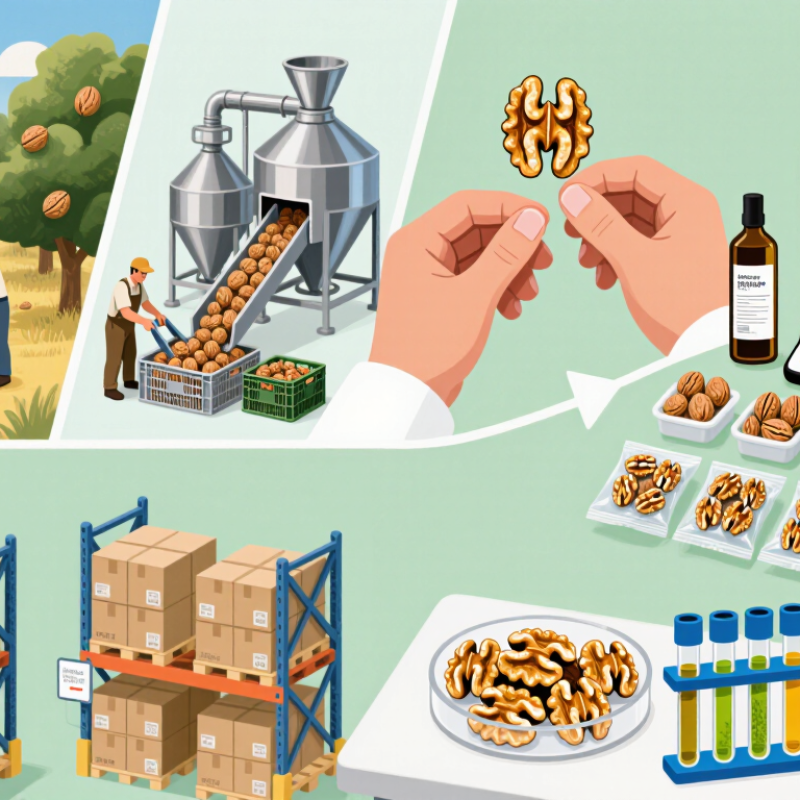
How to Source Walnut Food Products in 2026?

Define Product Specifications and Sourcing Requirements

For 2026, define the walnut product before comparing supplier prices. Specify English or black walnuts, in-shell or shelled, halves or pieces, raw or roasted, and the intended use. A bakery needs consistent particle size; snack packs need attractive halves and reliable crunch. Set measurable limits for moisture, color, broken-piece percentage, foreign matter, and sensory defects. Agree on sampling and rejection rules in writing, not just “premium quality.”

USDA FoodData Central reports about 185 calories, 4.3 grams of protein, and 18.5 grams of fat in a 28-gram serving of English walnuts. That rich oil content makes freshness and storage important purchasing criteria. Request harvest-year details, lot-level traceability, packaging specifications, and recent test results for relevant microbiological and quality indicators. For roasted products, also define roast level and seasoning limits. Specifications should reflect your process, not a generic checklist.

Tips: Ask for a sample from the actual production lot, then test it in your recipe or pack format. Check aroma after opening; stale, paint-like notes are a warning. I would leave one detail flexible: exact piece size may vary by crop, so agree on a usable range and verify it with a sieve test.

Identify and Compare Walnut Product Suppliers

When sourcing walnut food products in 2026, compare suppliers against the same product specification. Define the form you need, such as raw halves, chopped kernels, flour, or walnut oil. Note the required grade, size, packaging, and delivery schedule. Ask each supplier for recent product specifications, traceability records, and relevant food-safety documentation. Request a sample from the lot you may purchase, not just a polished display sample. Check color, aroma, texture, and package condition. Small details matter.

Compare more than the quoted price. Review minimum order quantities, lead times, payment terms, and how suppliers handle damaged or inconsistent shipments. Ask about harvest timing and storage conditions; walnuts can lose quality when exposed to heat, air, or light. For processed products, confirm ingredients and processing details. Where suitable, request test results for quality and food-safety indicators, and verify that documents match the product and lot. A low quote may look attractive, but it can hide extra freight or uneven specifications.

Tips: Use one comparison sheet for every candidate. Record sample notes beside the supplier’s claims. Check whether a test report is recent and lot-specific. If two samples differ, ask why before ordering. Supplier responses can be useful evidence, though a confident answer alone is not proof. I’d allow time for a second sample; it can feel slow, but skipping that check may cost more later.

Verify Food Safety, Traceability, and Regulatory Compliance

When sourcing walnut food products in 2026, ask suppliers for lot-level traceability, not just a general origin statement. Records should connect the harvest, processing site, shipment, and finished product. Check that lot codes on cartons match invoices and certificates. Details matter.

Request recent test results for relevant hazards, including aflatoxins, and confirm the sampling method and laboratory are suitable. A certificate alone may not tell the whole story. Ask how the supplier controls moisture, pests, and cross-contact with other allergens. Keep samples sealed. Inspect packaging for damage, clear lot identification, and storage instructions that protect quality during transit.

Verify that food safety plans, audit records, and sanitation procedures cover the actual facility handling the walnuts. For products sold across borders, review ingredient declarations, allergen statements, and contaminant limits against the destination market’s current requirements. Rules differ by market. Do not assume one certificate satisfies every buyer or regulator. A small gap in a translated label can matter. It is also worth checking how quickly the supplier can trace a lot and provide supporting documents during a mock recall; paperwork can look tidy until someone needs a specific shipment traced.

How to Source Walnut Food Products in 2026

EU maximum levels for aflatoxins in walnuts, by intended use

For walnuts marketed for direct human consumption, the EU maximum is 2 μg/kg for aflatoxin B1 and 4 μg/kg for total aflatoxins. For lots intended for sorting or other physical treatment before consumption, the respective limits are 5 and 10 μg/kg. Confirm the rules for the destination market and intended use; request lot-specific test results and retain supplier, origin, and lot-traceability records.

Source: Commission Regulation (EU) 2023/915, Annex I, Section 1.1.4. Total aflatoxins means B1 + B2 + G1 + G2.

Assess Samples, Pricing, and Supplier Reliability

A walnut sample should be judged as a food ingredient, not just by appearance. Check kernel color, size, breakage, moisture, and flavor; then test it in the product you plan to make. A handful may taste fresh, while a baked batch reveals bitterness or uneven texture. USDA NASS’s 2024 California Walnut Objective Measurement Report forecast a 670,000-ton crop, a reminder that seasonal supply can shift. Ask suppliers to identify harvest and processing lots, and confirm that production samples match the approved sample.

Compare landed cost per usable kilogram, not simply the quoted price. Include freight, packaging, expected sorting loss, and storage needs. Request written specifications and recent certificates of analysis, then verify key values against your own checks when practical. Supplier reliability also shows in response times, delivery records, traceability, and how clearly problems are handled. A polished sample is not proof of consistency; that distinction is easy to overlook.

Tips: Request samples from more than one lot. Store them in sealed bags, label each lot, and compare aroma after opening. Ask for a small production trial before committing to a large order. Record defects and delivery changes, even when the difference seems minor. A missed detail can become costly.

Finalize Contracts, Logistics, and Ongoing Quality Checks

A signed contract should define more than price and grade. Specify variety, origin, crop year, kernel color, moisture limits, defect tolerances, packaging, and inspection method. INC’s 2024 Statistical Yearbook puts global in-shell walnut production near 2.7 million metric tonnes, making lot traceability essential when supplies come from multiple origins. Require each lot’s certificate of analysis, harvest identification, and retain-sample procedure. Small details matter.

For logistics, agree on shipment windows, temperature and humidity controls, container ventilation, insurance, and responsibility for delays. Walnuts absorb odors and lose quality when exposed to heat, oxygen, or moisture. Use sealed, food-grade liners and check container cleanliness before loading. UNCTAD’s Review of Maritime Transport 2024 reported maritime trade growth of 2.4% in 2023, underscoring why buyers should plan buffer time rather than rely on perfect schedules. A port delay can undo careful sourcing.

Quality checks should continue after arrival. Sample cartons across the shipment, compare results with the agreed specification, and document rancidity, broken kernels, and foreign material. Set a clear claim deadline and escalation path before problems arise. Recheck retained samples during storage, especially after warm or humid periods. Contracts cannot prevent every dispute. I have seen paperwork look complete while sampling plans stayed vague; that gap deserves a second look.

Find Mitten in Michigan

Request Mitten Near You

Have a favorite dispensary that doesn't carry Mitten Extracts yet? Let us know, and we'll work to make sure our premium products are available where you shop.