What Is Private Label Skincare and How Does It Work?

Private Label Skincare lets a business sell skincare products under its own brand without building a manufacturing facility. A specialist manufacturer typically develops or supplies the formula, fills the containers, and helps prepare packaging. The brand chooses details such as texture, fragrance, bottle size, and label design. The arrangement sounds simple. The decisions are not.

The opportunity sits within a growing market. Grand View Research estimated the global skincare market at $115.65 billion in 2024 and projected a 7.3% compound annual growth rate through 2030. That figure covers skincare broadly, not private-label products alone. Still, it signals why retailers, salons, and emerging brands are exploring customized product lines. A market estimate is not a sales guarantee.

The process usually starts with a customer and product brief, then moves through formula selection, samples, packaging, production, and quality checks. Cosmetic chemist and science communicator Dr. Michelle Wong offers a useful caution: “Natural does not automatically mean safe, and synthetic does not automatically mean unsafe.” For a private-label brand, that means asking for clear ingredient information and evidence behind product claims—not relying on trend words or attractive labels. It also means checking minimum order quantities, sample costs, lead times, and who handles testing before committing. Small details matter. A formula that feels silky in a sample may behave differently in a pump bottle or after weeks in transit. Private Label Skincare can lower the barrier to launching a brand, but it does not remove the need for careful product decisions. The first batch may teach you more than the pitch deck did.
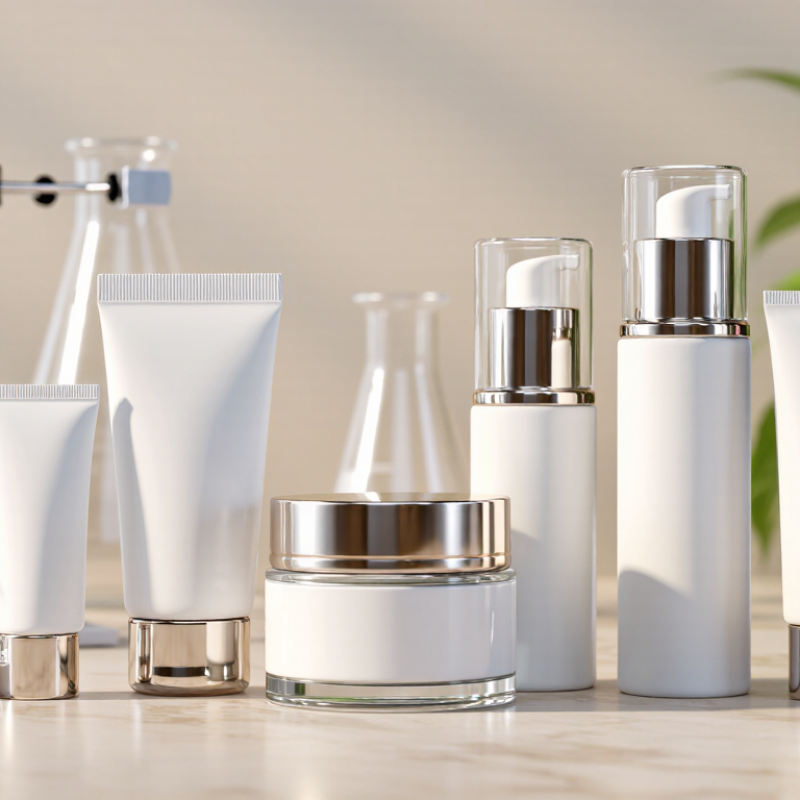
What Is Private Label Skincare and How Does It Work?

What Private Label Skincare Means

Private label skincare refers to products made by a manufacturer and sold under another company’s own label. The seller usually chooses an existing formula or works with a laboratory to adjust ingredients, texture, scent, and packaging. A lightweight lotion in a pump bottle may suit one audience; a richer cream in a jar may suit another. The formula may not be exclusive. That detail matters.

It is not simply a logo placed on a bottle. The seller needs to review samples, check how packaging interacts with the product, and assess quality documentation before placing an order.

Grand View Research estimated the global private-label cosmetics market at US$9.4 billion in 2022 and projected 6.3% annual growth from 2023 to 2030. Its figure covers cosmetics broadly, not skincare alone. McKinsey’s 2023 beauty report projected the wider beauty market could reach US$580 billion by 2027.

These figures show market context, not guaranteed demand for any individual product. I would still question whether a popular formula is distinctive enough. A supplier can make production easier, but it cannot decide what customers will trust.

How Private Label Skincare Products Are Made

Private label skincare production starts with a product brief. It defines the intended user, texture, ingredients, package, and price range. A manufacturer may offer an existing formula, such as a lightweight lotion, or develop one to meet specific needs. Existing formulas can shorten development, but they still need review. “Ready-made” does not mean right for every package or customer.

Samples are assessed for feel, scent, spread, and absorption. The formula is then checked for stability under changing temperatures and for compatibility with its container. A cream can separate, or a pump can clog. These problems are easier to catch before production. Testing requirements vary by product and market, so the manufacturer should explain its methods and provide relevant records. Small samples help, but they cannot predict every real-world condition.

Once approved, ingredients are weighed and blended in controlled batches. Equipment is cleaned, and production records track quantities, times, and batch numbers. Finished products are checked for appearance, fill level, and packaging faults. Not every formula will feel perfect on the first try; that is worth admitting. Adjustments may affect cost, texture, or stability. Labels and product claims also need careful review, with claims supported by suitable evidence and aligned with applicable requirements. A clear review process reduces avoidable surprises.

How Brands Choose Formulas and Product Types

Private label skincare lets a business sell products made from a supplier’s existing formulas or adapted to its specifications. Formula choice starts with the intended customer, not a trend. A lightweight gel may suit someone who dislikes a heavy finish, while a richer cream may work better for dry-feeling skin. Small details matter. Ask for samples and test them on different days, not just once.

Suppliers may offer cleansers, toners, serums, moisturizers, masks, and body products. Choose a focused range that has a clear purpose. For example, a cleanser and moisturizer can form a simple daily routine, while a serum adds a more targeted texture or ingredient profile. Check the ingredient list, available product sizes, packaging options, and minimum order quantities. Also request stability and safety documentation relevant to the finished product. Packaging can affect how a formula dispenses or feels in use.

A stock formula is usually quicker to launch, but offers less control over texture and ingredients. Customization can improve fit, though it may require more sampling, time, and cost. I would compare the final sample with the written specification; memory is a poor measuring tool. Notice scent, spread, absorption, and residue on the skin. A formula that looks elegant in a jar may feel sticky after a few minutes. Some choices are less obvious than they seem.

What Is Private Label Skincare and How Does It Work? — How Brands Choose Formulas and Product Types

Decision or Stage What It Means Typical Options or Examples What to Check
Private-label model A manufacturer supplies an existing or semi-custom product that a business sells under its own branding and packaging. Existing base formula with selected options such as fragrance, packaging, or label design. Clarify which formula and packaging elements can be changed, and who owns any custom developments.
Target customer and use Defines the intended audience, routine, price point, and product experience before selecting a formula. Daily cleansing, lightweight hydration, richer moisturization, or a simple travel routine. Keep product descriptions and claims appropriate for the product’s intended use and applicable regulations.
Formula selection The business reviews available formulas and selects one that fits its desired texture, use, and positioning. Gel or cream cleanser; lotion or cream moisturizer; serum with a water-based or oil-based feel. Review the ingredient list, sample feel, scent, appearance, stability information, and compatibility with the chosen package.
Product type The format determines how the product is applied and where it fits in a routine. Cleanser, toner, serum, moisturizer, balm, mask, or body lotion. Choose formats that make sense together; a focused initial range can be easier to explain and manage.
Customization level Customization may range from branding an existing formula to developing a formula to a more specific brief. Label and packaging changes; selected formula adjustments; or a new development project. More customization can involve additional sampling, development time, testing, and cost; details vary by manufacturer.
Packaging and size Packaging affects dispensing, product protection, shelf presentation, and shipping. Bottle, tube, jar, pump, or dropper; sizes selected for the intended use and sales channel. Confirm material compatibility, closure performance, labeling space, and whether the package suits the formula.
Sampling and approval Samples let the business assess the product before approving production. Review texture, spread, absorption, scent, appearance, and dispensing with the intended package. Record the approved sample and specifications; confirm how later changes are handled.
Testing and documentation Testing and records help assess product quality, safety, stability, and compliance responsibilities. Depending on the product and market, relevant work may include stability, microbiological, or package-compatibility assessments. Ask what evidence and records are available, who is responsible for each task, and which local rules apply.
Label and claims The label identifies the product and provides information required in the market where it is sold. Product name, net contents, ingredient declaration, directions, warnings, and responsible-party details where required. Label rules vary by jurisdiction. Avoid unsubstantiated claims or language that could change a product’s regulatory classification.
Order and production planning The business confirms quantities, costs, lead times, and production details before placing an order. Order minimums, production schedules, and available stock depend on the product, packaging, and manufacturer. Get current terms in writing, including minimum quantities, payment milestones, lead times, and arrangements for defects.

Note: Options, testing requirements, production terms, and labeling obligations vary by manufacturer, product, and sales market.

How Packaging and Branding Are Added

In private label skincare, the formula may come from a manufacturer, while the buyer shapes how it looks and feels on the shelf. Packaging choices can include a jar, pump, tube, cap, label material, and finish. A sample helps check practical details: Does the pump dispense a measured amount? Can the label be read on a small bottle? These checks matter more than a polished mock-up.

The scale of private label makes presentation worth careful thought. PLMA, using Circana data, reported U.S. store-brand sales of $236.3 billion in 2023, up 4.7% from the previous year. That figure covers many product categories, not skincare alone. It does show how familiar private label has become. Branding then gives a skincare line its own visual language through color, typography, product names, and clear descriptions. Keep claims and ingredient details accurate, and confirm that the final packaging matches the product inside.

Material choices also shape customer expectations. Trivium Packaging’s 2023 Global Buying Green Report found that 82% of surveyed consumers said they would pay more for sustainable packaging. The finding spans consumer goods, so it should not be treated as a skincare-specific forecast. Still, it is a useful prompt to compare recyclable materials, refill formats, and shipping protection. Sustainability needs evidence, not just a leaf illustration. And an elegant glass bottle may feel premium, but it can add weight and breakage risk. Test the real package in transit before committing to a large production run.

How Products Reach Customers and Meet Regulations

A private label skincare product usually begins with a formula selected or developed with a manufacturer. Before it reaches customers, the business must understand what is in the product and how it is made. Ask for ingredient documentation, batch records, and relevant safety information. A sample jar can look polished while still raising practical questions about texture, stability, or packaging. Test it under realistic storage conditions. Details matter.

Regulatory steps depend on where the product will be sold. The responsible business should check local rules for safety, ingredient lists, warnings, and label presentation before printing packaging. Product claims also need care: saying a cream moisturizes skin differs from promising to treat a medical condition. Keep evidence for claims, and review every label rather than relying on a supplier’s template. Requirements can change, and a checklist may miss something. That is worth admitting early.

Once checks are complete, products move from manufacturing and quality review to storage, shipping, and customer service. Clear batch identification helps teams investigate a complaint or recall concern. Online listings should match the physical label, including directions and cautions. After launch, monitor returns, customer feedback, and any reported reactions, then share relevant issues with the manufacturer. Reaching customers is not just delivery; it includes being ready to answer what is inside the package.

What Is Private Label Skincare and How Does It Work?

A typical U.S. product journey, from selecting a formula to selling and monitoring the finished product.

The chart shows stage order only—not time, cost, or market share. Under U.S. law, the responsible person must substantiate cosmetic product safety and meet applicable labeling and post-market requirements. MoCRA also requires facility registration and product listing in applicable cases; exemptions may apply. FDA generally does not approve cosmetics before they go on the market, though color additives are subject to approval requirements.

Find Mitten in Michigan

Request Mitten Near You

Have a favorite dispensary that doesn't carry Mitten Extracts yet? Let us know, and we'll work to make sure our premium products are available where you shop.