How to Source Animal Specimens Ethically in 2026?

Ethical sourcing begins with a basic question: how did this specimen come to be available? An Aniaml Specimen should never be treated as a decorative object without a history. Buyers, educators, and collections managers need clear records of origin, ownership, and handling. Ask suppliers for traceable documentation, including permits or other records where applicable. Requirements vary by location and specimen type, so consult relevant authorities and qualified collection professionals before proceeding.

A responsible choice avoids encouraging harm to living animals or collecting wildlife without authorization. Consider specimens from established educational collections, documented captive-breeding programs, or animals that died through independently verified, lawful channels. These sources still require careful review. A supplier’s reassuring language is not proof. Check dates, source details, transport conditions, and whether the documentation matches the actual item. Small details matter. If records are incomplete, pause and seek advice from a curator, veterinarian, or institutional ethics contact. Replicas, photographs, and digital models may meet the same learning goal with less risk. They may not offer the same tactile experience, and that trade-off deserves honest discussion. There is no shortcut to certainty; even well-intentioned sourcing can leave unanswered questions. This guide offers practical checks for making informed decisions, documenting uncertainty, and declining a specimen when its history cannot be responsibly established.
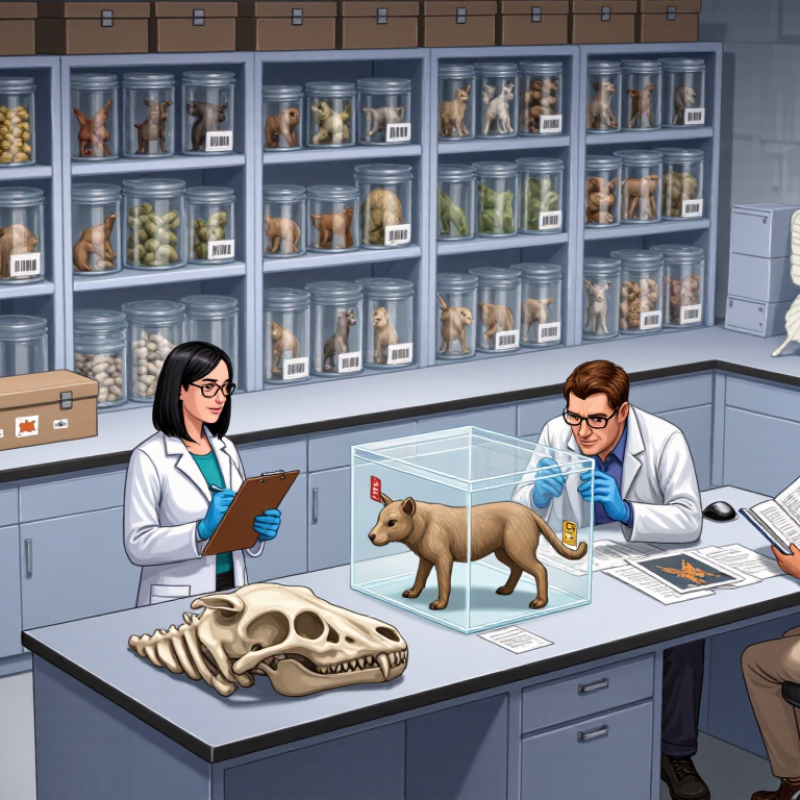
How to Source Animal Specimens Ethically in 2026?

Define the Purpose and Scope of the Specimen Collection

How to Source Animal Specimens Ethically in 2026?

Define the Purpose and Scope of the Specimen Collection

Before collecting anything, write down the question the specimen must answer. A classroom display, a disease study, and a conservation archive need different materials. This distinction prevents “interesting” from becoming the only reason to collect. Set a narrow scope: species or group, number of specimens, material needed, location, and collection period. Use the smallest sample that can meet the stated purpose. Sometimes, none is needed. Photographs, naturally shed material, or existing collections may provide sufficient evidence when their source is clear and their use is authorized.

Before fieldwork, confirm that the source is traceable and that collection is permitted by relevant authorities and land managers. Record who collected the specimen, when and where, how it was obtained, and each transfer between custodians. Keep authorization and consent records with the specimen, not buried in an inbox. Plan labeling, storage, and eventual disposal before collection begins. A plan can still overlook local ecological knowledge or community concerns. Ask knowledgeable local people early, and revise the scope when new information changes the risk. I would not treat an uncertain answer as a minor detail. Pause here. If the purpose cannot be explained in one plain sentence, reconsider whether collection is necessary.

Choose Sources That Avoid Harm to Living Animals

Ethical sourcing starts with one question: did obtaining this specimen harm a living animal? Favor naturally shed materials, such as feathers or antlers, when collection is permitted and the source can be documented. For whole specimens, seek suppliers connected to veterinary, educational, or wildlife-care settings, and ask how the animal died. Clear answers matter. “Found in nature” is not enough.

Request records showing the specimen’s origin, date, and chain of custody. Check whether permits or other documentation apply where you live and where the specimen came from. Rules differ. If a seller cannot explain the source, or pressures you to buy quickly, walk away. A low price is not proof of harm, but missing records deserve attention. Keep invoices and provenance notes with the specimen; they help future curators assess it.

I used to think a convincing story was enough. It isn’t. Even a beautifully prepared bird can carry an uncertain history, and that uncertainty should change the buying decision. Prefer photographs, casts, or ethically made replicas when provenance is weak. Ask a museum curator or wildlife rehabilitator for guidance if details are unclear. Sometimes the responsible choice is no specimen at all.

Verify Provenance, Welfare Standards, and Legal Compliance

How to Source Animal Specimens Ethically in 2026?

Ethical sourcing starts with evidence, not assurances. Request records identifying the species, origin, acquisition date, and collection method. Check that the documentation matches the specimen and is consistent across invoices, labels, and transport records. A supplier’s statement alone is not enough. When details conflict, pause and ask for clarification.

Welfare standards matter throughout acquisition and handling. Choose sources with clear protocols that minimize stress, prevent avoidable harm, and support humane care where live animals are involved. Confirm that qualified staff oversee handling and that storage conditions protect specimen integrity. Also verify applicable permits, transfer requirements, and institutional rules with relevant authorities. Requirements differ by location and species, so avoid assuming one checklist fits every case. Records can still have gaps. Noticing one is uncomfortable, but guessing is worse.

Tips: Keep copies of provenance and compliance documents. Record who reviewed them and when. Ask specific questions about unclear details, and do not proceed until the answers are documented. A careful pause is part of responsible sourcing.

Obtain Permits and Document Transport and Chain of Custody

Before acquiring an animal specimen, verify its origin and confirm that collection, possession, and export or import are permitted. Rules can differ by species, location, and intended use. Ask the relevant wildlife, customs, or research authority which permits apply. Do not assume one document covers every stage. Paperwork matters. Prefer specimens with clear, lawful provenance, and decline material when its source cannot be verified.

Keep permit copies with the specimen’s records. Before transport, check the carrier’s requirements and applicable packaging, labeling, and temperature rules. Use secure, clearly marked containers suited to the material, without hiding or misrepresenting what they contain. Record the specimen’s identifier, description, permit references, origin, destination, and each transfer’s date and time. Keep it simple, but exact.

At every handoff, note the sender and receiver, container condition, and any seal or label changes. Both parties should review and sign the record; retain receipts and transport documents together. A missing signature can leave a real gap. On arrival, compare the specimen with its paperwork and document discrepancies before storage or use. Even a neat file may not prove a complete history, so pause the transfer and seek guidance when details conflict.

Plan Responsible Use, Storage, and End-of-Life Handling

How to Source Animal Specimens Ethically in 2026?
Plan Responsible Use, Storage, and End-of-Life Handling

A responsible specimen plan starts before acquisition. Record its source, collection date, consent or transfer documentation, intended use, and any restrictions. The IUCN’s 2024 Red List update reported more than 46,300 threatened species among over 163,000 assessed. That scale of risk makes careful provenance checks essential, even when a specimen appears ordinary. Set a clear purpose and limit handling to what the work requires.

Storage is part of ethical care. Match conditions to the material, label containers clearly, and keep access and handling records. Review the storage plan when staff, facilities, or research needs change. GBIF’s 2024 reporting noted more than three billion biodiversity occurrence records worldwide; useful records depend on accurate, shareable documentation. No inventory is perfect. Missing details should be flagged, not guessed.

Tips: Assign a named custodian and review the inventory at least yearly. Keep a small log beside the storage area for access, condition changes, and incidents. Before work ends, decide whether specimens can be transferred to an appropriate repository, retained for approved future use, or disposed of through institutional procedures. Document the decision and its rationale. Disposal should never be an afterthought.

How to Source Animal Specimens Ethically in 2026? — Plan Responsible Use, Storage, and End-of-Life Handling
Planning Area Responsible Practice Evidence to Record Decision Check Storage and End-of-Life
Necessity and alternatives Define the research or teaching objective and use the least harmful suitable option. Consider existing collections, digital resources, models, or non-animal methods before acquiring new material. Purpose, proposed quantity, alternatives considered, and reason a specimen is needed. Do not acquire specimens when a suitable alternative can meet the stated objective. Estimate storage duration and disposal route before acquisition; avoid collecting material without a defined use or custodian.
Source and provenance Prefer documented, legally obtained material, such as approved research surplus, lawful by-products, or specimens from authorized collections. Do not collect wildlife without the required permissions. Species identification, source, collection or transfer date, location where relevant, and chain-of-custody records. Reject material with unclear origin, suspected unlawful collection, or unverifiable transfer history. Keep provenance records linked to the specimen throughout storage, transfer, and final disposition.
Permits and protected species Check applicable wildlife, animal welfare, import/export, and institutional rules before acquisition. CITES-listed specimens may require appropriate documentation for international trade or movement; requirements depend on the species and transaction. Permit numbers, authorizations, import/export documents, and any applicable exemption records. Pause acquisition or movement until required approvals are confirmed by the relevant authority. Retain permit and movement records with the specimen file; transfer restrictions may continue to apply after acquisition.
Ethical review and animal welfare Obtain institutional animal-care or ethics review when required. If live animals are involved, follow approved protocols and applicable welfare standards; specimen sourcing must not cause unauthorized harm. Review outcome, protocol reference, responsible personnel, and any conditions on use. Do not begin regulated collection or use before required approval is in place. Document any conditions governing use, transfer, retention, or destruction of the material.
Biosecurity and human safety Assess biological, chemical, and physical hazards. Use suitable containment, personal protective equipment, training, and transport packaging based on the material and risk assessment. Risk assessment, hazard classification where applicable, handling instructions, and incident records. Do not accept or handle material if hazards cannot be controlled with available procedures and facilities. Segregate incompatible materials and follow local requirements for hazardous, infectious, or chemical waste.
Identification and labeling Assign a unique identifier and label containers clearly. Include only information supported by reliable records; distinguish confirmed identification from provisional identification. Unique ID, taxonomic name where known, source, date received, preservation method, and custodian. Quarantine or clarify specimens with missing, conflicting, or illegible identification before use. Use labels and inventory systems suitable for the storage conditions, and maintain a backup record.
Preservation and storage Select preservation conditions for the specimen type and intended analysis. Validate temperature, container, fixative, and monitoring requirements; different tissues and downstream tests can require different conditions. Storage location, preservation method, temperature range where applicable, monitoring log, and access history. Confirm that the chosen method preserves the intended research value and does not create unmanaged hazards. Use secure, maintained storage with a documented response for equipment failure, spills, or loss of power.
Use, sharing, and transfer Use only for approved purposes. Before sharing, verify that permits, consent or source restrictions, institutional rules, and transport requirements allow the transfer. Use log, recipient and destination, transfer date, authorization, and shipping documentation where required. Do not transfer material to an unverified recipient or for a purpose that conflicts with its acquisition conditions. Require the receiving custodian to confirm appropriate handling, storage, and final disposition.
Retention review Review the continued need for each specimen at a defined interval set by institutional policy, project needs, and applicable law. Review date, scientific or educational value, condition, storage cost, and retention decision. Keep only material with a justified purpose, appropriate documentation, and a responsible custodian. Plan retention, lawful transfer, return, or disposal; do not assume specimens can be kept indefinitely.
End-of-life handling Choose a disposal or transfer route based on biological risk, preservatives, species restrictions, and local regulations. Use authorized waste services where required. Disposition method, date, approving person, service or recipient record, and any required waste documentation. Do not place regulated biological or chemical material in general waste or drains unless local rules explicitly permit it. Decontaminate or dispose of containers and preservatives under applicable procedures; close the inventory record while retaining required provenance and permit records.

Find Mitten in Michigan

Request Mitten Near You

Have a favorite dispensary that doesn't carry Mitten Extracts yet? Let us know, and we'll work to make sure our premium products are available where you shop.