10 Multipurpose Electric Kettle Buying Tips for Global Buyers
The Multipurpose Electric Kettle is no longer just a fast way to boil water. Buyers compare temperature presets, keep-warm modes, tea infusers, and travel-ready voltage options. Yet extra functions can mean more parts to clean and more failure points. Small details matter.
Grand View Research estimated the global electric-kettle market at US$4.45 billion in 2023 and forecast 5.6% annual growth through 2030. This is a market estimate, not a guarantee of demand in every country. For global buyers, it signals a crowded category where clear specifications matter. The International Electrotechnical Commission’s IEC 60335-2-15 standard covers safety requirements for appliances that heat liquids, including kettles. Check applicable standards, plug type, voltage, and warranty terms for each destination market.
Energy use belongs in the comparison, too. International Energy Agency Executive Director Fatih Birol has called efficiency “the first fuel”—a useful lens for an appliance used repeatedly each day. That phrase is not a kettle-specific test result. Compare rated wattage, minimum fill, insulation, and measured boil time instead. This guide turns those checks into ten practical buying tips for global buyers. Look closely at steel grade, lid hinges, scale filters, and controls that remain legible above a steaming countertop. Ask whether the stated capacity is usable, not simply the brim-full volume. No feature list answers everything. Sometimes a simpler kettle is better. That trade-off deserves a second look.
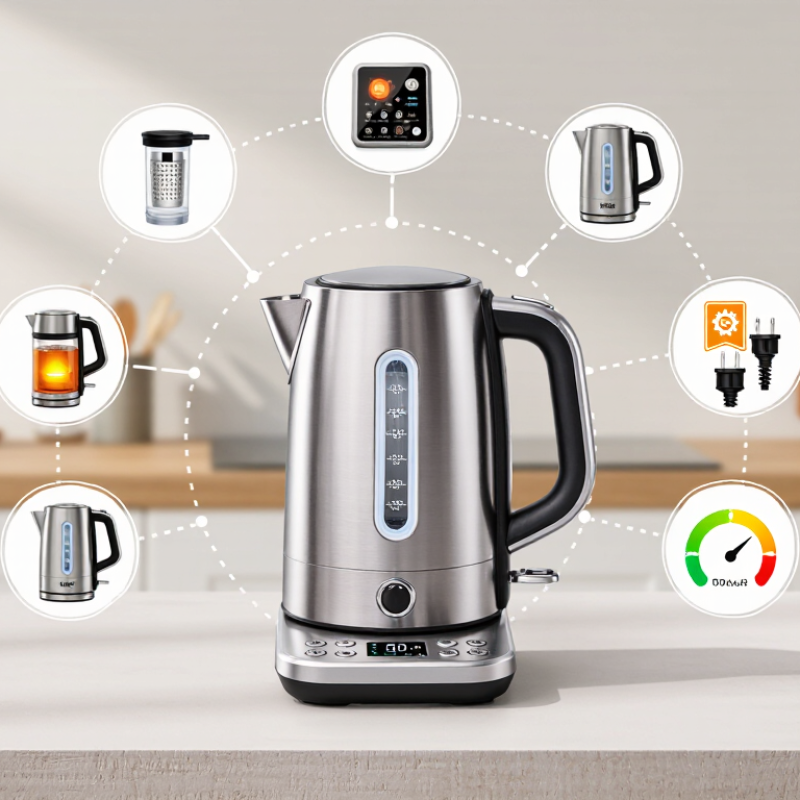
Identify Your Use Cases, Capacity Needs, and Budget
A multipurpose electric kettle should fit your daily routine, not just look versatile on a product page. Start with the routine. Do you mainly boil water for tea, prepare instant meals, or need several temperature settings? A variable-temperature model may help with delicate teas, while a simple boil function may suit a shared office kitchen. Check the controls and cleaning access in product specifications. A narrow opening can make limescale harder to remove.
Capacity depends on who uses it and how often. A one- or two-person household may not need a large kettle, which can take more counter space and encourage boiling excess water. For a family or small workplace, compare the stated capacity with the amount you typically pour at once. Small details matter. Consider handle comfort, a clear water-level window, and automatic shutoff or boil-dry protection. These features are useful, but confirm them in the manual rather than assuming every model includes them.
Tips: Set a budget that includes more than the purchase price. Check warranty terms, filter replacement availability, and whether the kettle’s voltage suits your destination. Compare materials and temperature controls at similar prices. A cheaper option can be perfectly adequate, though support may be harder to assess. I would not treat the highest price as proof of better performance.
Compare Heating Speed, Temperature Control, and Energy Efficiency
Heating speed, temperature control, and energy use can change how useful a multipurpose electric kettle feels each day. Compare the rated wattage, but also check how much water the kettle heats in its performance tests. A higher wattage may shorten the wait, yet results depend on fill level and starting water temperature. For a morning cup, timing a 500-milliliter boil at home gives a more practical comparison than relying on a headline claim. Small differences matter.
Temperature settings are useful for more than tea. Coffee, baby bottles, and warm drinks may need different water temperatures, so look for clear settings and a readable display. Check whether the kettle holds a selected temperature and for how long. Some models show the target temperature but allow water to cool quickly; that detail is easy to overlook.
Tip: Compare actual temperatures with a kitchen thermometer, and repeat the check after several heating cycles.
Energy efficiency depends on how much water you heat and how long you keep it warm. Boiling a full kettle for one mug wastes time and energy. A visible minimum-fill mark helps, while insulation and automatic shutoff can reduce unnecessary reheating. Check the manual for standby or keep-warm behavior, since features vary. The most efficient choice may not be the fastest one, and I would weigh both against your usual serving size.
Assess Materials, Safety Features, and Ease of Cleaning
A multipurpose electric kettle may handle tea, instant meals, and warm water, so its materials matter. Check that water-contact surfaces are described clearly, not just the outer shell. Stainless steel is durable, while glass makes water level and residue easy to see. Plastic parts can be practical, but inspect the lid and spout for areas that may retain odors. A polished finish looks reassuring; it does not tell you everything about the inner materials.
Safety features deserve a close look. Automatic shutoff and boil-dry protection help reduce risk if the kettle is left unattended or runs low on water. Check that the handle stays cool and the base sits firmly on the counter. A short cord can keep it tidy, though it may be awkward near a distant outlet. Small details are easy to overlook.
Tip: Choose a wide opening for easier hand access. Unplug the kettle before cleaning, and never immerse its base. Wipe the exterior with a damp cloth; remove mineral scale using a method approved in the care instructions. Rinse well afterward. Even a kettle that looks clean can hide deposits around the heating plate, so check beneath the lid regularly. Cleaning is not difficult, but it can become annoying if the opening is narrow.
Evaluate Multipurpose Functions, Controls, and Build Quality
When comparing multipurpose electric kettles, treat extra modes as useful tools, not proof of better performance. Check whether temperature presets match the drinks or foods your customers commonly prepare. A keep-warm setting can help during busy mornings, but confirm how long it operates and whether the display shows the selected temperature. Ask suppliers for clear operating instructions and test a sample with a full and partly filled kettle.
Small details matter. Check the hinge. Controls should be easy to read and press, even when the kettle sits beside other appliances. A clear display, distinct buttons, and a steady base make daily use simpler. If the panel offers many settings, see whether users can select a basic boil without navigating several menus. More functions can mean more confusion; that trade-off is easy to overlook.
For build quality, inspect the lid, spout, handle, and power connection. Look for a lid that opens smoothly and closes securely, with no sharp edges around the pouring area. Feel the handle with a full kettle, since balance can change when water is added. Ask about overheat protection and dry-boil shutoff, then check the product documentation for those features. A glossy finish may look appealing, but it can show fingerprints quickly. Don’t judge durability by appearance alone.
Check Voltage Compatibility, Certifications, Warranty, and Supplier Support
Before ordering a multipurpose electric kettle, match its rated voltage and frequency to the destination market. A 220–240 V, 50 Hz model may not work safely on a 110–120 V, 60 Hz supply. Ask for the rating-plate photo, plug type, wattage, and test results for boiling and keep-warm modes. The International Energy Agency’s Energy Efficiency 2023 report says global energy-intensity improvement reached 1.3% in 2023, still below the annual pace needed for climate goals. It is broad energy data, not kettle-specific, but it reinforces the value of checking measured consumption rather than relying on claims.
Verify that certificates and test reports identify the exact model, factory, and electrical configuration you plan to buy. IEC 60335-2-15 covers safety requirements for appliances that heat liquids; destination-market acceptance may require additional checks. Small detail. Ask who issues the certificate and whether its scope includes the kettle’s food-contact parts. Paperwork can be imperfect.
Read the warranty line by line: coverage period, replacement process, spare-part availability, and who pays freight for defects. Ask the supplier for a written response-time target and a named technical contact. A polished catalogue is not after-sales support. Request a sample unit and test its lid, temperature controls, and cord length; suppliers may provide clear documents but slow follow-up. That is a real procurement risk, and worth recording before payment.
10 Multipurpose Electric Kettle Buying Tips for Global Buyers
| Tip | Buying Dimension | What to Verify | Why It Matters |
|---|---|---|---|
| 01 | Check voltage compatibility | Confirm the rated voltage and frequency on the product label match the destination market and intended use. Mains supplies commonly fall within 100–120 V or 220–240 V ranges, but requirements vary by country. | Using a kettle outside its rated electrical supply can cause malfunction or create a safety risk. Do not assume a plug adapter converts voltage. |
| 02 | Match the plug and power rating | Specify the destination plug type, rated wattage, and any applicable local electrical requirements. Ask for the rating label and product documentation for the exact configuration being purchased. | Plug shape, outlet capacity, and electrical requirements differ between markets. A suitable plug alone does not confirm that the appliance is electrically compatible. |
| 03 | Review market-specific compliance | Identify the rules for each destination market and request relevant declarations, test reports, or certificates for the exact model. Examples include CE marking for applicable EU legislation, UKCA marking where applicable in Great Britain, and recognized safety certifications for North American markets. | Compliance requirements depend on the product and destination. A marking or document should be verified for scope, model, and issuing party; it is not automatically valid in every country. |
| 04 | Check food-contact materials | Ask for the bill of materials for water-contact parts, such as the inner vessel, lid, filter, and seals. Request applicable food-contact compliance documentation for the markets where the kettle will be sold. | Material suitability and documentation requirements vary by jurisdiction. Clear material specifications help buyers assess quality, labeling, and regulatory obligations. |
| 05 | Confirm capacity and intended use | Compare usable capacity, minimum and maximum fill marks, and the intended household or workplace use. Check that the design supports the expected serving size and countertop space. | Capacity affects how much water can be heated per cycle and helps buyers select a model suited to their users without relying on appearance alone. |
| 06 | Inspect safety features | Verify whether the model includes automatic shut-off after boiling, boil-dry protection, a stable base, and a lid designed to reduce accidental spills. Confirm these features in the product specification and sample testing. | These features can help reduce common operating hazards. Their presence and performance should be checked on the actual model rather than assumed from a product description. |
| 07 | Assess temperature and multipurpose functions | For models with temperature settings or keep-warm functions, check the available settings, operating instructions, and behavior after the selected cycle. Verify that controls are clearly labeled for the target market. | Functionality differs between models. Clear specifications and user instructions help buyers assess whether extra features suit their customers and intended applications. |
| 08 | Read warranty terms carefully | Confirm the warranty period, start date, covered components, exclusions, claim process, and who pays transport or replacement costs. Request written terms that apply to the export order. | Warranty coverage is set by the seller or contract and may vary by market. Written terms reduce uncertainty about after-sales responsibilities. |
| 09 | Evaluate supplier support | Ask whether the supplier can provide manuals, spare-parts information, troubleshooting guidance, product traceability, and a named contact for quality or warranty issues. Confirm response channels and working hours. | Accessible documentation and support can make product onboarding and issue resolution more manageable for importers and distributors. |
| 10 | Test samples and export packaging | Evaluate a pre-production or production sample, review packaging dimensions and protection, and agree on inspection criteria, labeling, and shipment documents before placing a bulk order. | Sample checks can reveal differences between specifications and delivered goods. Packaging and documentation should be suitable for the agreed transport route and destination requirements. |
Buyer note: Electrical, product-safety, food-contact, marking, and warranty requirements depend on the destination market and the exact product configuration. Confirm applicable requirements with qualified local compliance professionals before import or sale.