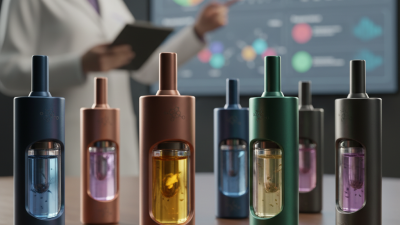
Why Do Dab Cart Types Differ in Safety and Quality?
Dab Carts may share a familiar shape, yet differences in construction, contents, and quality controls can affect safety. Glass chambers, metal fittings, seals, and heating elements all matter. Weak joints may leak, while inconsistent components can behave unpredictably. Small details count. A clean exterior does not prove that the contents are safe.
The oil itself also deserves careful attention. Ingredients, contaminants, and manufacturing standards can vary between products. Where these products are legally available, clear ingredient information and verifiable testing from an independent laboratory offer useful evidence. Still, a report is only meaningful when it matches the specific product and batch. Labels can be incomplete, and impressive packaging is not proof. That sounds simple. It isn’t.
This overview examines how cartridge design, material quality, product information, and testing practices relate to consumer safety. It does not treat appearance or price as reliable shortcuts. Instead, it highlights practical warning signs, such as leaks, damaged seals, unclear ingredient lists, or missing batch details. Avoid using products with visible damage, and seek medical advice if you have health concerns. No checklist can remove every uncertainty. Even careful checks have limits, so the most responsible choice may be to pause when essential information is missing.
Types of Dab Carts and How They Work
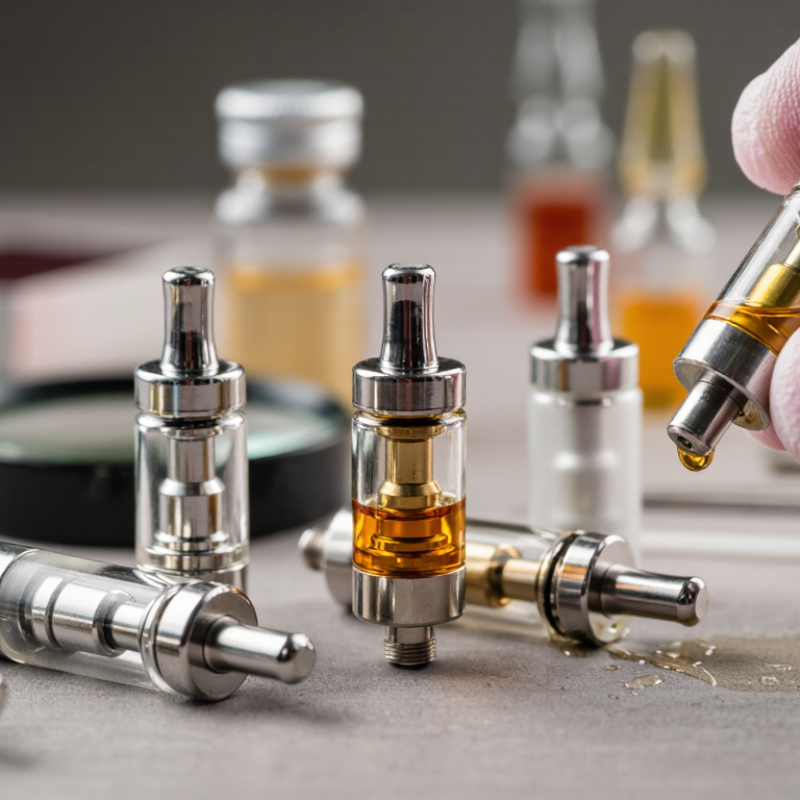
Dab carts differ mainly in the heater, oil path, and airflow. Wick-based designs use a porous material to carry oil toward a heating element. Ceramic designs rely on a porous ceramic core, while mesh designs spread heat across a wider surface. That can affect how evenly a cart heats and how quickly residue builds up. Feel the difference in a simple detail: a restricted air path can make each draw feel tighter, but it does not prove better filtration or safer materials.
Construction matters too. Look for clear material and testing information, including details about the heating element and cartridge components. A 2020 CDC surveillance report counted 2,807 hospitalized cases or deaths associated with vaping-related lung injury in the United States. The report did not compare cart designs, so it cannot establish that ceramic, wick, or mesh is safest. That limitation matters. A cart’s design alone cannot verify the contents or predict what its aerosol contains. Independent testing and transparent documentation are more useful signals than appearance, although paperwork can still leave unanswered questions.
Why Dab Cart Types Differ in Safety and Quality
Representative oil-heating designs differ in how they feed oil to the heater. The chart shows whether each feature is commonly present (1) or absent (0); it is not a safety or quality rating.
Both designs use a resistive heater. Wick-and-coil designs commonly use a separate fiber wick, while porous ceramic-core designs use porous ceramic to draw oil toward the heater. Actual construction varies; chart features alone cannot establish product safety. Materials, manufacturing quality, oil composition, and independent testing also matter.
How Materials and Design Affect Product Quality
Different dab cart types often reflect choices in housing, seals, airflow, and heating components. Those choices affect durability and consistency, not just appearance. A glass chamber may reveal discoloration or residue, while an opaque housing can hide it. Neither feature proves safety. Small parts matter.
Materials matter most where heat and liquid meet. Poorly fitted seals can allow leaks, and uneven heating may affect performance. Ceramic, metal, and glass each have tradeoffs; a material label alone cannot confirm purity or workmanship. Look for clear material disclosures and credible, independent testing where available. Even that is not a guarantee.
Design can also affect cleaning access and airflow. Narrow passages may collect residue more easily, while loose connections can feel unstable. A smooth draw or sturdy feel is not a safety test. It is easy to overread a polished finish; visual checks cannot reveal every internal flaw. When product details are missing, that uncertainty deserves attention.
How Oil Composition Influences Safety
Why Do Dab Cart Types Differ in Safety and Quality?
How Oil Composition Influences Safety
Oil composition can change a cartridge’s thickness, flavor, and behavior when heated. Different blends may contain varying amounts of active compounds, aromatic compounds, and carrier ingredients. That difference matters: an oil that is too thick may heat unevenly, while added thinning agents can introduce additional concerns. Clear oil is not necessarily clean oil. Appearance alone cannot confirm safety.
Tips: Check for a recent, independent laboratory report that identifies ingredients and screens for contaminants. Read the actual results, not just a “tested” claim. Avoid products with vague ingredient lists or unexplained additives.
Reliable testing can help reveal substances that are invisible in the cartridge, including residual solvents or unwanted contaminants. Heating also matters; excessive heat can degrade some ingredients and create irritating byproducts. There is no simple visual test for that. I’d be cautious about treating a smooth taste or consistent vapor as proof of quality; those impressions are subjective, and I may be missing details without verified testing. When composition or testing information is unclear, the safest choice is not to use that cartridge.
Testing and Labeling Standards for Dab Carts
Dab-cart safety depends on more than the oil’s appearance. Reliable testing should be tied to a specific production batch, not just a general product description. A clear report may list potency, residual solvents, pesticides, heavy metals, and microbial contaminants. The test date and laboratory identity matter. So does the batch number printed on the package. Without a matching number, a report may not describe that particular cart.
Labels should identify ingredients and provide a way to check the batch report. Some also disclose cartridge materials or screening for metals that could migrate into the oil. Standards and required disclosures vary by location, so one label cannot prove every safety claim. A polished package is not evidence by itself. Even careful testing has limits, and reports can be difficult to interpret. That deserves a second look.
Tips: Match the package’s batch number to the lab report. Check whether the report names the tests, results, and date. Be cautious when information is missing, unreadable, or unusually vague. Ask a qualified seller or laboratory about unclear terms; do not guess from color or thickness alone.
Storage, Handling, and Common Safety Risks
Dab cart types can differ in seals, heating elements, and materials, so storage matters. Keep cartridges upright in a cool, dry place, away from windowsills and hot cars. Heat can thin the contents, encourage leaks, and strain seals. Cold can make some oils thicker; avoid trying to warm a cart with a flame or heater. Small details matter.
Check the cartridge before handling it. A cracked body, loose mouthpiece, unusual odor, or visible leakage is a reason to stop using it and seek guidance from the seller or manufacturer. Appearance alone cannot verify ingredients or quality. Choose products with clear ingredient information and independent testing where available, and follow the package directions. Keep carts away from children and pets, and do not share mouthpieces. Clean hands help prevent residue from reaching the mouthpiece or battery contacts. Don’t force a stuck part or modify the device; damaged batteries can overheat. I sometimes think a neat label looks reassuring, but labels are not proof. Store carts in their original packaging, and dispose of damaged items according to local waste guidance.
| Type or factor | What can differ | Safety and quality considerations | Safer handling |
|---|---|---|---|
| Regulated, lab-tested cartridge | In regulated markets, products may be subject to testing and labeling requirements; requirements vary by location. | A label or test result can provide information about contents, but does not make inhalation risk-free or guarantee that every product is free of defects. | Check local rules and product information. Do not use a cartridge with a broken seal, missing information, or signs of tampering. |
| Unregulated or unknown-source cartridge | Contents, manufacturing conditions, hardware materials, and testing may be unknown or inconsistent. | Unverified products can carry greater uncertainty about contaminants, additives, or device defects. Appearance alone cannot establish safety. | Avoid products of unknown origin. Do not rely on informal claims or packaging alone to verify contents. |
| Heating element and oil pathway | Cartridges may use different heating elements and pathway materials, such as ceramic, metal, or glass components. | Material choice alone does not prove product quality. Poorly made, damaged, or overheated hardware may affect performance and exposure. | Use only the device as directed. Stop using it if the cartridge cracks, leaks, or behaves unusually; do not modify the hardware. |
| Disposable and reusable devices | Some devices have a built-in battery; others use a separate rechargeable battery. Controls and charging requirements vary. | Damaged batteries, unsuitable chargers, or excessive heat can create fire or burn hazards. | Follow the device instructions, use a compatible charger, and do not charge unattended or near flammable materials. Stop using swollen, hot, or damaged devices. |
| Oil formulation and additives | Oil composition and viscosity vary. Ingredients and additives may not be apparent from color, thickness, or flavor. | Vitamin E acetate was strongly associated with the 2019 EVALI outbreak, particularly in illicit THC vaping products. Other unverified additives may also pose risks when inhaled. | Do not add oils, thinners, or other substances to a cartridge. Avoid products with unclear ingredients or unknown sources. |
| Storage conditions | Heat, direct sunlight, and prolonged exposure to air can affect oil and device components; temperature guidance may differ by product. | High temperatures may increase leakage or degrade components. Loose storage can also expose children or pets to the contents. | Store in a cool, dry place, away from sunlight and heat, and follow the product’s storage instructions. Keep locked and out of reach of children and pets. |
| Leaks, cracks, or unusual performance | Leaks, blocked airflow, unusual heating, or visible damage can arise from defects, wear, or improper storage. | Oil can irritate skin or eyes; damaged devices may also create exposure or battery hazards. | Do not use or attempt to repair a damaged or leaking cartridge. Avoid contact with leaked oil, wash exposed skin, and follow local disposal guidance. |
| Adverse symptoms | Responses vary by person, product, and exposure; coughing, breathing difficulty, chest pain, nausea, or confusion may be warning signs. | Vaping can cause harm, and serious or worsening symptoms require prompt medical attention. | Stop using the product. Seek urgent medical care for breathing difficulty, chest pain, or severe symptoms; tell clinicians what may have been inhaled. |
Related Posts
-
2026 Best Dab Carts for Flavor and Potency?
-
Understanding the Rise of Pen Vape Usage Among Young Adults in 2023
-
Top 10 Advantages of Using Nic Pen for Global Buyers?
-

Mastering Dab Carts A Comprehensive Guide to Choosing the Best Options for Global Buyers
-

Unlocking Global Trade: The Importance of Import-Export Certifications for Best Dispo Carts
-
The Ultimate Guide to Choosing the Best Rechargeable Vapes: Features, Benefits, and Tips