How to Choose Thermal Paper Labels for Your Business in 2026
Choosing Thermal Paper Labels in 2026 is not just a matter of comparing roll prices. The right label must print clearly, stick reliably, and remain readable through handling, storage, and delivery. That sounds simple. Real operations are less tidy. A label that works beside a packing bench may fade in a sunny shop window or lift from a cold parcel. Printer compatibility, label size, adhesive, and expected exposure all deserve attention before a bulk order.
Demand for dependable fulfillment offers useful context. The U.S. Census Bureau’s Quarterly Retail E-Commerce Sales report for the fourth quarter of 2024 estimated U.S. retail e-commerce sales at $1.1926 trillion for the year, up 8.1% from 2023. E-commerce represented 16.1% of total retail sales. These figures do not measure thermal-label use directly, but they show why shipping and product identification matter to many businesses. For 2026 planning, assess your own label volume and workflow rather than treating national sales data as a purchasing forecast.
A practical choice starts with the printer and the label’s actual job. Direct thermal labels need no ribbon, but heat and light can affect image life. Test samples on the products or packages you use, then check print contrast, barcode scans, and adhesion after handling. Small trials help. They can also expose assumptions: perhaps the cheapest roll saves money, or perhaps it causes reprints and delays. The answer depends on your environment, and that is worth testing before you commit.
Understanding Thermal Paper Labels and Their Printing Methods
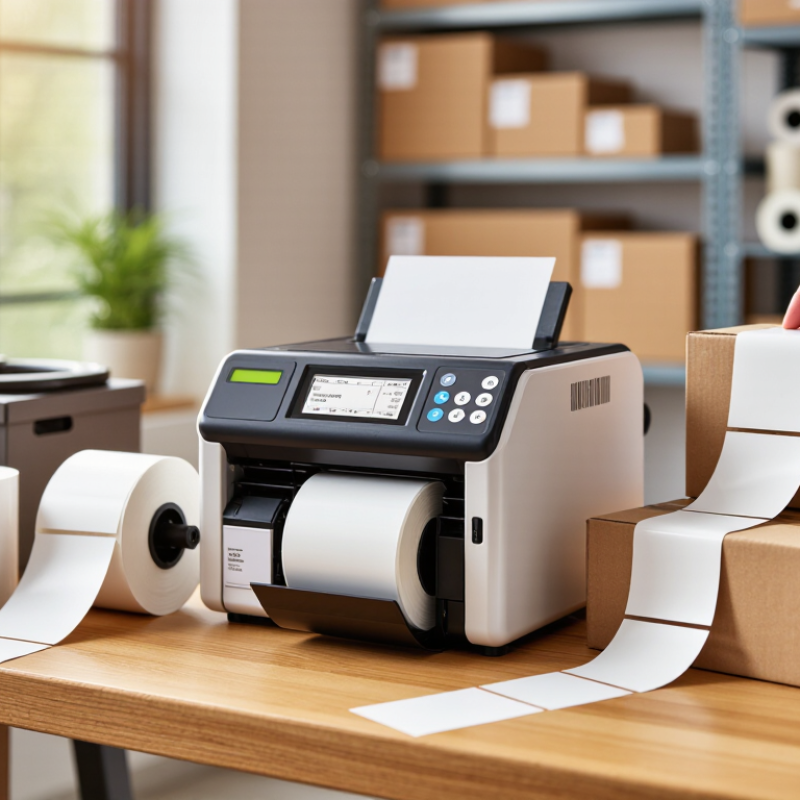
Thermal paper labels create images when a printhead applies heat to a coated surface. Direct thermal printing needs no ink or ribbon, making it useful for shipping labels and short-life inventory tags. However, heat, sunlight, oils, and abrasion can fade or darken the image. Thermal transfer printing uses a ribbon whose ink bonds to the label face, often improving resistance for warehouse, asset, or outdoor identification. Choose based on exposure, scan life, and surface—not printer price alone.
A 2024 Thermal Paper Market Size, Share & Trends Analysis report estimated the global thermal paper market at about US$4.2 billion in 2023, with 6.6% annual growth forecast through 2030. This figure covers thermal paper broadly, not labels alone, but it indicates continuing demand. Match the roll width, core size, adhesive, and coating to both printer and package. A label that curls on a cold carton or smears under a gloved thumb is still a poor choice. Easy to overlook.
Tips: Print a small batch. Scan it after heat exposure, rubbing, and several days on the actual package. Check barcode readability, edge lift, and print darkness. Don’t assume all thermal labels are interchangeable.
Assessing Your Business’s Labeling Requirements
Before selecting thermal paper labels, map where each label will be used and how long it must remain readable. A shipping label may need to last only through delivery, while a shelf or inventory label could stay in place for months. Note the surface too: a clean cardboard carton accepts adhesive differently from a cold plastic container. Small details matter.
Record your printer’s supported label width, roll size, and core diameter, then compare these with your daily print volume. Direct thermal labels work without ribbons, but heat, sunlight, and friction can make the image fade. For products stored near warm equipment or displayed in bright light, test whether the print remains scannable over the required period. Test before scaling. Check adhesive performance on the actual packaging, especially if it is curved, dusty, or refrigerated. A short trial can reveal jams, curled edges, or barcodes that scanners struggle to read. It is easy to assume one label will suit every task; in practice, that assumption may cost time and relabeling work. Keep a sample from each test and review it after storage and handling.
Comparing Label Materials, Coatings, and Adhesives
For a short-life shipping label, standard direct-thermal paper keeps costs and printer setup simple. Its heat-sensitive coating darkens without a ribbon, but sunlight, friction, and heat can fade the image. For freezer cartons or outdoor bins, test a top-coated grade instead. The extra coating improves resistance, though it cannot fix a poor adhesive bond. Small detail, big headache.
Adhesive choice depends on the surface and temperature at application. A permanent rubber-based adhesive often grabs corrugated boxes quickly; acrylic grades can offer better aging and temperature stability. Test labels on the actual carton, including dusty or recycled surfaces. A label that sticks at room temperature may lift after chilling. EPA’s 2018 Facts and Figures report found a 68.2% recycling rate for paper and paperboard overall. That figure does not apply specifically to labels, but it highlights why face stock and liner disposal deserve attention. Silicone-coated release liners may need separate collection, where available. Even a neat materials comparison misses one thing: warehouse handling is messy, and small trials catch failures early.
Checking Printer Compatibility, Label Size, and Roll Specifications
Before ordering thermal paper labels, identify whether your printer uses direct thermal or thermal transfer printing. Direct thermal stock forms an image through heat and requires no ribbon. A thermal-transfer printer may also support direct thermal media, but its settings and sensor must match. Check the manual or measure the feed path; model names alone can mislead. Small details matter.
Match label width and height to the printer’s supported range, then check the gap or black-mark sensing method. A label that fits the platen may still feed poorly if its spacing differs. Compare the roll’s core diameter and maximum outside diameter with the printer compartment. Also confirm the winding direction and whether the roll loads from the top or bottom. A few millimeters can cause trouble.
Think about where labels will be used. Heat, sunlight, moisture, and frequent handling can fade direct-thermal print or weaken adhesion. For shipping, storage, or refrigerated goods, test the label on the actual packaging and inspect it after a few days. Test one roll. Print small text and barcodes at normal speed, then check legibility and feeding. Measurements are not always perfect, so a sample run can catch a mismatch before a larger order.
Evaluating Durability, Costs, and Supplier Options
Thermal label durability starts with the route, not the roll price. Direct thermal stock suits short-lived shipping labels, but heat, sunlight, and friction can fade the image. For freezer bins or long-term asset tracking, test thermal-transfer labels with the intended ribbon and surface. A label that survives a desk test may fail on a damp carton. Test the trade-off.
UNCTAD’s Digital Economy Report 2024 estimates that e-commerce sales across 43 economies approached $27 trillion in 2022. That scale makes print consistency and replenishment worth checking, though the figure does not predict any one company’s label use. Compare total cost per usable label, including ribbon, misprints, printer adjustments, and wasted rolls. ASTM D4332 conditioning and D5264 rub testing can help structure trials; also expose samples to your actual light, temperature, and handling conditions. Ask for samples.
Supplier options differ in coating, adhesive, roll dimensions, and batch consistency. Request written specifications and sample rolls from more than one supplier, then print the same barcode and scan it after handling. Check core size and unwind direction against your printer.
One uncomfortable detail: low-cost stock can look identical until adhesive residue builds up or small text becomes hard to scan. I would still test a modest order before committing to a full-year supply.