How to Choose the Best China Food Grade Flavor Supplier?

Choosing the right China Food Grade Flavor supplier requires more than comparing prices. It requires evidence, technical judgment, and careful communication. A supplier may present an attractive sample, yet the final production batch can smell weaker or taste different. That risk deserves attention.

Veteran flavorist John Wright offers a useful principle: “Flavorists are artists, but they are also scientists.” This idea applies directly to supplier evaluation. A capable partner should combine creativity with controlled formulation, accurate documentation, and repeatable manufacturing. Ask for ingredient specifications, allergen statements, certificates of analysis, and clear storage instructions. Check whether each Food Grade Flavor batch can be traced to its production record. Reliable suppliers should also explain their testing methods without hiding behind vague claims.

Practical experience matters, too. Request samples in the intended application, such as a beverage, bakery filling, or dairy dessert. Compare aroma after mixing, heating, and several days of storage. A pleasant bottle sample proves little. Trial orders can reveal packaging quality, delivery consistency, response speed, and technical support. Small details matter, including drum seals, lot numbers, and temperature guidance.

No supplier is perfect. I have seen evaluations focus heavily on unit price while ignoring dosage stability and communication delays. That approach can create expensive reformulation work later. A thoughtful buyer should question polished presentations and confirm every important claim. This guide explains how to assess Chinese Food Grade Flavor manufacturers through quality systems, compliance documents, customization ability, production capacity, and long-term reliability.
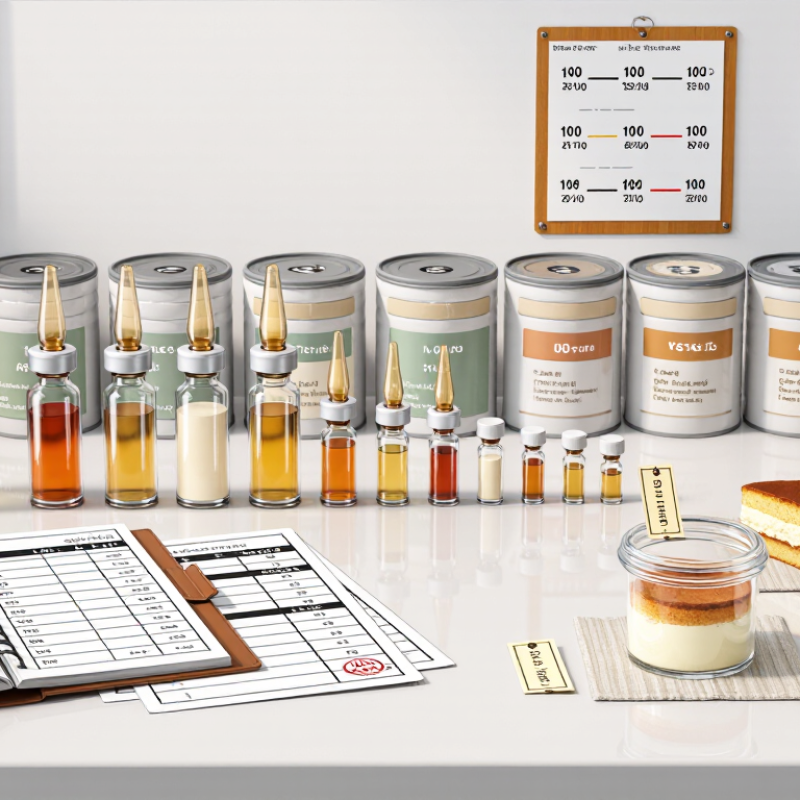
How to Choose the Best China Food Grade Flavor Supplier?

Define Your Flavor Requirements and Product Specifications

Choosing the best China food grade flavor supplier starts with a precise flavor brief. Describe the target profile, such as ripe mango, roasted garlic, or fresh lemon peel. Define the application, dosage range, processing temperature, pH, and expected shelf life. A beverage flavor may fail in a baked product because heat changes its top notes.

MarketsandMarkets estimated the global food flavors market at about USD 8.2 billion in 2023. It also projected growth to approximately USD 11.2 billion by 2028. This expansion increases supplier choices, but not every supplier offers equal technical control. Ask for product specifications, ingredient declarations, allergen statements, certificates of analysis, and batch traceability. Confirm whether the flavor is natural, nature-identical, or artificial under your target market’s rules. These terms can differ between regions.

Tips: Send a reference sample, not only a written description. Request small pilot samples at three dosage levels. Test them in the real recipe after processing and storage. Check color, aroma release, taste balance, and sediment. A supplier may provide an excellent laboratory sample, yet the flavor may weaken after two weeks. That result is disappointing, but useful. Your specification may also need revision. Include acceptable variation limits, packaging requirements, minimum order quantity, and lead time before requesting a quotation. Review the supplier’s technical response with a food technologist, rather than judging aroma alone.

Verify Supplier Certifications, Compliance, and Production Standards

Choosing a China food grade flavor supplier starts with verifiable certifications, not attractive samples. Ask for current copies of ISO 22000, FSSC 22000, HACCP, or equivalent systems. Check the certificate number, issuing body, scope, factory address, and expiry date. The certified scope should cover flavor production, not only storage or trading activities.

Request production records for a representative batch. These should include raw material approval, allergen controls, cleaning procedures, temperature records, and final release checks. A reliable supplier can provide a certificate of analysis with batch number, appearance, flavor profile, microbiological limits, and relevant contaminant results. Traceability should work both ways. One retained sample should lead back to each ingredient source.

Do not accept a certificate without checking its details. I have seen documents that looked convincing but covered another facility. That mistake is costly. Ask whether the factory follows applicable Chinese food standards and the regulations of your target market. Review labeling support, permitted-use limits, change-control procedures, and recall plans. Production areas should have separated zones, sealed containers, calibrated instruments, and visible hygiene records. A video tour helps, but it cannot replace an independent audit. Even strong suppliers may have weak documentation. Probe the gaps. Their response often reveals more than the certificate.

How to Choose the Best China Food Grade Flavor Supplier? - Verify Supplier Certifications, Compliance, and Production Standards
Evaluation Dimension Verification Item Relevant Standard or Requirement Evidence to Request Minimum Acceptance Benchmark Priority
Food Safety Management Certified food safety management system ISO 22000 or a GFSI-recognized certification scheme, such as FSSC 22000 or BRCGS Food Safety Current certificate, certification scope, issuing body, site address, expiry date, and latest audit result The certificate must cover the actual flavor-production site and the relevant product category Required
Hazard Control HACCP-based hazard analysis HACCP principles aligned with Codex Alimentarius and applicable national food safety requirements Hazard analysis, critical control points, critical limits, monitoring records, and corrective-action procedures Documented controls for biological, chemical, physical, and allergen hazards Required
GMP and Hygiene Good Manufacturing Practice and sanitation controls Applicable Chinese food production regulations and hygienic manufacturing principles GMP manual, sanitation standard operating procedures, pest-control records, hygiene training records, and inspection logs Routine documented inspections with corrective actions closed within defined deadlines Required
Regulatory Compliance China food additive and flavor compliance China National Food Safety Standard GB 2760 and other applicable Chinese food safety standards Ingredient list, additive function, use level, application category, and regulatory assessment Every ingredient and intended use must be legally permitted for the target application in China Required
Export Compliance Destination-market regulatory review Applicable requirements such as U.S. 21 CFR 101.22, EU Regulation (EC) No. 1334/2008, or destination-country rules Market-specific compliance statement, composition review, labeling guidance, and restricted-substance assessment Written confirmation must match the destination market, product type, and intended use level Conditional
Ingredient Control Raw-material approval and supplier management Risk-based raw-material qualification and approved-supplier procedures Approved supplier list, raw-material specifications, certificates of analysis, allergen declarations, and change-control records High-risk materials require documented approval, testing, and traceable lot identification Required
Allergen Management Allergen identification and cross-contact prevention Applicable allergen-labeling rules in the target market and documented allergen-control procedures Allergen matrix, production-sequencing rules, cleaning validation, label review, and cross-contact risk assessment Allergenic ingredients and possible cross-contact risks are clearly identified and controlled Required
Contamination Control Microbiological, chemical, and physical testing Risk-based testing against product specifications and applicable legal limits Recent test reports, laboratory qualifications, sampling plan, methods, detection limits, and corrective-action records Testing is performed by a competent laboratory using suitable and documented methods Required
Product Documentation Complete technical specification Specification must reflect the actual finished flavor and intended application Product specification, composition or ingredient declaration, physical properties, storage conditions, shelf life, and packaging details Documents are controlled, dated, versioned, and consistent with the supplied sample Required
Traceability One-step-back and one-step-forward traceability Traceability principles required by food safety management systems and applicable regulations Mock recall report, batch records, raw-material links, finished-goods records, and distribution records Affected lots can be identified and placed on hold within the supplier's documented response time Required
Process Control Batch consistency and production monitoring Validated or controlled process parameters appropriate to liquid, emulsion, powder, or compound flavors Batch manufacturing records, process parameters, in-process checks, yield records, and deviation reports Critical process parameters are defined, monitored, recorded, and reviewed before release Required
Laboratory Capability Quality-control laboratory and testing competence Testing capability appropriate to the product risk; external laboratories should have recognized competence where applicable Equipment list, calibration records, analyst training, method validation, and external laboratory qualifications Measuring equipment is calibrated, test methods are suitable, and results are reviewable Recommended
Packaging and Storage Food-contact packaging and warehouse controls Packaging must be suitable for food use and compatible with the flavor's physical and chemical properties Packaging specifications, food-contact declarations, warehouse temperature records, humidity records, and stock-rotation procedure Packaging protects product integrity and storage conditions are defined and monitored Required
Change Management Control of formulation, raw-material, process, and site changes Documented change-control procedure within the food safety and quality system Change-notification policy, approval workflow, impact assessment, requalification records, and customer notification process Material changes are communicated before implementation when they may affect safety, compliance, or performance Required
Supplier Audit On-site or remote quality audit Risk-based supplier approval and periodic reassessment Completed audit questionnaire, audit report, nonconformity log, corrective-action plan, and closure evidence No unresolved critical nonconformities; major findings have documented corrective actions Required
Business Continuity Capacity, backup resources, and supply continuity Documented business-continuity and emergency-response planning Production capacity statement, backup raw-material plan, emergency contacts, disaster-recovery procedures, and lead-time data Critical products have defined contingency measures and realistic production lead times Recommended
Verification principle: approve a supplier only after the certificate scope, production-site details, product documentation, test evidence, and audit findings have been checked for consistency. Requirements should be confirmed against the destination market and the specific flavor application.

Evaluate Flavor Quality, Stability, and Application Performance

Choosing a China food grade flavor supplier requires more than a pleasant first taste. I ask for batch samples, specifications, and traceability records. The flavor should match its description, without harsh solvent notes or rapid fading. The Codex General Standard for Food Additives and FAO/WHO JECFA evaluations provide useful safety references. A supplier should explain how each flavor complies with applicable food regulations.

Stability needs practical testing. Request data from heat, light, oxygen, and pH trials. For a beverage flavor, test samples after pasteurization and storage at 4°C and 25°C. For bakery use, test after baking, not only in water. FAO reports that 13.2% of food was lost between harvest and retail in 2021. Flavor instability does not cause every loss, but poor performance can increase rework and waste. A perfect shelf-life claim deserves questions.

Application performance is where many evaluations become weak. Check dosage, dispersion, sweetness interaction, and performance in the final matrix. Ask for three production-scale batches, not one laboratory sample. Compare sensory results with GC-MS or HPLC data when appropriate. WHO estimates that 600 million people suffer foodborne illness yearly, so hygiene records, microbiological controls, and allergen management cannot be secondary. I have seen attractive samples fail after packaging. That mistake is easy to repeat. Supplier audits, retained samples, and clear complaint procedures make the decision more reliable.

Compare Customization, Supply Capacity, Pricing, and Delivery

Choosing a China food grade flavor supplier requires more than comparing a low quotation. Start with customization. Ask whether the supplier can adjust flavor strength, sweetness, solubility, and application performance. Request small samples for your beverage, bakery, or dairy formula. A flavor that smells excellent in a bottle may perform poorly after heating or storage.

Supply capacity must match your growth plans. Review production equipment, batch records, quality control procedures, and lot traceability. Ask for recent certificates, specifications, and a certificate of analysis for each shipment. Reliable suppliers should explain allergen controls and provide clear documentation. I once saw a promising sample fail during scale-up because the supplier had limited mixing capacity. That mistake delayed testing for weeks.

Pricing should include more than the product cost. Compare minimum order quantities, sample fees, packaging, testing, and payment terms. A cheap offer can hide expensive rework. Delivery also deserves practical testing. Confirm production lead time, shipping options, export documents, and emergency response procedures. Ask for a written schedule with realistic buffer time. Fast promises are not always reliable. I prefer a supplier that reports delays early, even when the news is inconvenient. Before signing a long-term agreement, place a controlled trial order and compare the delivered flavor, documents, packaging condition, and arrival date. Small checks matter.

Review Samples, Audit Communication, and Select the Right Supplier

Choosing the best China food grade flavor supplier starts with controlled sample reviews. Request three coded samples, not one polished showcase. Test them in the finished product, after heating, storage, and dilution. Record aroma strength, aftertaste, color, and batch consistency. A clear sensory scorecard prevents personal preference from dominating the decision. It also exposes weaknesses early.

Communication deserves a practical audit. Ask how quickly the supplier answers technical questions, revises specifications, and reports deviations. Request COAs, allergen statements, traceability records, shelf-life data, and manufacturing-flow details. The FAO/WHO JECFA database contains evaluations for more than 2,600 flavoring substances, showing why precise substance identification matters. A supplier should explain each ingredient’s regulatory status and intended use without vague promises. Short answers are useful. Missing documents are not.

Audit the factory, physically or remotely, with evidence rather than presentation slides. Check batch coding, retained samples, sanitation records, complaint handling, and change-control procedures. The World Bank estimates that unsafe food costs low- and middle-income economies over 110 billion US dollars annually. Supplier discipline therefore affects more than purchasing costs. A common mistake is choosing the fastest communicator. I would still question my own checklist, because a successful sample cannot guarantee stable production. Ask for a pilot batch and compare it against the approved sample before signing a long-term agreement.

Find Mitten in Michigan

Request Mitten Near You

Have a favorite dispensary that doesn't carry Mitten Extracts yet? Let us know, and we'll work to make sure our premium products are available where you shop.