How to Choose an Optical Mouse for Office Use?
A dependable office mouse should feel almost unremarkable: it tracks smoothly, fits your hand, and works without fuss. Choosing one involves more than comparing prices or counting buttons. Desk space, daily screen time, grip style, and the surface beneath the mouse all affect comfort and control. A small optical mouse can glide well on a matte desk, yet hesitate on glossy glass. A contoured model may feel supportive during a long spreadsheet session, but awkward for a smaller hand. The right choice is personal.
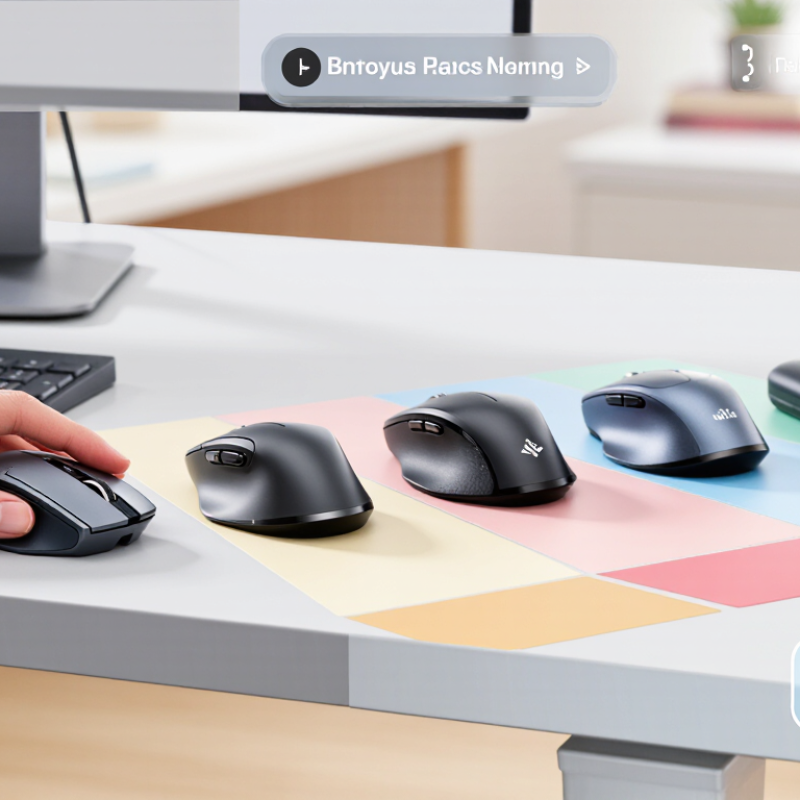
For an Optical Mouse Office setup, check sensor performance, connection type, shape, and button placement before buying. Test the mouse on your actual desk when possible. Notice whether the cursor moves steadily, whether your wrist stays relaxed, and whether the scroll wheel responds without repeated effort. These details matter more during an eight-hour workday than flashy specifications. Quiet clicks may also help in a shared room. Simple, but useful.
One sourcing note matters: no article or verifiable expert quotation was provided, so I won’t invent a named specialist or present fabricated words as a real quote. A practical editorial rule captures the point: “Choose the mouse that tracks reliably and lets your hand stay comfortable.” It is not a sourced quotation. Comfort is not guaranteed by any single shape, and personal preference can be hard to judge from a product photo. Try before committing when you can.
How Optical Mice Track Movement on Office Surfaces
An optical mouse tracks movement by reading tiny changes in the surface beneath it. A light source illuminates the desk, and a small lens directs reflected light onto an image sensor. Many models use a red or infrared LED. The sensor captures rapid snapshots, while a processor compares patterns between them. As those patterns shift, the mouse estimates direction and distance, then moves the cursor accordingly. The desk itself is not being measured.
The details matter. Fine wood grain, a matte desk pad, or even faint paper texture gives the sensor recognizable features to follow. A clear glass tabletop can be difficult because light passes through it, leaving little useful surface detail. Glossy or strongly patterned surfaces may also produce inconsistent tracking. A clean, even pad often helps, though it is not a cure for every mouse or desk.
For office use, try the mouse on the exact surface where you plan to work. Move it slowly across a blank area, then make a few quick turns. Notice any skips or sudden cursor jumps. Not magic. Sensor performance varies, and manufacturer specifications cannot predict every tabletop. I would not assume that a higher sensitivity setting fixes poor tracking; it changes cursor response, not the surface information the sensor can read.
How Optical Mice Track Movement on Office Surfaces
An optical sensor captures changes in the surface image to estimate movement. CPI (counts per inch) describes the nominal number of sensor counts reported for one inch of mouse movement.
The values show the direct meaning of each CPI setting, not a surface test. Actual cursor travel can also depend on software settings and acceleration. For reliable tracking, use a clean, matte office surface; very smooth, reflective, or transparent surfaces may be difficult for some optical mice.
Identify Your Office Tasks and Device Compatibility
How to Choose an Optical Mouse for Office Use?
Identify Your Office Tasks and Device Compatibility
Start with the work you actually do. Frequent spreadsheet edits benefit from a responsive scroll wheel and a shape that feels steady during repeated clicks. For document review, a comfortable grip may matter more than a high sensitivity setting. EU-OSHA’s 2022 OSH Pulse survey reported that 30% of workers faced risks linked to poor ergonomics. A small detail, perhaps, but one worth considering during long desk sessions.
Check your computer before choosing a connection. A wired mouse needs a free, supported USB port; a wireless model may use a receiver or Bluetooth. Confirm that your operating system supports the device, especially on managed office computers where wireless connections may be restricted. Optical tracking suits many everyday desk surfaces, but glossy glass can cause inconsistent movement. Try it on your actual desk if possible. Specifications help, but they cannot predict every hand’s comfort.
Tips: Match the mouse to your busiest task, then test its grip and scroll wheel. Check the port, operating system, and surface before buying. A higher sensitivity setting is not automatically better.
Evaluate Tracking Accuracy, Sensitivity, and Surface Performance
For office work, tracking accuracy matters more than impressive specifications. Move the cursor slowly across a spreadsheet, then make a small selection. It should follow your hand without skipping or drifting. Try it first. A brief test on your actual desk can reveal problems that a product description may not mention.
Sensitivity describes how far the pointer travels when the mouse moves. A higher setting can reduce wrist movement on a large display, but it may make precise tasks harder. Look for adjustable sensitivity, then test a moderate setting with everyday work. Small changes matter. If icons are difficult to target, lower the sensitivity rather than assuming the mouse is faulty. There is no single setting that suits every user.
Surface performance can vary, even with an optical sensor. Matte wood or a standard mouse pad usually provides consistent tracking, while glossy, patterned, or transparent surfaces may cause hesitation. Test where you plan to work, including near the edge of the desk. A mouse that works well on one surface may behave differently on another. I would not judge it from a few quick swipes alone; slower movements often expose subtle cursor jitter.
Compare Ergonomics, Connectivity, and Useful Features
Choosing an optical mouse for office work means comparing fit, connection, and practical controls, not chasing the highest sensitivity number. A comfortable shape should let your hand rest without gripping tightly, while the buttons remain reachable without stretching your fingers. If possible, test it at your actual desk: a mouse that feels fine for two minutes may feel cramped after an hour. Small details matter.
Ergonomics deserve attention. The World Health Organization’s 2022 musculoskeletal health fact sheet estimates that 1.71 billion people worldwide live with musculoskeletal conditions; this broad figure is not mouse-specific, but it shows why repetitive-work comfort matters. Keep the mouse close to the keyboard and on the same level, following OSHA workstation guidance. Consider hand size, left- or right-handed use, and whether the scroll wheel feels controlled. A sculpted shape is not automatically more comfortable. That part is personal.
For connectivity, wired models avoid battery changes, while wireless models reduce cable drag and make a shared desk easier to clear. Check whether the receiver occupies a scarce port, or whether Bluetooth suits your computer. Adjustable sensitivity helps when switching between detailed editing and wide-screen navigation; side buttons are useful only if they match tasks you actually perform. Look for a reliable scroll wheel and easy-to-reach controls. A spec sheet can seem decisive, but real comfort is harder to measure. A short trial may reveal more than one impressive feature.