How to Choose the Best Vacuum Packing Machine?

Choosing the best Vacuum Packing Machine begins with the product, not the machine’s advertised speed. A countertop unit may suit small batches, while a food processor needs repeatable seals, suitable chamber size, and practical cleaning access. Think of the actual work: damp portions, wide bags, and a busy sealing bar. Small details matter.

The Food and Agriculture Organization’s The State of Food and Agriculture 2023 estimated that 13.2% of food was lost in supply chains after harvest and before retail in 2021. Vacuum packaging can support storage and handling, but it cannot prevent every cause of food loss. Product type, refrigeration, film compatibility, and operator technique still matter. Packaging researcher Dr. R. Ahvenainen’s published work offers a useful principle: match packaging performance to the product and its storage conditions. This is a paraphrase, not a direct quotation. A careful distinction.

Before comparing models, note your daily output, package dimensions, and available power. Then assess seal consistency, chamber depth, spare-part access, and cleaning time. A machine that seals one oversized pouch poorly may be less useful than a slower model that handles your usual bags reliably. Be skeptical of broad shelf-life promises; results depend on the food, process, and storage conditions. The right choice is rarely the most powerful machine. It is the one your team can use consistently, safely, and without wasting film or time.
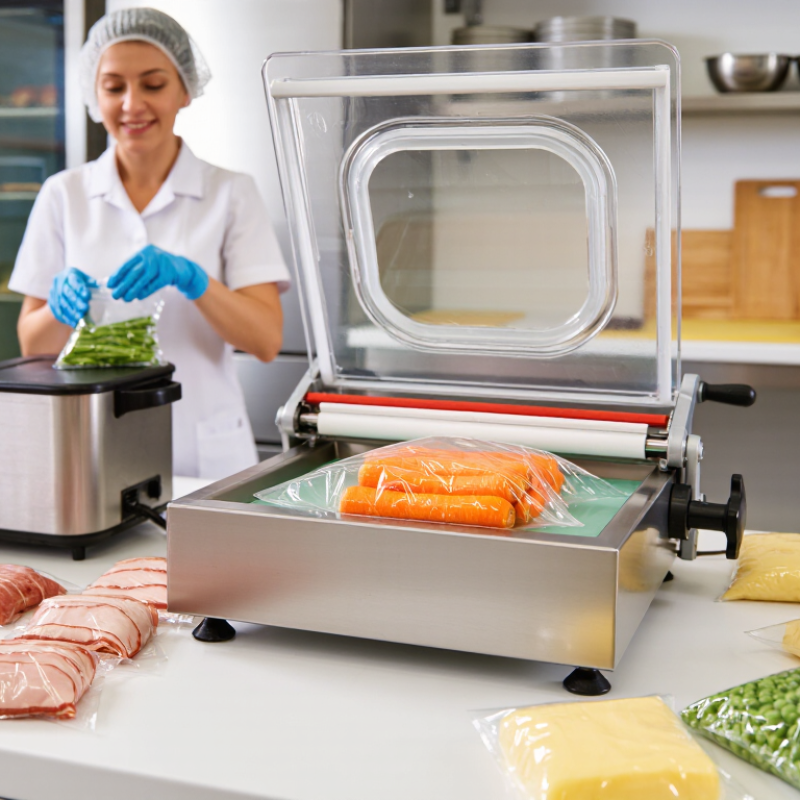
How to Choose the Best Vacuum Packing Machine?

Define Product, Package Format, and Required Production Throughput

How to Choose the Best Vacuum Packing Machine?

Define Product, Package Format, and Required Production Throughput

Start with the product. A firm cheese block, marinated cut, and delicate berry behave differently under vacuum. Note size, weight, moisture, temperature, and sharp edges. These details affect sealing, product damage, and cycle time. Test representative items, not just the easiest sample. Small details matter.

Then choose the package format. Chamber machines suit pre-made pouches and varied batch sizes; rollstock systems form packs continuously but need consistent product presentation. Check film type, pack dimensions, seal width, and whether liquid could contaminate the seal area. A short production trial can expose leaks or crushed products before equipment is specified. I have seen throughput estimates overlook loading and changeovers; that is an easy mistake to make.

Calculate required output as acceptable packs per minute, across a full shift. Include loading, film changes, cleaning, rejects, and planned pauses—not only the machine’s stated cycle rate. PMMI’s 2023 State of the Industry report estimated U.S. packaging machinery shipments at about $10.9 billion in 2022. That figure covers packaging machinery broadly, not vacuum equipment alone, but signals the scale of investment decisions. Record actual trial speed and yield. The first estimate may be wrong. Use the measured result to size capacity and leave room for demand changes.

Compare Pump Capacity (m³/h) and Ultimate Vacuum Pressure (mbar)

When choosing a vacuum packing machine, compare pump capacity and ultimate vacuum pressure as separate measurements. Pump capacity, shown in m³/h, describes how quickly the pump can move air under stated test conditions. A higher figure may shorten evacuation time, especially with a large chamber or frequent production cycles. It does not guarantee a faster cycle in every setup.

Check the chamber size and the pressure level your product needs. For example, a machine rated at 40 m³/h will not necessarily run twice as fast as one rated at 20 m³/h. Hose diameter, chamber volume, seals, and pump condition all affect performance. Small details matter.

Ultimate vacuum pressure is usually measured in mbar absolute. Lower numbers indicate a deeper vacuum, but the lowest available reading is not always necessary. Ask whether the figure is a pump specification or a measured result inside the chamber. Those are not the same thing. A simple test with your actual pouch and product can reveal more than a catalogue number. Watch the pressure gauge, sealing time, and consistency across several cycles. One awkward point: published ratings may use ideal conditions, so request the test method and duty-cycle limits before comparing machines.

How to Choose the Best Vacuum Packing Machine?

Compare pump capacity (m³/h) with ultimate vacuum pressure (mbar). Higher pump capacity can shorten evacuation time, while a lower ultimate pressure indicates a deeper vacuum.

The figures are representative examples, not universal machine specifications. Check the manufacturer’s tested figures for the complete machine; chamber size, product load, sealing conditions, and maintenance also affect performance.

Verify Seal Strength with ASTM F88 and Package Leaks with ASTM F2096

A vacuum packing machine should be judged by more than how tightly its chamber pulls down. The finished seal must resist opening and remain free of leaks. ASTM F88/F88M measures the force needed to separate a flexible-package seal, typically reporting force per unit width. Compare results from consistent sample widths, conditioning, and pull rates. Record the failure mode, too: a seal that peels cleanly differs from film that tears beside the seal. There is no universal pass value; set limits for the product and package. Small details matter.

Then check for leaks. ASTM F2096 uses internal pressurization and bubble observation to locate gross leaks in flexible packaging. The method describes sensitivity down to about 250 micrometers under specified conditions, but actual detection depends on the package and test setup. A bubble stream from a pinhole is easy to see. A slow, intermittent leak may not be. That distinction matters.

Use both tests when qualifying a machine or adjusting temperature, pressure, and dwell time. F88 evaluates seal strength; F2096 screens for leaks. They are not interchangeable. Sample seals from different positions and production runs, and document settings alongside results. One weakness: bubble testing depends on careful setup and observation, so repeatability deserves attention. ASTM test methods provide a stronger basis than visual checks alone, but they do not replace package-specific acceptance criteria.

Check Food-Safety Controls, Including FDA Cold Holding at 41°F (5°C) or Below

When choosing a vacuum packing machine, look beyond suction strength. A firm seal can help protect food quality, but it cannot make unsafe food safe. For temperature-controlled foods, the FDA Food Code sets 41°F (5°C) or below as the cold-holding standard. Local requirements and rules for reduced-oxygen packaging can vary, so food businesses should check the rules that apply to their operation.

Cold matters most. Choose equipment that seals consistently, is easy to clean, and lets staff inspect seals without guesswork. Then pair it with a separate, accurate refrigerator thermometer; the machine does not monitor storage temperature. Keep a thermometer near the packed food, not beside a warm door or light. Check and record temperatures regularly, and label packages with the packing date. If food sits above 41°F, do not assume a tight seal protects it. Follow food-safety procedures and applicable guidance before serving or storing it further. Vacuum packaging can create low-oxygen conditions, so handling and refrigeration deserve extra care. I would not rely on the machine’s display alone; it may show sealing settings, not the food’s actual temperature.

How to Choose the Best Vacuum Packing Machine? - Check Food-Safety Controls, Including FDA Cold Holding at 41°F (5°C) or Below

Selection factor What to look for Why it matters Practical check
Machine type Chamber vacuum: the bag is placed inside the chamber. External-suction: the open bag remains outside the machine. Chamber machines can handle liquids more readily because pressure is reduced around the whole bag. External-suction machines are generally suited to dry or low-moisture products and compatible textured bags. Test the machine with the actual food, bag type, and portion size before purchase.
Capacity and workflow Check chamber dimensions, seal-bar length, number of sealing bars, cycle time, and the number of packages needed per shift. The usable chamber and seal area determine package size and how many bags can be processed per cycle. Confirm that the largest intended pouch fits without obstructing the seal bar or lid.
Seal quality and controls Look for adjustable vacuum and seal settings, consistent sealing, accessible seal bars, and readily available replacement parts. Food, bag material, and pouch thickness can affect the seal. A vacuum-packed product is only protected by an intact, properly formed seal. Inspect sample seals for gaps, wrinkles, food or liquid in the seal area, and leaks. Follow the pouch and machine instructions.
Food-contact suitability and cleaning Choose equipment and food-contact packaging suitable for the intended use. Check whether food-contact surfaces can be cleaned and sanitized as required. Food-contact materials and equipment must be managed in accordance with applicable food regulations and the manufacturer’s instructions. Review cleaning instructions, inspect surfaces for damage, and include the machine in the facility’s cleaning schedule.
Cold holding: 41°F (5°C) or below Have reliable refrigeration and a way to monitor food temperature. Under the FDA Food Code model, cold-held time/temperature control for safety (TCS) food is generally maintained at 41°F (5°C) or below. Vacuum packaging does not replace temperature control or make perishable food shelf-stable. The FDA Food Code is a model code; local requirements and adoption can vary. Use an appropriate, calibrated food thermometer and verify actual product temperatures. Follow local food-code requirements.
Reduced-oxygen packaging (ROP) controls Before packaging TCS food under reduced-oxygen conditions, confirm which rules apply to the process, food, storage temperature, and intended use. ROP can create conditions in which certain hazards, including growth of Clostridium botulinum or Listeria monocytogenes, require specific controls. The FDA Food Code includes requirements for certain ROP processes, which may involve a HACCP plan, a variance, or specified conditions. Consult the regulatory authority and qualified food-safety personnel before starting an ROP process. Do not assume vacuum packing alone establishes a safe shelf life.
Service, training, and records Consider operator training, maintenance support, spare-part availability, and simple written procedures for packaging and temperature monitoring. Reliable operation and consistent procedures help staff identify failed seals, equipment problems, and temperature deviations. Keep maintenance and required food-safety records according to your facility’s procedures and applicable local regulations.

Food-safety note: The FDA Food Code is a model for state and local regulation, not a substitute for the rules adopted by your local jurisdiction. Confirm applicable requirements with your regulatory authority.

Match Chamber, Nozzle, or Belt Design to Bag Type and Daily Output

How to Choose the Best Vacuum Packing Machine?

Start with the bag, not the machine. Chamber models suit flat pouches, liquids, and products that need consistent seals. The bag sits inside the chamber, so air pressure is controlled around it. For external nozzle machines, confirm that the film allows air to escape; some systems require channelled bags. Test your actual product and bag together. A sample run can reveal leaks or crushed corners.

Output matters just as much. A nozzle unit can work well for larger bags and moderate runs, while a belt-fed chamber machine supports repeated cycles on a busy line. Compare real cycle time, including loading, sealing, and unloading—not just the pump’s advertised speed. Watch the operator’s reach, too. Small layout problems add up.

The FAO’s 2023 SDG Progress Report estimated that 13.2% of food was lost after harvest and before retail in 2021. Vacuum packing cannot prevent every cause of loss, but a sound seal helps protect product quality. Check seal width, maintenance access, and film compatibility before choosing. A faster machine is not always the better fit. Some trade-offs only appear during a full shift.

Find Mitten in Michigan

Request Mitten Near You

Have a favorite dispensary that doesn't carry Mitten Extracts yet? Let us know, and we'll work to make sure our premium products are available where you shop.