10 Best Vegetable Cutters for Commercial Kitchens
Commercial kitchens rarely get a quiet prep hour. During a lunch rush, cooks may dice onions, slice peppers, and portion potatoes while orders keep arriving. A dependable Vegetable Cutter can reduce repetitive knife work and help produce more uniform cuts. But equipment alone cannot fix a cramped station or inconsistent prep habits.
The National Restaurant Association’s 2024 State of the Restaurant Industry report projected U.S. restaurant sales of $1.1 trillion and employment of 15.7 million people. At that scale, speed, consistency, and cleanability are practical purchasing concerns, not just showroom claims. The FDA Food Code 2022 describes food-contact surfaces as needing to be smooth and easily cleanable, among other requirements. Operators should still check each model’s materials, disassembly process, and cleaning instructions. Consider whether it can handle firm carrots, ripe tomatoes, or only a narrow range of produce. Small details matter.
This guide compares 10 commercial vegetable cutters by capacity, cut options, construction, footprint, and maintenance demands. It considers manual and powered designs, since a high-output machine may be excessive for a small café. A low-cost unit can also become expensive if replacement blades are difficult to source or clean. No ranking replaces a hands-on trial. The right choice depends on menu volume, staff experience, counter space, and the cuts customers actually see on the plate.
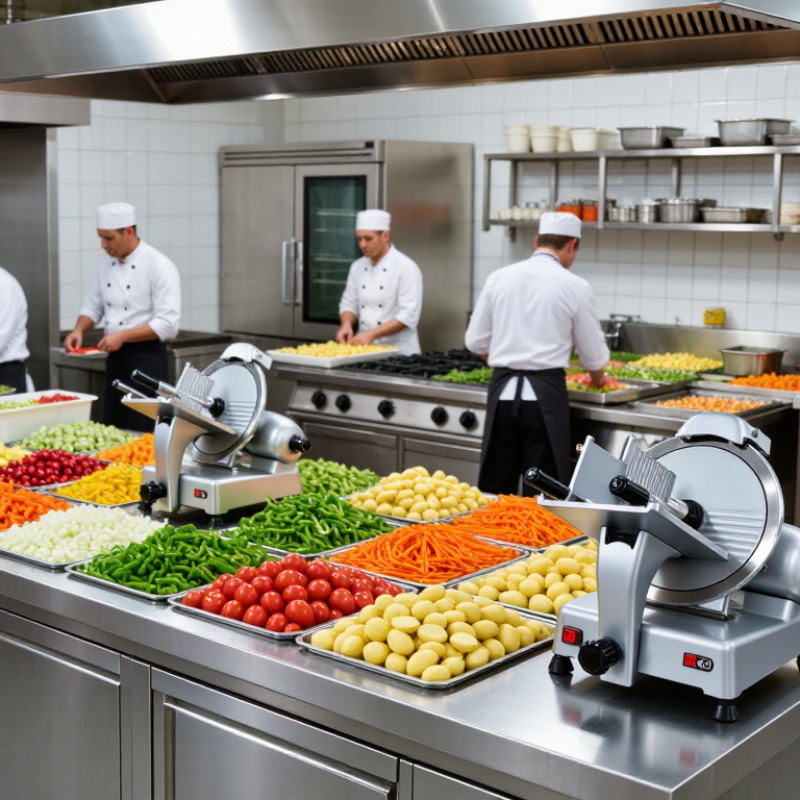
Types of Vegetable Cutters Used in Commercial Kitchens
Commercial kitchens use several vegetable cutter types because prep tasks differ by volume, produce, and cut shape. A manual dicer presses vegetables through a grid to make uniform cubes of onions, peppers, or firm tomatoes. It works well for controlled batches, but soft produce may get crushed instead of cut cleanly. That matters. Lever-operated slicers suit repeated cuts of potatoes, cucumbers, and similar firm vegetables. Their guides help maintain thickness, although operators still need to feed produce evenly.
Mandoline-style cutters provide quick slices or julienne strips, making them useful for smaller batches and varied cuts. They require careful handling and a stable work surface. For larger workloads, a food processor with interchangeable cutting discs can slice or shred vegetables quickly. Disc choice affects the result, so test a small amount before processing a full container. Rotary cutters, including drum-style models, can also shred or slice vegetables with less manual effort. They may take up counter space, and parts need thorough cleaning between tasks. A common planning mistake is choosing by speed alone. Match the cutter to daily volume, the vegetables being prepared, available storage, and the consistency the kitchen actually needs.
10 Best Vegetable Cutters for Commercial Kitchens: Common Cut Sizes
Commercial slicers, julienne cutters, and dicing grids can produce these common kitchen cuts. Dimensions are typical culinary references; actual results vary by blade, machine setting, and produce.
Key Features for Comparing Commercial Vegetable Cutters
10 Best Vegetable Cutters for Commercial Kitchens
Key Features for Comparing Commercial Vegetable Cutters
Commercial vegetable cutters differ in capacity, cut options, and how consistently they handle daily prep. For a busy lunch service, compare the cutter’s output with your actual batch size, not just its advertised maximum. Check whether it can produce the slices, cubes, or shreds your menu needs. Uniform pieces help vegetables cook evenly and make portions easier to control. Still, a high-capacity model may be awkward for a small prep counter. That detail is easy to miss.
Check the blade assembly, frame, and cleaning process. Stainless steel parts resist corrosion, while a stable base can reduce movement when cutting firm vegetables. Removable components are useful, but only if staff can take them apart and clean them without struggling. Safety features matter, too: look for a secure feed mechanism and guards that keep hands clear of blades. Consider storage and noise alongside speed. A fast cutter is not always the best fit.
Tips: Test the cutter with the vegetables your kitchen uses most, such as carrots or cabbage. Notice whether pieces stay even and cleanup feels manageable. Ask staff for feedback after a real prep shift. Their first impression may change.
Ten Top Vegetable Cutters for Commercial Kitchens
Ten Top Vegetable Cutters for Commercial Kitchens
Choosing among ten cutter styles starts with the menu and daily volume. Options include a manual dicer, lever-operated dicer, tabletop rotary slicer, drum grater, adjustable mandoline, julienne cutter, potato-chip cutter, cabbage shredder, food-processor attachment, and multi-grid commercial dicer. Each handles different produce and cuts. Check blade access, stable mounting, and how quickly parts can be cleaned. A neat dice is useful, but consistency also depends on produce size and operator technique.
WRAP’s UK hospitality and food service estimates, published in 2020, reported 1.1 million tonnes of food waste in 2018; about 75% was considered avoidable. A cutter cannot prevent waste by itself. However, portion-ready cuts may help kitchens use ingredients consistently and monitor prep quantities. Compare capacity against actual peak-hour demand, not just the busiest day of the year. A machine that sits idle can waste counter space. Small details matter.
Tips: Ask staff to test-cut firm carrots and soft tomatoes before choosing. Check whether guards and blades can be removed for cleaning, and follow the maker’s care instructions. Track prep time and trim waste during a short trial. The results may surprise you.
Choosing a Cutter for Kitchen Volume and Prep Tasks
Choosing a commercial vegetable cutter starts with the busiest service period, not the daily average. Estimate how many kilograms of produce staff must prepare in an hour. A small café may need a compact unit for occasional onions and peppers. A high-volume kitchen may need a larger feed opening and steady batch capacity. Peak demand matters.
Match the cutter to the foods and cuts on your menu. Dicing tomatoes, slicing firm potatoes, and shredding cabbage place different demands on blades and operators. Check whether the machine offers the cut sizes you actually use. Extra attachments are only useful if they save time. Otherwise, they become clutter.
Consider who will operate and clean the equipment during a rushed shift. Controls should be easy to understand, and removable parts should be practical to wash and inspect. Confirm that the cutter has appropriate guards and follow its operating instructions. Measure counter space, including room for a collection pan and safe access around the machine. Test a representative batch before committing, if possible. We once overlooked cleanup time in a prep estimate; the cutting was fast, but the sink became the bottleneck. A cutter does not fix a crowded workflow.
Safe Operation and Routine Maintenance of Vegetable Cutters
Safe operation begins before the first vegetable reaches the blade. Place the cutter on a stable, dry surface, then check that its guard and pusher are secure. Keep hands away from the feed opening; use the supplied pusher instead. Never clear a jam while the machine is connected to power. Stop it, unplug it, and wait until every moving part has fully stopped. Small habits matter.
After each shift, follow the equipment manual for disassembly and cleaning. Remove blades only as directed, since cutting edges can stay sharp even when they look harmless. Wash food-contact parts with approved cleaning products, rinse as required, and let them dry completely before reassembly. Keep water away from electrical controls and connections. Do not rush this step.
During routine checks, look for dull or chipped blades, loose fasteners, damaged cords, and guards that do not lock correctly. If anything seems wrong, take the cutter out of service until it has been repaired. A simple maintenance log can help staff notice recurring problems. It may feel like extra paperwork, but missed checks are harder to explain after a failure. Test reassembled equipment only as its manual recommends, and train every operator on the same safe procedure.