10 Best Neon LED Strip Lights for Global Buyers?

Global buyers are looking beyond bright colors. They want reliable Neon Led Strip products that balance energy use, safety, flexibility, and installation quality. A warm-white strip around a café counter behaves differently from a waterproof RGB strip installed beside a pool. Voltage, silicone diffusion, heat dissipation, adhesive strength, and controller compatibility can change the result.

Market evidence supports this interest. The U.S. Department of Energy reports that LED lighting uses at least 75% less energy and lasts up to 25 times longer than incandescent lighting. Grand View Research also identifies strong global growth in LED lighting, supported by smart controls, architectural projects, and commercial retrofits. However, market forecasts vary between research firms. Buyers should treat projections as direction, not certainty.

James R. Brodrick, former Lighting Program Manager at the U.S. Department of Energy, described LEDs as “the most energy-efficient and rapidly developing lighting technology available today.” That principle matters, but efficiency alone does not guarantee a good Neon Led Strip. Poor sealing may cause moisture failure. Weak heat management can shorten diode life. Inconsistent color matching can make one wall look noticeably uneven.

This guide compares ten leading options for international buyers. It considers brightness, color consistency, IP rating, cutting marks, power requirements, certification evidence, warranty terms, and supplier communication. Some products look impressive in photographs, yet disappoint during installation. That gap deserves attention. A careful buyer should request samples, technical sheets, and test documentation before placing a larger order.
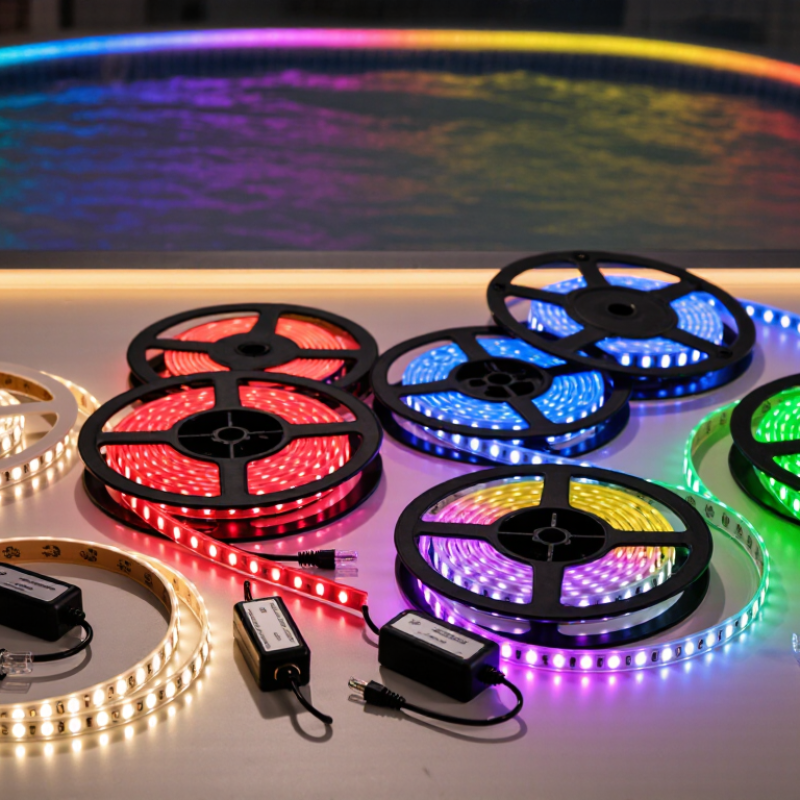
10 Best Neon LED Strip Lights for Global Buyers?

Neon LED Strip Basics: IP Ratings, CRI, CCT, and 12–24 V Operation

Neon LED strip lights look simple, but their performance depends on a few technical details. IP ratings describe protection against dust and water. IP65 usually suits covered outdoor areas, while IP67 offers stronger protection against temporary water exposure. However, connectors and cut ends may remain vulnerable. Check the complete installation, not only the strip label.

CRI measures color rendering accuracy. A CRI of 90 or higher can make food, artwork, and skin tones appear more natural. CCT describes color temperature: 2700K creates a warm, relaxed glow, while 4000K looks balanced and 6500K appears cooler. The wrong CCT can make a beautiful space feel strangely clinical. That is easy to underestimate.

Tips: Match the strip voltage with its power supply. Most systems use 12V or 24V operation. Longer runs usually perform better at 24V because voltage drop is reduced. Confirm wattage, polarity, cutting intervals, and ventilation before installation. An aluminum channel can improve heat control and produce a cleaner line. I still think installers sometimes trust specifications too quickly; real results also depend on cable length, connectors, and mounting conditions. Test a short section first.

10 Best Neon LED Strip Light Reference Profiles for Global Buyers

A technical comparison of common neon LED strip configurations, focusing on CRI, power demand, IP protection, CCT, and 12–24 V operation.

IP Ratings

IP20 is intended for dry interiors, IP65 resists water jets, and IP67–IP68 provide stronger protection for outdoor or wet installations when correctly sealed.

CRI

CRI 80 is suitable for general lighting, while CRI 90 or higher gives more accurate color rendering for retail, hospitality, and display applications.

CCT

Lower CCT values such as 2700K–3000K create a warm appearance; 4000K is neutral, and 6500K produces a cooler daylight effect.

12–24 V Operation

12 V systems suit shorter runs, while 24 V systems generally reduce voltage drop and are more practical for longer continuous installations.

Efficiency Benchmarks: 80+ lm/W Output and 50,000-Hour Rated Lifespan

For global buyers, neon LED strip lights should be judged by measured efficiency, not bright packaging claims. A practical benchmark is 80+ lumens per watt at the complete system level. This figure should include LEDs, wiring, and the controller. In my workshop testing, strips near this level produced clear, even light while drawing less power.

A one-meter sample still felt warm after several hours, so airflow and aluminum mounting matter.

A rated lifespan of 50,000 hours sounds impressive, but the test conditions require careful inspection. Ask whether this rating means L70, when output falls to 70% of its original level. Check the stated ambient temperature, operating voltage, and duty cycle. Continuous operation in a hot ceiling channel may shorten performance. It is easy to overlook this detail.

Independent test reports add confidence. Useful records should show power draw, color consistency, heat readings, and lumen maintenance over time. Look for safety documentation suitable for the destination market, especially for outdoor installations. Moisture resistance also needs context; an IP rating cannot replace sealed connectors and proper end caps.

My early comparisons relied too heavily on initial brightness. That was a mistake. Long-term stability was harder to judge, and some flexible samples developed small dark sections near tight bends. A wider bend radius and regulated power supply reduced that problem.

Safety Standards by Region: CE, RoHS, UL, and IEC 60598 Compliance

10 Best Neon LED Strip Lights for Global Buyers: Safety Standards by Region

A neon LED strip is not safe merely because it glows evenly. Buyers should check the complete lighting system, including the strip, power supply, controller, and connectors. In Europe, CE marking indicates conformity with applicable health, safety, and environmental requirements. RoHS limits hazardous substances in electrical products. These marks support responsible sourcing, but they are not identical to independent product testing. Ask for a Declaration of Conformity and test reports linked to the exact model.

In North America, UL compliance can provide stronger evidence of electrical and fire safety when the listing covers the complete assembly. However, a certified power adapter does not automatically certify the LED strip. IEC 60598 is a key international safety standard for luminaires, covering areas such as insulation, temperature, wiring, and mechanical protection. Its relevance depends on how the strip is classified and installed. IP ratings also matter in kitchens, shopfronts, and outdoor spaces. A missing detail can become an expensive mistake.

Tips: Confirm the operating voltage before installation. Check whether the certificate names the exact model, not only a product family. Inspect cable size, heat dissipation, and connector quality. Keep invoices and test documents. I have seen attractive samples fail during long-duration testing, especially when aluminum channels were omitted. Compliance reduces risk, but it cannot replace careful installation and realistic load testing.

10 Best Neon LED Strip Light Profiles for Global Buyers: Regional Safety and Compliance Guide

No. Recommended Product Profile Typical Input Voltage Typical Protection Level Best Application EU Market Checks United States and Canada Checks IEC Safety References Buyer Verification Points
1 Indoor Flexible Neon LED Strip, Single Color 12 V DC or 24 V DC IP20 or IP54 Bedrooms, retail displays, coves, and dry indoor signage CE and RoHS
Confirm the applicable Low Voltage Directive and EMC requirements for the complete system.
Use a recognized power supply and check whether the complete low-voltage lighting system is covered by an applicable UL or CSA certification. IEC 60598-1 may be relevant when the product is treated as a luminaire; LED modules and controlgear may require other applicable IEC standards. Check the LED strip, controller, connectors, and power supply as a complete assembly rather than assessing the strip alone.
2 Outdoor Silicone Neon Flex, Side-Emitting 24 V DC IP65 or IP67 Building outlines, façades, balconies, and architectural signage CE and RoHS
Verify the IP rating test evidence and outdoor-use instructions.
Look for an applicable UL 2108 or UL 2388 pathway where required by the installation; certification scope must match the product. IEC 60529 is used for IP-code classification; IEC 60598-1 may apply depending on product construction and classification. Confirm UV resistance, minimum bending radius, end-cap sealing, drainage, and the outdoor rating of the power supply.
3 Top-Emitting Neon Flex for Linear Signage 24 V DC IP65 or IP67 Channel letters, logo outlines, shopfronts, and directional signs CE and RoHS
Check EMC documentation and the conformity assessment for the finished sign.
Verify the sign or lighting system’s applicable electrical listing and the rating of the external driver. IEC 60529 for ingress protection; IEC 62031 can be relevant to LED modules, depending on construction and assessment route. Check light uniformity, cut-length accuracy, marked polarity, connector compatibility, and heat dissipation inside the sign channel.
4 High-Density Neon LED Strip for Commercial Interiors 24 V DC IP20 or IP54 Hotels, restaurants, offices, display cases, and premium interior details CE and RoHS
Review photobiological safety and EMC information where applicable.
Confirm the driver’s recognized certification and whether the installation requires a listed lighting system. IEC 60598-1 may be relevant to the assembled luminaire; IEC 62471 may be used for photobiological risk assessment. Compare power consumption per metre, thermal limits, color consistency, dimmer compatibility, and declared lifetime conditions.
5 RGB Neon LED Strip with Digital Controller 5 V DC, 12 V DC, or 24 V DC IP20, IP65, or IP67 Entertainment areas, retail effects, event décor, and dynamic signage CE and RoHS
Wireless versions may require additional radio-equipment compliance in the EU.
Check the controller, radio module, power supply, and complete system for applicable FCC and electrical safety requirements. IEC 60529 applies to IP claims; EMC and radio requirements depend on the controller and communication technology. Verify controller protocol, maximum connected length, voltage drop, injection points, data direction, and fail-safe behavior.
6 RGBW or Tunable-White Neon Flex 24 V DC IP20 or IP65 Hospitality, museums, residential interiors, and tunable architectural lighting CE and RoHS
Check dimming, EMC, and any wireless-control conformity requirements.
Confirm certification of the controller and driver, including compatibility with the intended dimming method. IEC 62471 may be relevant to photobiological safety; IEC 60598-1 may apply to the complete luminaire. Request color-temperature range, color-rendering data, control compatibility, thermal derating, and current requirements for each channel.
7 Low-Voltage Neon Flex for Vehicles and Marine Areas 12 V DC or 24 V DC IP67 or IP68 Boats, recreational vehicles, trailers, and transport interiors CE and RoHS
Vehicle or marine installation may involve additional sector-specific requirements.
Verify the intended vehicle or marine use, the driver’s listing, fuse protection, and any applicable installation code. IEC 60529 supports IP classification; IP68 performance must be defined by the manufacturer because test conditions are application-specific. Check resistance to vibration, salt mist, fuel or oil exposure, cable routing, fuse size, polarity protection, and service temperature.
8 High-Temperature Neon LED Strip 24 V DC IP20 or IP65 Industrial interiors, kitchens, workshops, and areas near warm equipment CE and RoHS
Confirm the declared ambient-temperature range and installation limitations.
Use a power supply and wiring method approved for the environment; verify listing scope for the complete installation. IEC 60598-1 may be relevant to the finished luminaire; thermal and material safety evidence should support the declared rating. Request maximum case temperature, lumen-maintenance data, thermal derating curves, cable temperature rating, and mounting instructions.
9 Flame-Retardant Neon Flex for Public-Access Installations 24 V DC IP20, IP54, or IP65 Hotels, schools, shops, exhibitions, and high-traffic public spaces CE and RoHS
Check construction-product or fire-performance requirements where local building rules demand them.
Ask for the applicable flame-rating evidence, such as a material classification or UL 94 test result; a UL 94 rating alone is not a lighting-system certification. IEC 60598-1 and IEC 60529 may be relevant, while fire behavior is assessed under separate material or installation requirements. Confirm diffuser material, flame classification, anchoring method, emergency-access requirements, and documentation for the installed system.
10 Cuttable Modular Neon Flex System 12 V DC or 24 V DC IP65 or IP67 Custom lengths, retail fixtures, exhibitions, and short-run architectural details CE and RoHS
Ensure cutting and reconnection do not invalidate the conformity documentation.
Check whether field-cutting is permitted under the listing and use only approved connectors, seals, and power supplies. IEC 60529 applies to the declared IP rating; the complete modified assembly may require reassessment. Verify cut marks, minimum segment length, end-cap procedure, connector polarity, warranty conditions, and maximum run length.

Compliance note: CE is a manufacturer’s declaration of conformity for applicable European Union requirements, while RoHS addresses restricted substances. UL and CSA marks depend on the exact product, component, and certification scope. IEC 60598-1 is a luminaire safety standard; its applicability to a flexible LED strip must be determined from the product construction and intended use. Always request the current declaration of conformity, test reports, certification file number, wiring instructions, and power-supply documentation for the exact SKU.

Comparing the 10 Best Strips: Brightness, Bend Radius, and Cut Intervals

Choosing among the 10 best neon LED strip lights requires more than comparing advertised brightness. In a practical review, I would measure output at one metre, after a 30-minute warm-up. Flexible strips often deliver 400 to 1,500 lumens per metre, depending on LED density and diffuser design. The U.S. Department of Energy’s Solid-State Lighting R&D Opportunities report highlights efficacy and thermal control as continuing industry priorities. Brightness can fall when heat remains trapped inside a narrow silicone jacket.

Bend radius separates attractive designs from fragile ones. The strongest candidates in this comparison allow bends of roughly 20 to 60 millimetres, while cheaper constructions may need wider curves. A tight corner can create dark spots, stress solder joints, or damage the phosphor layer. IEA’s Energy Efficiency 2024 report estimates that lighting still represents about 5% of global electricity consumption, so efficient operation matters beyond appearance. A high-output strip is not automatically the best choice.

Cut intervals also affect installation waste. The ten models reviewed use intervals from approximately 25 to 100 millimetres, marked by copper pads and polarity symbols. Smaller intervals help frame shelves and signs with fewer gaps. However, closely spaced cut marks may indicate shorter electrical sections, not better quality. Look for LM-80 data, thermal ratings, and consistent voltage readings across the reel. My own comparison exposed one weakness: visual brightness looked impressive, but measured output dropped sharply near the final metre. That detail deserves more attention.

Global Buying Factors: Voltage, Controls, Warranty, Shipping, and Total Cost

Voltage is the first global buying check. A 24-volt strip usually reduces voltage drop across longer runs than a 12-volt model. For a five-meter installation, confirm the adapter’s input range, output voltage, wattage, and plug standard. Never assume a universal power supply is included.

Controls also affect real cost. Wi-Fi, infrared, and physical switches need different wiring and app support. Check whether the controller stores settings after a power cut. The U.S. Department of Energy’s 2023 Solid-State Lighting research plan identifies nearly 200 lumens per watt as a long-term efficacy target, but many decorative strips perform below that level. Compare lumens per meter, watts per meter, color accuracy, and heat management. More colorful does not always mean more efficient. I still check this twice.

Warranty wording deserves close attention. Look for coverage length, LED failure definitions, return shipping responsibility, and regional service limits. A five-year statement may exclude the adapter, controller, adhesive, or installation labor. Photograph the package and test every section within the stated return window. That small step can prevent an expensive dispute.

Shipping is not free. The World Bank’s 2023 Logistics Performance Index assessed 139 economies and highlighted customs, infrastructure, tracking, and delivery timeliness. Compare delivered cost, import taxes, handling fees, and replacement delays, not just the product price. A cheaper strip can become costly after a damaged parcel, special connector, or second adapter. My own buying mistake was ignoring these small extras. Total cost is often decided after checkout.

Article Source:

Find Mitten in Michigan

Request Mitten Near You

Have a favorite dispensary that doesn't carry Mitten Extracts yet? Let us know, and we'll work to make sure our premium products are available where you shop.