Who Are the Best Disposable Pens Suppliers in China?
Choosing the best Disposable Pens suppliers in China takes more than comparing quoted prices. A low unit cost can look attractive, until uneven ink flow or loose caps appear in a sample batch. Buyers should examine writing consistency, barrel finish, refill options, packaging, production capacity, and communication before making a decision.
Quality expert W. Edwards Deming is widely associated with the principle, “Quality is everyone’s responsibility.” That idea matters when assessing a pen supplier. Reliable output depends on more than a final inspection. It also depends on material checks, process controls, and clear feedback between the buyer and factory. Ask how the supplier tests ink flow, checks dimensions, and handles defects. Then verify those answers with physical samples and documented specifications.
This guide compares Chinese suppliers through practical criteria, including product range, customization, quality systems, and responsiveness. It also considers details that are easy to overlook, such as whether the cap fits securely and whether printed logos remain legible after handling. No checklist catches everything. Samples can differ from mass production, and a polished sales response does not prove consistent manufacturing. That is worth remembering. The aim is not to declare one factory perfect, but to help buyers identify dependable partners and ask better questions before placing an order.
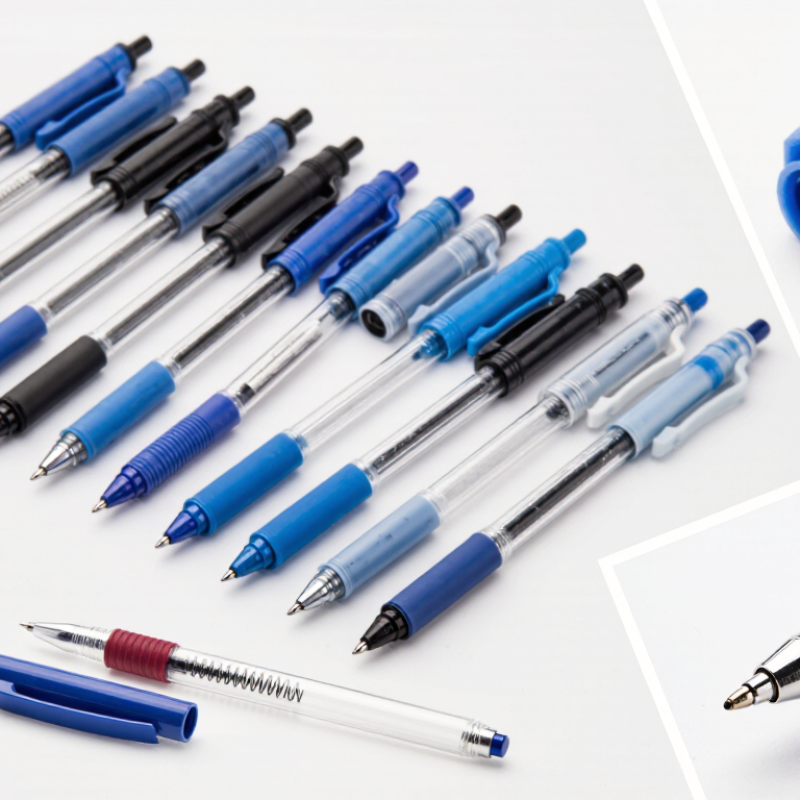
Disposable Pen Types and Common Tip Sizes: 0.5 mm, 0.7 mm, and 1.0 mm
Disposable pens are not one uniform category. Chinese suppliers commonly offer ballpoint, gel, and rollerball options, each with a different writing feel. A 0.5 mm tip makes a fine line and works well for compact notes or forms with narrow spaces. It can feel scratchy on rough paper. A 0.7 mm tip is a practical middle choice for everyday writing. It usually produces a clearer line without using as much ink as a broader point. A 1.0 mm tip creates bold strokes that stand out on labels and quick signatures. The trade-off is faster ink use and less room for small handwriting.
Tip size alone does not guarantee the same result across suppliers. Ink flow, ball quality, and paper texture all affect the finished line. Ask for samples in each size, then test them on the paper your customers are likely to use. Check for skipping, smearing, and uneven starts after the pen has been uncapped briefly. It’s easy to overlook that detail. For bulk orders, request the stated tip size and ink type in the product specification, and compare a production sample with the approved sample. A printed “0.5 mm” label is useful, but it is not a substitute for testing.
Common Disposable Pen Tip Sizes
Disposable ballpoint, gel, and rollerball pens are commonly offered with 0.5 mm, 0.7 mm, and 1.0 mm tips. These measurements refer to the nominal tip size; the resulting line appearance can vary by ink and pen design.
China’s Supplier Landscape: OEM Models, Materials, and Export Markets
China’s disposable-pen suppliers commonly offer three OEM arrangements: ready-made designs with custom printing, modified components, or full tooling and assembly. The first keeps setup simple; the last gives buyers more control but requires clearer specifications and longer sampling. Ask for ink type, tip size, barrel resin, clip strength, and writing-length test results. Small details matter. A pen that feels fine in a sample may crack when packed tightly in cartons.
Material choices shape both cost and export readiness. Many lightweight barrels use polypropylene or polystyrene, while metal tips and tungsten-carbide balls affect writing consistency. The OECD’s Global Plastics Outlook reports that global plastics production rose to 460 million tonnes in 2019, underscoring the scale of material use behind everyday products. That figure is not pen-specific, but it makes resin sourcing and packaging worth checking. Request material declarations and test records, not just a “recyclable” claim.
For export planning, compare suppliers by destination experience, carton specifications, and documentation support. UN Comtrade records ballpoint pens under HS code 960810, allowing buyers to examine export values and trade destinations by year. Treat those figures as market signals, not proof of factory capability. A supplier may know a route well and still need clearer instructions. Ask for a pre-production sample, confirm color tolerances, and record agreed inspection points before mass production.
Quality Standards for Ballpoint and Gel Pens: ISO 12757-1 and ISO 27668-1
When comparing disposable-pen suppliers in China, check test evidence before judging a pen by its finish. ISO’s published standards identify two useful benchmarks: ISO 12757-1:2017 for general-use ballpoint pens and refills, and ISO 27668-1:2009 for general-use gel ink pens and refills. The different standard numbers and publication years matter; a supplier should state which standard applies to each pen type. A certificate alone is not enough.
Request dated test reports that identify the pen model, test method, and results against the relevant standard. Compare writing continuity, line consistency, and leakage results where applicable, rather than relying on vague claims such as “smooth writing.” Check whether the tested sample matches the production model. Small details count: a pen that skips after a short pause can frustrate users, even if its barrel looks excellent. Test a few samples yourself, too.
Standards help make comparisons clearer. They cannot make every writing experience identical.
A real limitation.
Ask suppliers to explain any test exceptions and provide batch-level records where available; then check several pens from the same shipment for differences. Some buyers may overlook that final step.
Supplier Comparisons: Writing Distance, Defect Rate, MOQ, and Lead Time
Who Are the Best Disposable Pens Suppliers in China?
When comparing disposable pen suppliers in China, request the same sample type and test conditions from each. Writing distance can vary with paper, writing pressure, and ink storage. A supplier’s stated figure is useful, but it is not a guarantee. Ask for test records and repeat a simple line test on standard office paper. Small differences become visible quickly.
Defect rate deserves equal attention. Ask how defects are counted, whether inspection happens before packing, and how replacements are handled. A quoted rate means little without a clear sample size. Compare MOQ with your forecast and packaging needs; a low unit price may require more stock than you can use. Confirm lead time for both samples and production, including peak-season delays. Dates slip sometimes, even with careful planning.
Tips: Put writing distance, acceptable defect rate, MOQ, and lead time in one comparison sheet. Request a pre-production sample and agree on an inspection method in writing. Check whether delivery timing includes packaging and export preparation. Keep one sample from each batch for reference. It sounds basic, but teams sometimes skip that step. Supplier selection is less tidy than a spreadsheet suggests; real batches can still differ.
How to Shortlist Suppliers Through Sample Testing and Factory Audits
China has a wide range of disposable-pen suppliers, but a polished sample does not prove stable production. ISO’s Survey 2022 recorded more than one million valid ISO 9001 certificates worldwide. Certification is a useful screening clue, not proof that a factory controls every pen-making step.
Request samples from the actual production line, not only showroom stock. Test several pens for start-up skips, ink flow, line consistency, cap fit, and leakage after storage. Use the same paper and writing pressure for every sample. Record results, batch codes, and test dates; compare samples from different production runs when possible. No sample is perfect. A failed first test can reveal a fixable issue, but repeated variation deserves attention.
During a factory audit, verify that the site makes the pens itself and can trace barrels, tips, ink, and packaging to incoming lots. Ask to see inspection records, equipment-maintenance logs, and procedures for handling rejected parts. Observe a live production run: check whether workers measure tip fit and test filled pens at the frequency shown in their records. A certificate alone cannot establish that practice. Keep the audit scope specific, and document any gaps with owners and due dates. Some records may look complete while floor habits differ; revisit critical controls before approving a large order.
Who Are the Best Disposable Pens Suppliers in China? - How to Shortlist Suppliers Through Sample Testing and Factory Audits
Use this scorecard to compare suppliers consistently. The pass criteria below are suggested buyer-defined benchmarks, not universal industry standards; adjust them to your product specification, market requirements, and risk level.
| Evaluation Area | What to Test or Verify | Suggested Method or Evidence | Suggested Shortlist Benchmark | Weight |
|---|---|---|---|---|
| Writing performance | Start-up, line continuity, skipping, smudging, and writing length | Test samples on the intended paper under consistent conditions; record results and compare with the approved product specification. | All tested units meet the agreed writing-length and performance requirements; no unacceptable skipping or leakage. | 25% |
| Sample consistency | Variation in ink color, line width, starting behavior, and component fit | Compare at least 30 randomly selected samples from the same production-representative batch, where practical. | No critical defects; observed variation remains within buyer-approved tolerances. | 15% |
| Leakage and storage behavior | Ink leakage, drying, and performance after storage or temperature conditioning | Keep samples in the intended orientation and packaging; test after a buyer-defined storage period and any agreed conditioning. | No visible leakage or unacceptable drying in the agreed test sample; results documented by lot. | 10% |
| Cap, clip, and body durability | Cap retention, clip strength, assembly, and visible damage | Conduct repeatable opening-and-closing and handling checks; define any drop test and acceptance criteria before testing. | No breakage, loose parts, or loss of intended function under the agreed test procedure. | 8% |
| Production quality controls | Incoming inspection, in-process checks, final inspection, and defect handling | Review inspection records, control plans, defect samples, corrective-action records, and the process for segregating nonconforming goods. | Documented controls cover key components and finished pens; corrective actions have owners and follow-up records. | 15% |
| Factory capability and capacity | Relevant production equipment, staffing, bottlenecks, and realistic output planning | During an audit, compare equipment and production records with the quoted product and schedule; verify capacity assumptions against recent orders. | The audited site can explain and support the proposed production plan, lead time, and quality checkpoints. | 10% |
| Traceability and change control | Lot identification, component sourcing records, and notification of material or process changes | Request a sample batch record and confirm that changes affecting the agreed specification require buyer notification and approval. | Finished goods can be linked to a production lot, and a written change-control process is available. | 7% |
| Documentation and market requirements | Product specifications, packaging details, and documents required for the destination market | Check document scope, product identity, issuing party, and validity where relevant; confirm requirements with the importer or qualified compliance professional. | Requested documents are complete and consistent with the exact product and destination-market requirements. | 10% |
| Total score weight | 100% | |||
Shortlisting tip: Evaluate production-representative samples before placing a bulk order, then audit the site responsible for manufacturing. Record findings against the same specification and scoring rules for every candidate.
Related Posts
-
How to Choose the Best Disposable Pens?
-
How to Choose the Best Disposable Pen for Your Writing Needs
-
Future Proofing Your Supply Chain with the Best Disposable Pen Innovations for 2025
-
How to Use Nicotine Vape Safely and Effectively?
-
Understanding the Rise of Pen Vape Usage Among Young Adults in 2023
-

Top 10 Disposable Cannabis Vape Pen Manufacturers at the 137th Canton Fair