7 Tips for Choosing a Silver Silk Pillowcase

A Silver Silk Pillowcase can look quietly luxurious: cool silver fabric, a smooth surface, and a soft sheen beside the bed. But color alone tells you little about quality. “Silver” may describe the shade, not silver fibers or an antimicrobial treatment. Check the product description before trusting either interpretation.

Material claims deserve the same care. Textile Exchange’s Materials Market Report 2024 places silk below 0.1% of global fiber production, making clear that it is a small, specialized category. Board-certified dermatologist Dr. Hadley King has noted that silk absorbs less moisture than cotton, a potential advantage for reducing moisture transfer from skin. That is not a promise to prevent wrinkles or repair hair. Results depend on the fabric, the person, and how the pillowcase is used.

The seven tips in this guide focus on details you can inspect: fiber content, silk grade, weave, seam quality, closure, care instructions, and trustworthy claims. Feel the fabric if you can. Read the label twice. A glossy finish may photograph beautifully yet reveal little about durability. I would also question vague terms such as “pure silk” when the listing offers no fiber details. Choosing well takes more than liking the color; it means weighing evidence, comfort, and care requirements before buying.
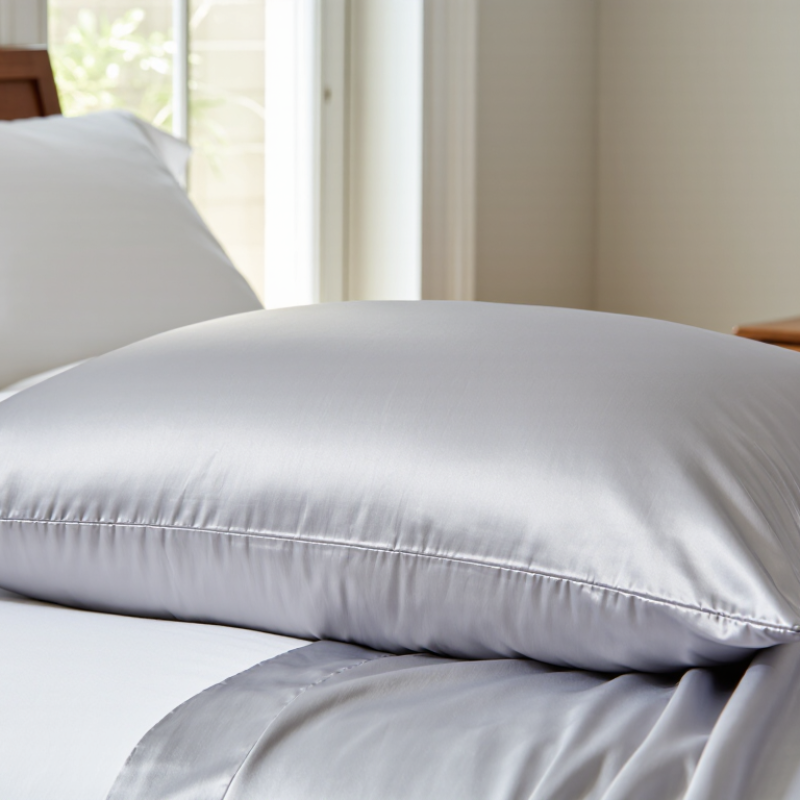
7 Tips for Choosing a Silver Silk Pillowcase

Define What “Silver Silk” Means in Pillowcase Materials

The phrase “silver silk” can describe appearance, not a special fiber. A silver-colored pillowcase may be natural silk dyed gray or another fabric with a satin-like surface. Silk refers to the fiber; satin describes a weave. They are not interchangeable. Mulberry silk remains silk when dyed silver. Shiny polyester satin is not silk, even if its color and sheen look similar. Read the fiber-content label before judging by photos or product wording. Small distinction, big difference.

Tip: Check the exact fiber percentage and care label. Look for “100% silk” rather than relying on “silky” or “silver silk.” If the listing mentions silver ions, ask what treatment was applied and whether supporting test information is available. Color alone does not prove silver is in the fabric. I still find the wording confusing.

If provided, check the momme weight too; it describes silk fabric weight, not purity or softness by itself. Compare the fiber, seam finish, and washing instructions. Follow the care label. A cool, smooth feel is useful to notice, yet touch is subjective and cannot confirm fiber content. If details conflict, trust the material label more than polished product copy.

7 Tips for Choosing a Silver Silk Pillowcase — Define What “Silver Silk” Means in Pillowcase Materials

Tip What “Silver Silk” May Mean What to Check Practical Guidance
1. Separate color from fiber “Silver” may describe a grey or metallic-looking color, while “silk” describes the textile fiber. Look for a fiber-content label and a separate color description. A silver-colored pillowcase is not necessarily made with silver, metallic thread, or silver treatment.
2. Confirm the actual fiber content Silk is a natural protein fiber; products described as “silky” may instead use other fibers or blends. Check the stated fiber composition, such as 100% silk or a clearly listed blend. Do not rely on terms such as “silky feel” or “silk touch” as proof of silk content.
3. Ask whether silver is a treatment Some products may use silver-containing materials or a silver-based finish; this is different from a silver color. Look for a clear description of the treatment, where it is applied, and supporting product documentation. If no treatment is specified, interpret “silver” as a color description rather than evidence of silver content.
4. Treat performance claims separately Claims such as “antimicrobial” or “odor control” may refer to a finish, not to silk itself. Check what the claim applies to and whether test conditions or substantiation are provided. A material name alone does not establish a health benefit or guarantee a particular result.
5. Compare silk weight carefully Silk fabric is often described by momme (mm), a measure of fabric weight; it is not the same as thread count. Check whether momme is stated and compare products using the same measurement. Momme can help compare fabric weight, but it does not by itself prove fiber purity, softness, or durability.
6. Review care instructions Care needs may depend on the silk fabric, dyes, stitching, and any added finish. Read the care label for washing temperature, detergent guidance, drying, and ironing instructions. Follow the specific label; do not assume every silk or silver-treated textile has identical care requirements.
7. Check the complete product details “Silver silk” may be shorthand for several different combinations of color, fiber, and finish. Review the fiber label, color, fabric weight, treatment details, care instructions, and return terms. Choose based on the material information that matters to you, rather than the phrase “silver silk” alone.

Compare Silk Types, Grades, and Weave Quality

Separate the silk type from its grade. Mulberry silk comes from domesticated silkworms and often has a smoother, more uniform appearance. Wild silk can feel more textured, though quality varies by fiber and finishing. “Grade 6A” appears on many labels, but grading claims are not a universal guarantee. Ask how the grade was assessed and whether the seller can document fiber origin. Textile Exchange’s Materials Market Report 2024 estimates global fiber production reached 124 million tonnes in 2023. Silk is a small part of this huge market, so a clear product specification matters more than a polished label.

Check weight and weave together. Momme measures silk fabric weight; a higher number usually means more material, not automatically better craftsmanship. For a pillowcase, compare momme only across products with similar dimensions and construction. Satin describes a weave, not a fiber. A charmeuse satin weave can create a smooth face that glides under your cheek, while loose stitching or uneven seams may still weaken the finished case. Feel matters. Thread count alone is a poor silk comparison, since counting methods vary and are more commonly used for cotton.

Look for fiber content, momme weight, weave, and care instructions on the same specification sheet. If the listing says “100% silk” but omits weight and construction, pause and request details. I would not treat a shiny surface as proof of quality; finishing can change the feel, and product photos cannot reveal seam strength. Check whether the closure sits flat and whether the fabric feels consistent near the edges, not just in the center.

Choose a Suitable Size, Fit, and Closure

Measure the pillow, not just the label. The Sleep Foundation’s pillow-size guide lists standard pillows at 20 × 26 inches, queen at 20 × 30, and king at 20 × 36. Check the case’s finished dimensions against your pillow, including any unusual thickness. A close fit helps prevent silk from bunching beneath your cheek, but a tight case can strain seams. Leave a little room.

Closure matters, too. An envelope flap holds the pillow without exposed hardware and is simple to use. A zipper can secure the insert, but check that its end is covered and cannot rub your face. Feel the seam with your fingertips. Small details count. I would not trust “one size fits most” without checking measurements; pillow shapes and manufacturer sizing can vary. If you use a protector, measure the pillow with it on, since that extra layer may change the fit. A case that looks roomy in a product photo may sit snugly on a fuller pillow. There is no perfect shortcut: compare dimensions, inspect the closure, and allow for the fabric’s care instructions.

7 Tips for Choosing a Silver Silk Pillowcase: Choose the Right Size, Fit, and Closure

Start by matching the pillowcase to your pillow’s dimensions. These typical U.S. pillow sizes show why checking both width and length matters.

Standard, queen, and king pillow dimensions are typically 20 × 26, 20 × 30, and 20 × 36 inches, respectively. Sizes can vary, so measure your pillow and check the case’s dimensions and closure style before buying.

Check Care Requirements and Product Certifications

A silver silk pillowcase may combine silk with silver-based fibers or a surface treatment, so care instructions can vary. Read the label before washing; do not assume silk-friendly advice applies to every construction. If the maker permits machine washing, use a mesh laundry bag and a delicate cycle. Otherwise, hand-wash gently in cool water with a mild detergent. Avoid wringing the fabric. Press out water with a clean towel, then air-dry away from direct sun.

Tip: Check care requirements before buying. Look for clear instructions on washing, drying, ironing, and whether the case can be cleaned at home. Vague directions are worth questioning. Small details matter. I still find it easy to overlook drying instructions, yet heat can affect delicate fabrics.

Check product certifications with the same care. Look for the certification name, the covered product or material, and a way to verify the certificate with its issuing organization. A certificate for a mill or raw fabric may not cover the finished pillowcase. Certifications can provide useful evidence about specific standards, but they do not prove every performance claim. Not always. If a seller claims the case is safer, more durable, or antimicrobial, seek evidence that directly supports that claim. A polished label alone is not enough.

Assess Price, Durability, and Seller Reliability

A silver silk pillowcase can look luxurious in a product photo, but color alone says little about quality. Check whether the listing specifies silk type, fabric weight, and construction. A stated momme weight can help you compare silk fabrics, though it should not be treated as a complete quality score. Look closely. Clear photos of seams, closures, and the fabric’s reverse side make details easier to judge.

Compare prices against those details, not just the discount label. A very low price may reflect lighter fabric, simpler stitching, or unclear product information. Consider cost per use, too: a pillowcase you can wash and handle according to its care instructions may offer better value over time. Still, durability is hard to predict from a listing, and I would not assume a higher price guarantees a longer life. That part takes a little judgment.

Seller reliability matters just as much. Look for specific answers about fabric composition, care, sizing, and returns. Reviews are more useful when they describe repeated washing or months of use, rather than only the first impression. Check whether the return terms are easy to find and whether product details stay consistent across the listing. If key information is missing, pause before buying. A polished page is not proof.

Find Mitten in Michigan

Request Mitten Near You

Have a favorite dispensary that doesn't carry Mitten Extracts yet? Let us know, and we'll work to make sure our premium products are available where you shop.