7 Tips for Choosing Natural Stretch Fabric?
Choosing Natural Stretch Fabric can feel simple until the material reaches a cutting table. A soft roll may look attractive, yet stretch unevenly across its width. It may also recover poorly after repeated movement. I have seen fabric that felt smooth in the hand but twisted after washing. Small tests matter.
This guide introduces seven practical tips for selecting natural stretch fabric with greater confidence. It considers fiber content, stretch direction, recovery, fabric weight, surface feel, shrinkage, and supplier reliability. Cotton with elastane may suit everyday clothing, while wool blends can provide warmth and controlled flexibility. However, “natural” does not always mean sustainable, durable, or suitable for every garment. Check the fiber label carefully. Ask for technical data. Request a sample before ordering.
Try a simple test. Mark a ten-centimeter section, stretch it gently, then measure the recovery. Wash another piece according to the intended care instructions. Notice whether the surface pills, fades, or loses shape. These details often reveal more than photographs. A fabric expert or qualified textile laboratory can provide useful testing when performance is critical. Still, no choice is perfect. Supplier claims deserve verification, and personal judgment can be wrong. A better decision combines touch, measurement, documentation, and real-use testing. That balanced process helps designers choose a fabric that feels comfortable, performs reliably, and matches the garment’s purpose.
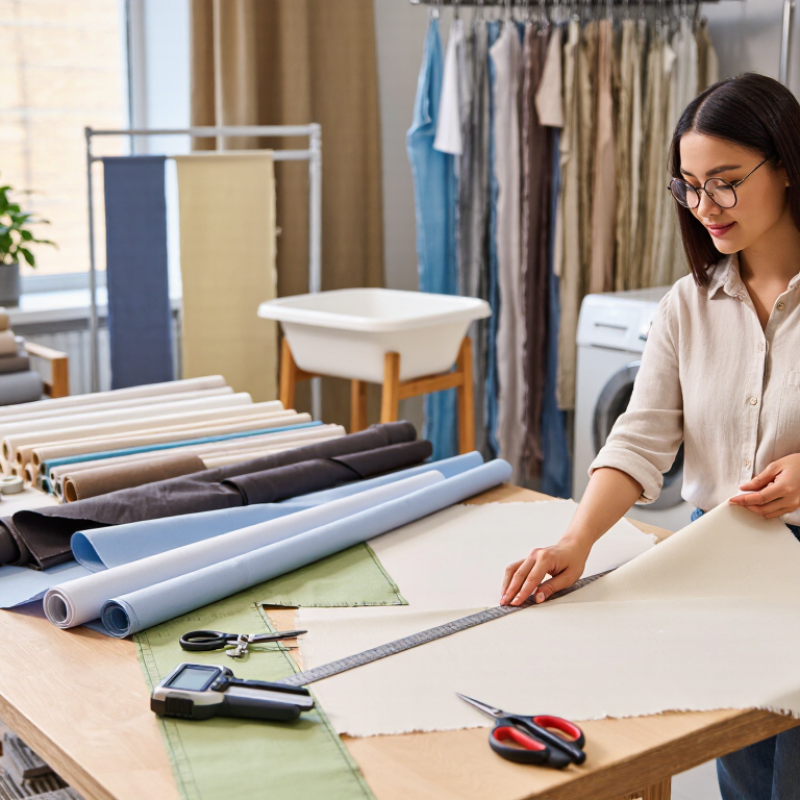
Understand Natural Stretch Fabric and Its Key Properties
Natural stretch fabric is not one single material. It usually describes fabric that moves through fiber structure, knitted construction, or both. Cotton has modest give, while wool gains flexibility from its natural crimp. Linen generally feels firmer. The word natural can also mean no elastane, so check the fiber label carefully. It is an easy detail to overlook.
When choosing fabric, test seven practical points: stretch direction, stretch amount, recovery, softness, breathability, weight, and shrinkage. Pull a fabric swatch gently across and along the grain. Hold it for ten seconds, then release it. Good recovery means the surface returns without obvious ripples. A close-knit fabric often feels supportive, while a loose knit may stretch comfortably but lose shape sooner. Touch both sides. Roughness can become irritation after several hours of wear.
Wash a small sample before cutting. Natural fibers may shrink, relax, or change texture after laundering. Cool water and moderate drying are usually safer, but care instructions still matter. Think about the garment’s purpose: wool can suit flexible layers, cotton can work for relaxed clothing, and linen may need a looser design. No fabric performs perfectly. I once treated softness as the main quality signal, but recovery mattered more after repeated wear. A supplier’s test data helps, yet a simple home swatch test can reveal practical problems. Check the fabric again under light, because thin areas and uneven knitting may only appear then.
7 Tips for Choosing Natural Stretch Fabric? - Understand Natural Stretch Fabric and Its Key Properties
| Tip | Fabric or Construction | Natural Fiber Content | Typical Crosswise Stretch | Stretch Recovery | Breathability and Moisture Behavior | Best Applications | What to Check Before Buying |
|---|---|---|---|---|---|---|---|
| 1 | Cotton Jersey Knit | Usually 100% cotton; some versions include added elastane, so the fiber label should be checked. | 20–50% | Low to moderate without elastane; the fabric may gradually relax after repeated wear. | Generally breathable and absorbent, but it can retain moisture and dry more slowly than wool. | T-shirts, casual tops, children's clothing, and lightweight loungewear. | Test both directions. A compact knit with firm edges usually holds its shape better than a loose, lightweight knit. |
| 2 | Wool Jersey or Fine Wool Knit | Commonly 100% wool; wool fibers naturally have crimp that contributes to resilience and comfort stretch. | 15–35% | Moderate to good, depending on wool fineness, yarn twist, and knit density. | Breathable and moisture-absorbing; wool can absorb vapor while still feeling relatively dry. | Base layers, lightweight sweaters, travel garments, and comfortable dresses. | Look for even recovery after stretching and check for surface pilling, especially with very soft fine-wool knits. |
| 3 | Linen Knit | Typically 100% linen or a linen-rich blend; the knit structure provides more movement than ordinary linen woven fabric. | 10–25% | Low to moderate; linen has limited elastic recovery and may develop relaxed areas over time. | Highly breathable and moisture-absorbent, with a cool hand feel in warm conditions. | Summer tops, relaxed dresses, resort clothing, and lightweight cardigans. | Choose a stable knit if shape retention matters. Expect natural wrinkling and avoid relying on linen for close-fitting compression. |
| 4 | Silk Knit | Usually 100% silk; stretch comes mainly from knit construction rather than elastic fiber. | 10–30% | Low to moderate; silk can stretch under load and may not return fully after prolonged tension. | Breathable and moisture-managing, with a smooth hand feel and good temperature comfort. | Underlayers, soft tops, draped dresses, and lightweight sleepwear. | Check for snagging, transparent areas, and consistent recovery. Use gentle washing methods recommended for silk. |
| 5 | Woven Fabric with Bias Stretch | May be cotton, linen, silk, or wool; stretch is created by cutting across the grain rather than by elastic fiber. | 5–20% | Usually low; bias-cut garments can lose length or become distorted under repeated tension. | Depends on the fiber. Natural-fiber woven fabrics are often breathable, but weave density affects comfort. | Bias-cut skirts, slip dresses, scarves, and softly fitted garments. | Measure stretch across the intended direction and consider lining, seam stability, and possible garment growth. |
| 6 | Rib Knit | Can be made from cotton, wool, linen, or other natural fibers; rib columns create strong widthwise extensibility. | 30–80% | Moderate to good, but recovery depends strongly on yarn quality and rib structure. | Breathability varies by fiber and weight; thicker ribs can feel warm, while cotton ribs may absorb perspiration. | Cuffs, neckbands, fitted tops, waistbands, and body-skimming garments. | Check whether the rib returns close to its original width after stretching. Inspect edges for curling or waviness. |
| 7 | Double-Knit or Interlock | Often made from cotton or wool; interlock has two connected knit layers and is generally more stable than single jersey. | 15–40% | Moderate; typically better dimensional stability than a lightweight single jersey. | Comfortable and breathable, although heavier constructions may hold more heat and moisture. | Structured T-shirts, knit trousers, children's wear, and travel clothing. | Compare fabric weight, thickness, and recovery. A stable double-knit is preferable for fitted garments that need shape retention. |